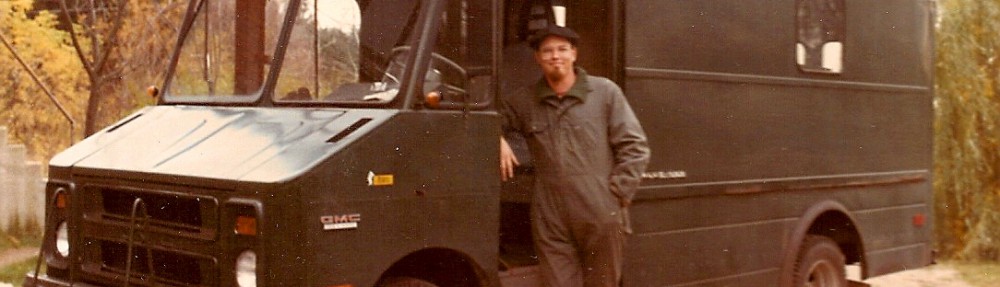
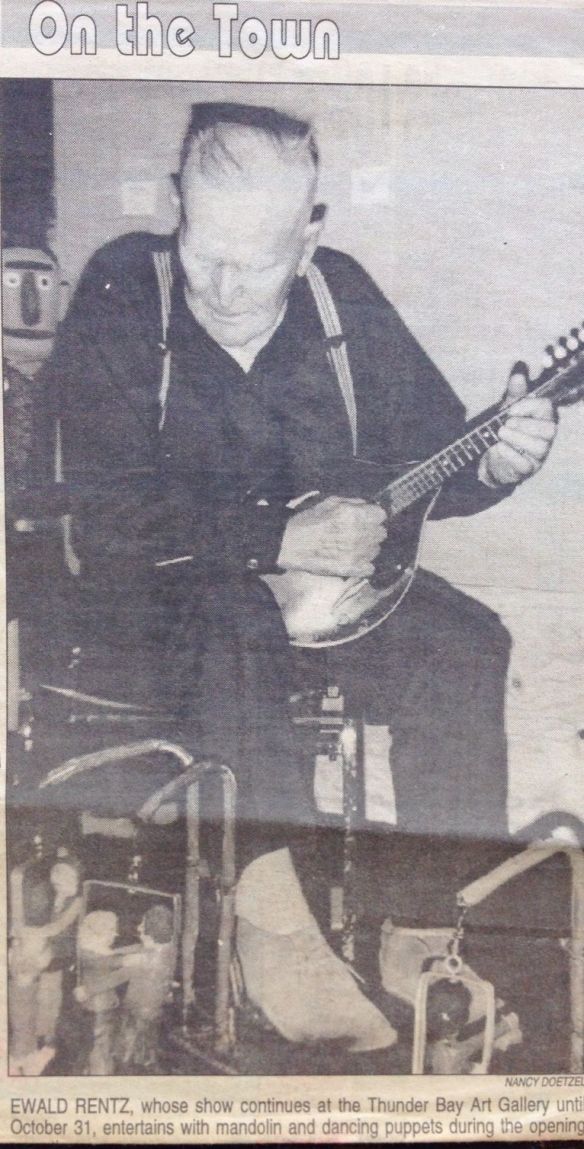
Rentz performing at his opening
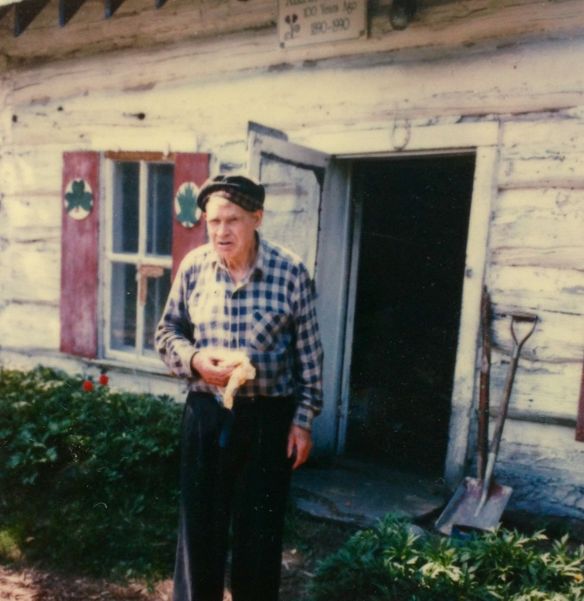
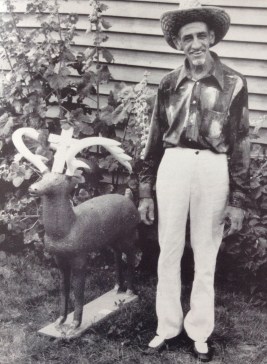
I was just going through some papers and found an article about Beardmore, Ontario folk artist Ewald Rentz written by Canadian humourist Arthur Black. We enjoyed listening to his radio programme “Basic Black for many years on the C.B.C., and reading his syndicated weekly humour column. I don’t know how I came by this transcript of a 1994 show he did on Ewald Rentz, but the content is sufficiently interesting that I thought to reproduce it here to add to the (hopefully) permanent record of this significant Canadian folk artist. In looking him up I noticed Arthur Black started his column in 1976 in Thunder Bay, so it makes sense that he would become aware of, and write about a folk artist who lived so nearby. Arthur Black died Feb 21, 2018, from pancreatic cancer at the age of 74. Three time winner of the Stephan Leacock Award for Humour, he will be remembered for his humour, and the large contribution he made to the promotion and documentation of Canadian culture.
“The artist brings something into the world that didn’t exist before, and he does it without destroying something else. A kind of refutation on the conservation of matter.” – John Updike.
You know what’s particularly wonderful about this country of ours? Treasures, treasures everywhere. No matter how humble or unlikely the surroundings.
Take Beardmore, Ontario. Towns don’t come much more humble than Beardmore, with it’s population of a few hundred souls nestled in the bosom of northwestern Ontario wilderness about ninety miles due north of lake Superiors arched eyebrow.
It’s a small town, boasting a couple of gas stations, a general store, a motel or two. Hard to differentiate from any of several hundred other small Canadian towns. You could drive right down the main street, past the grocery store and the barber shop and be back out on the highway before you knew it. Thousands do, every year.
Ah, but they miss the treasure that way. It’s the barber shop on Main Street. That’s where Ewald Rentz lives.
Who’s Ewald Rentz? Well, first off, it’s “Ed” to his friends. He was born in North Dakota, drifted around a bit through Manitoba, but made his way eventually to Beardmore, where he fell in ove with the land and stayed.
And since all that happened back in 1939, folks take it for granted that Ed’s there for keeps.
In his 86 years Ed’s done most of the things a Northerner does. He’s been a miner, lumberjack, prospector, cook, and as the candy-stripped pole outside his place attests, a barber.
Oh yes, and one other thing. Artist. Ed’s an artist. World renowned as a matter of fact.
There are collectors in England who salivate for his work. Curators from the U.S., Montreal, Toronto, and Vancouver make periodic pilgrimages to the barber shop to see if he’s got anything new they can buy. His work is on display in museums across the country including the National Museum of man in Ottawa.
Ed Rentz is a national treasure. And the barber in Beardmore. Ed’s what you call a folk artist. He doesn’t do abstract impressionist canvasses or mobiles a la Henry Moore. Balsam, birch and poplar are his media. His inspiration comes from the bush he’s wandered through for most of his life.
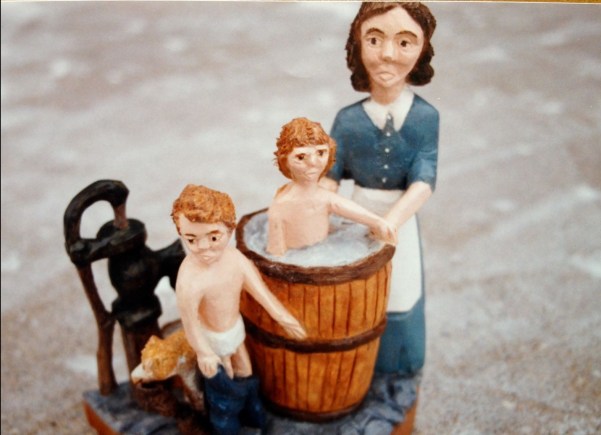
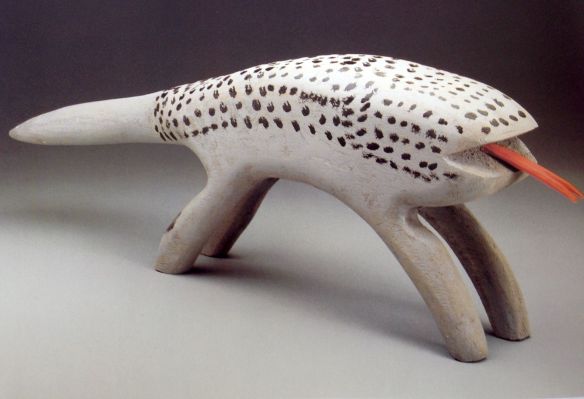
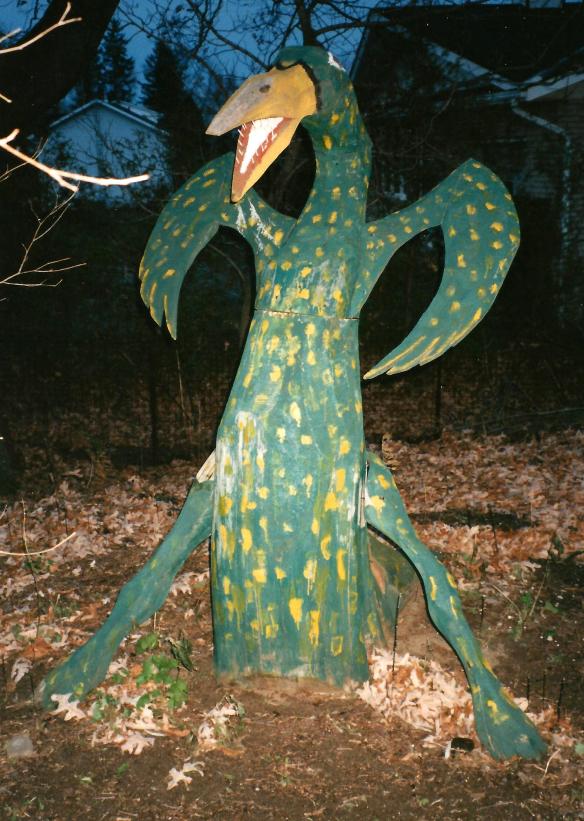
Ed can pick up a chunk of knotted forest debris that you and I would reject as firewood, turn it over in his own gnarled hands, take it back to his workshop and with the help of a knife and chisels, and judiciously applied dollops of house paint, transforms it into the most exquisite and unexpected bit of art – a ballerina perhaps. Or a bear cub. Or a Mountie. Or a great spotted fantasy pterodactyl in full flight, with a man on its back hanging on for dear life.
Ed’s tiny barber shop on the main street of Beardmore is crammed full of his works of wonder. Elves, moose, mermaids, wolves, Prime Ministers.
If you are good, and he’s not too busy, Ed might fetch his step-dance dolls. All meticulously hand carved, out of their special cloth bags, set them on the floor, haul out his mandolin, and make them dance for you.
But have a care. Just because he is a world-renowned artist and an unusually fine chap of 86 winters, doesn’t mean that Ed’s not a working man too. My no. If it’s a Saturday, you may have to talk to him between haircuts. Ed still knows how to give a haircut.
He still knows how to handle knotty customers too – be they balsam or bushworker.
“One time” says Ed, looking at your correspondent thoughtfully, “a nearly bald guy comes in here. I cut his hair. He gets out of the chair and says “wait a minute”. You charged me a buck when I only got a little bit of hair?”
“I told that guy” continues Ed, “I didn’t charge you a buck, I charged you twenty-five cents to cut your hair.
“And eighty cents to look for them.”

Arthur Black
 By the mid-nineties we were doing a lot of business with Quebec collector, Pierre Laplante. He was, at the time a very successful dentist, and determined collector of Quebec antiquity and contemporary folk art. A very good fellow who we enjoyed meeting up with every few weeks at his country home, where typically after a good meal and a little wine was consumed we would inevitably end up in his converted machine shed, which was stuffed to the walls with wonderful things, so that I might buy some of what he was prepared to let go of. At the time he was keeping five or six pickers busy full time in an attempt to find him the “all” of the best pieces available. They would bring in full truck loads and he would usually buy everything to get the best price, and assure their dedication. He would sell me all the stuff he didn’t want to keep at very reasonable prices, and that kept me coming back. His appetite was voracious and he rarely said no so there was a lot of stuff arriving. For a couple of years before we both slowed down we did a lot of great business together.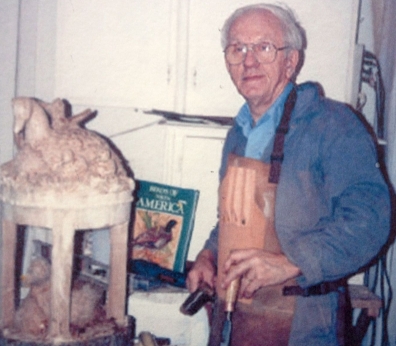
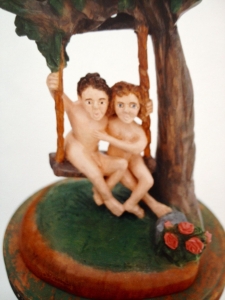 Rene Dandurand’s carvings are worked in one piece from a solid butternut or pine block. Some early works are left bare, showing the grain, but most are painted by his wife Julienne, an excellent colourist, after lengthy consideration of suitable colours. Although Dandurand’s children supplied him with a full set of carving chisels, he prefers the familiarity of his two or three ordinary old knives.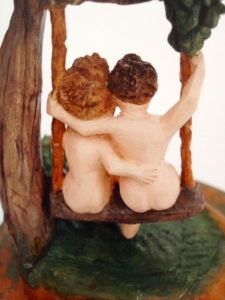
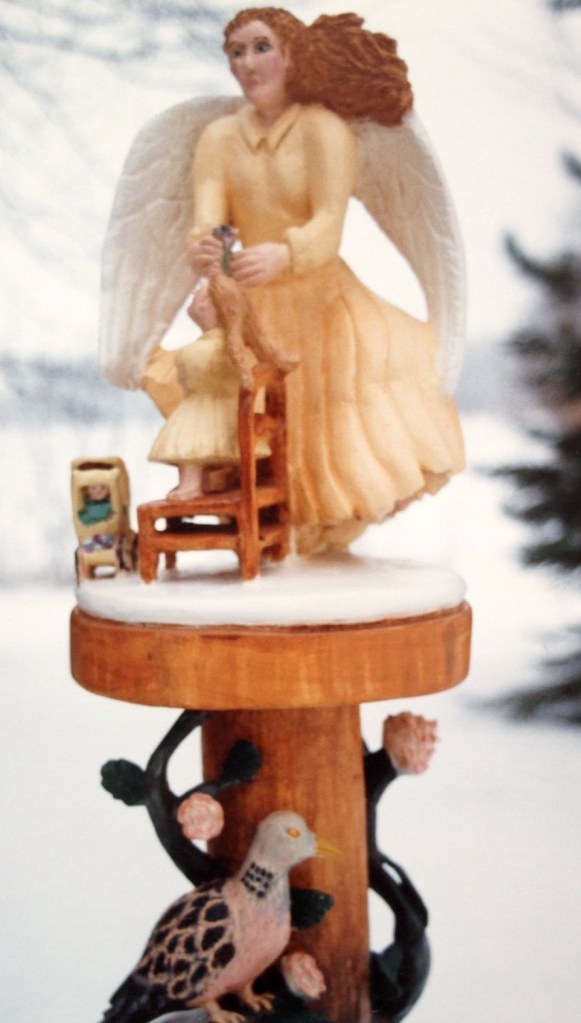
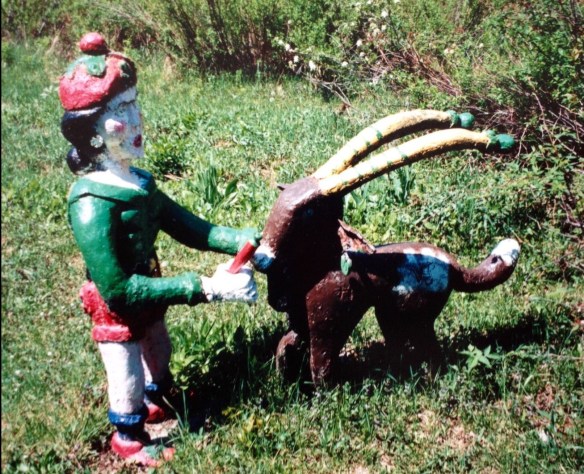 In retrospect, “no slouch when it comes to art” sounds a bit flippant, when I was meaning to suggest that “no slouch” is an understatement. I had and have great respect and admiration for her taste and instincts, and her contributions to the world of folk art. She was also very nice to me when I was a stranger in the midst of the dealers at the Outsider Art Fair in 1996.
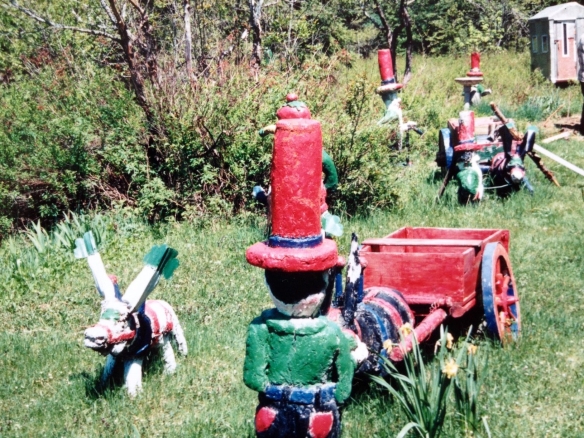 Phyllis was interested in the fact that Billy had created his own “wooden” version of Stonehenge in his back forty, and that he occupied it with many Irish leprechauns, and zodiac figures he had created in cement. She imagined having all the work in her gallery, in a type of recreation of Billie’s world. We excitedly talked on about it a bit more, and we agreed that I would look into it when I got home in terms of interest on Billie’s part, and the logistics of getting all that cement to New York.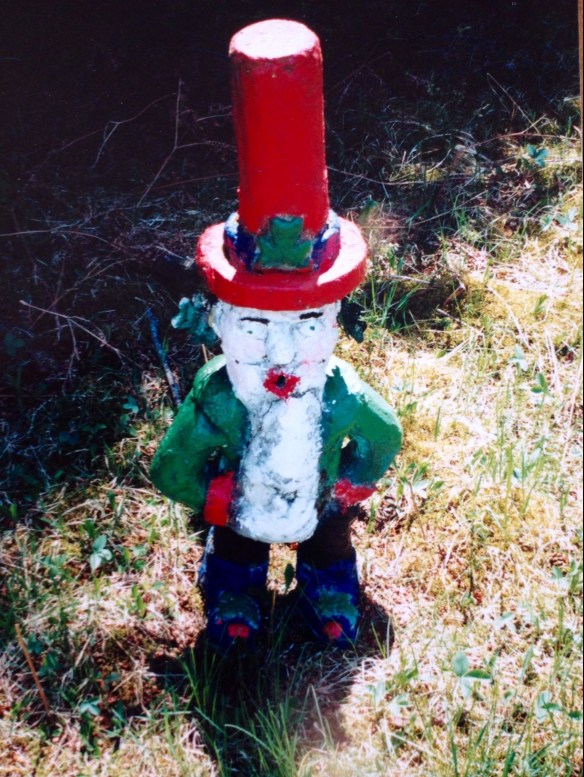
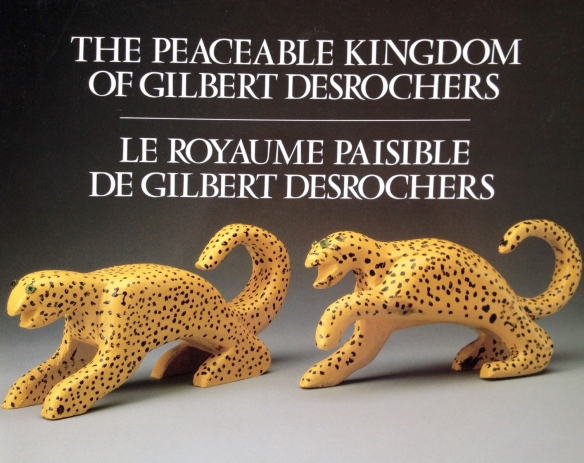
 Gilbert Desrochers was born on May 2, 1926, in Tiny Township. The fifth child in a family of six boys and one girl. His father Thomas owned a farm on the eighteenth concession, overlooking the bluffs of Thunder Bay Beach. He only attended school for two years when his mother died, and he went to work with his father and brothers on the family farm. “I wasn’t much good in school” he recalled. “I didn’t learn much. I went to school only to smoke. And I slept. I was always so tired that I fell asleep. I had no notion about school. I had only work in my head. I figured that work was easier than school.” Our father couldn’t read or write either and said “it’s just as well that you are like me. Come work with me in the woods.” “My father had two hundred sheep, and we took care of them. Also nine cows, three horses, chickens and pigs. In the winter we would cut wood all the time. We didn’t have a power saw so me and Joseph would cut wood all winter. It was a lot of work with cross-cut saws and Swede saws.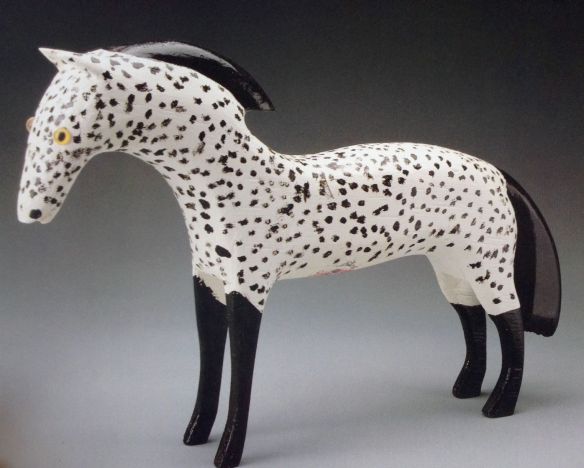


 shadflyguy