Unknown's avatar

About shadflyguy

Owner/ operator of Shadfly Antiques.

With a little help from our friends – Closing Shadfly

last day sale

last day sale

Today, September 30th marks the one year anniversary of the sale of the Shadfly Antiques building, and as it happens the 11th anniversary of our purchasing the building in 2005.  We had a great run of it, and loved having what we considered to be a great little antique shop, but the upkeep of the building and dealing with tenants had taken it’s tole on our enthusiasm, not to mention the downturn in the antique business.
last day sale

last day sale

As planned, we did a review of operations at the end of 9 years of operation, as well as hiring a professional building inspector to look over what needed to be done to the building, and when we looked at the figures we decided we it was time.  We bought the building reasonably and did not have to invest much money to set up two upstairs apartments and the main floor shop.  Not much money, but a lot of time and effort, and the building had been “good to us” for nine years, not requiring any major repairs, but it was getting harder to find good, reliable tenants, and when a blocked sewer pipe cost us $1,200 to repair with a warning from the plumber that it might soon need to be totally replaced at an estimated cost of $12,000, we started to get nervous.  Then the building inspection presented many more problems like an impending roof replacement, etc., so we took the practical step to get out before a large investment would be necessary.  We priced it reasonably and it sold within two weeks.

last day sale

last day sale

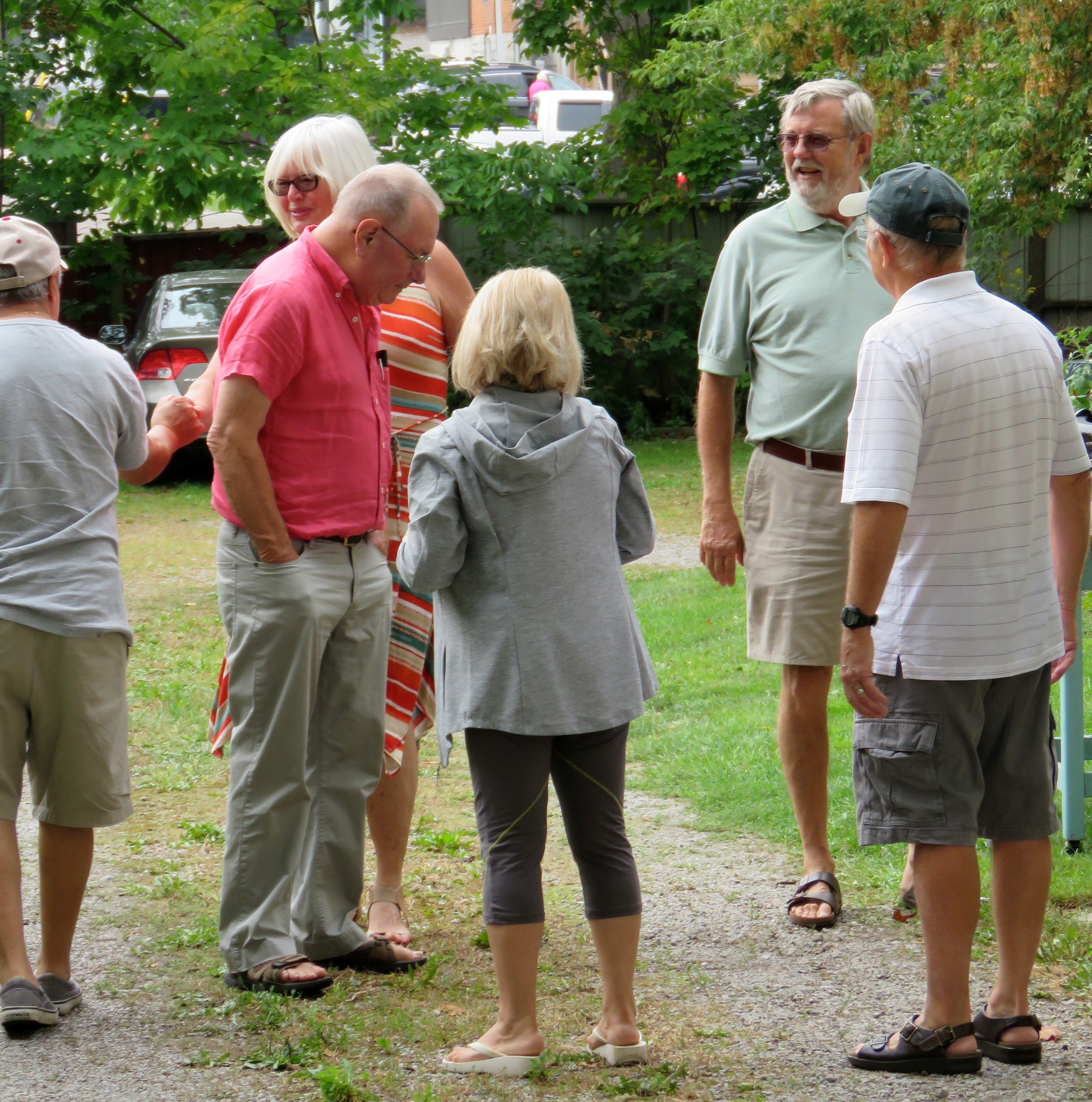
We were able to establish a four-month period before the deal closing, which allowed us time to clear the larger stock, and move the smalls and folk art which we would continue with on-line into the basement of our house next door.  It was a very busy four months I can tell you.  My side-kick Albert and I had a lot of cleaning up and painting to get the basement presentable, and there was all that furniture to move.  We held a big clearing sale for the month of August with a last day celebration and sale the weekend of September 6/7 which was a great successful in terms of sales and saying goodbye to our many local friends and customers.   I can attest that nothing improves sales like closing shop.  We were motivated sellers, and many realized that it would be their last, best chance to score a few items that they had been eyeing over the years. It was a great last day. A mixture of joy, celebration, and a little sadness; and when it was over we closed the door for the last time and started to take apart the shop in earnest the very next day.

last day sale

last day sale

fullsizerender1

Paul moving books

We chose Tuesday September, 22 as the day to move the remaining stock from Shadfly to our basement, planning to take the remaining stock the following day to a storage unit which we decided we would need for a couple of months to deal with the surplus.  We were surprised and delighted when hearing of our plan, some friends offered to help.  People can be so wonderful, can’t they? It’s one thing to have a couple of buddies help you move to your college digs.  It’s quite another at our age to be slogging heavy boxes. Many hands do indeed make for light work.  Jeanine and I spent many days packing so that on that fateful morning when 6 friends, as it turns out, arrived all we had to do was get everything from point a to b.  We thought this might take until about 1p.m. and then it would be pizza and beer, and thank you folks, but we were so efficient that when 11 o’clock rolled around everything was moved over, and instead of quitting, our friends decided that they would continue and would help move the three truck-loads of items to the storage unit.  What a team.
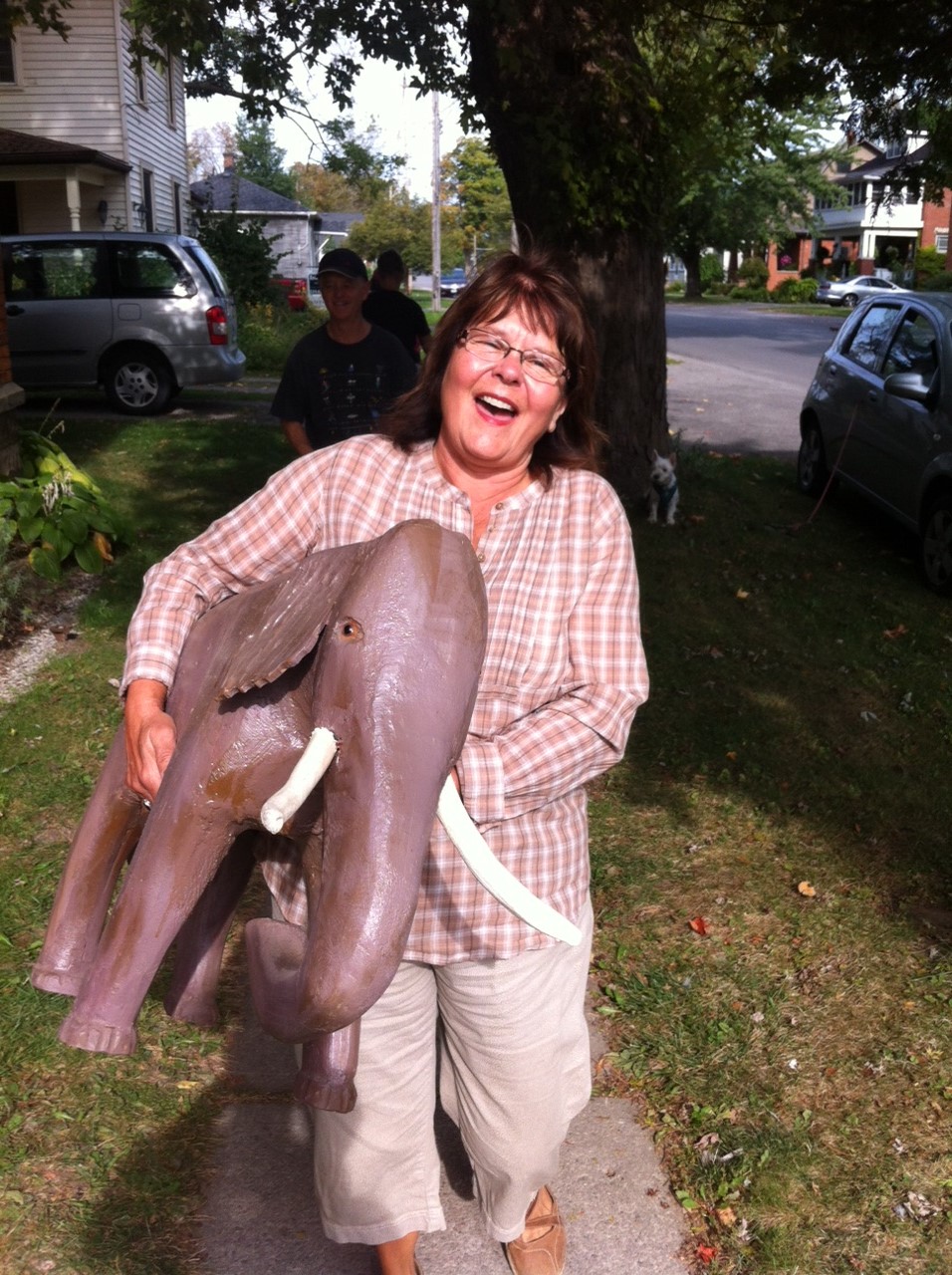
Carma and her new friend

Carma and her new friend

There was a natural and relaxed order to things. A person received the boxes in each of the basement storage rooms, Albert got everything down the stairs, Jeanine and I loaded people from the Shadfly end and the rest of just carried things over.  We had considered a “human chain” passing the boxes from hand to hand but it was rejected as a concept being too hard to keep the timing right, and with too much passing of things from hand to hand.  The difference between theory, and practice.  It was a beautiful morning.  The crew remained cheerful; and by 2 p.m we were sitting down to pizza and beer with a warm glow of gratitude and relief filling the room.
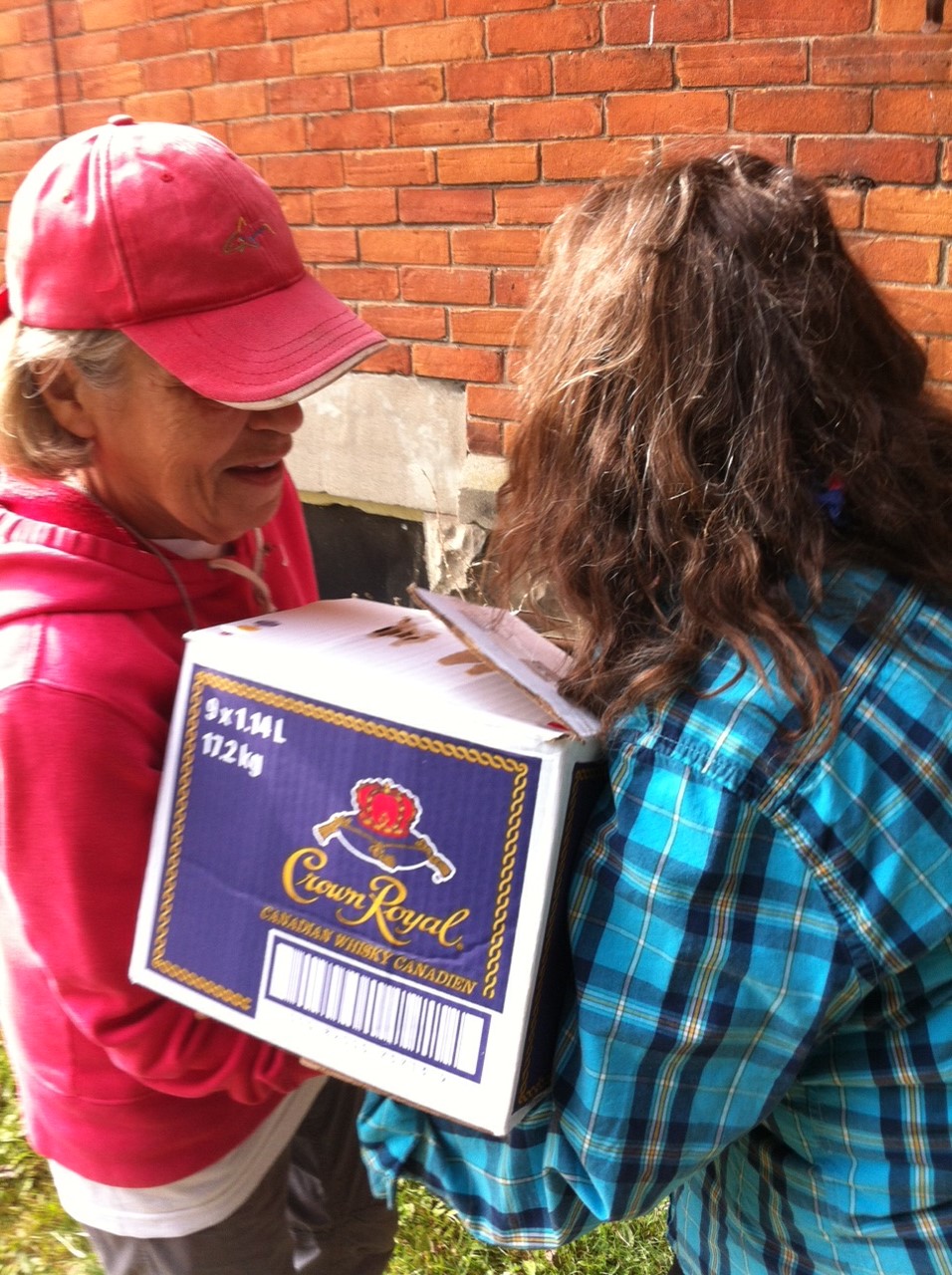
Jan passes to Jeanine

Jan passes to Jeanine

If that wasn’t enough, another friend who coudn’t make it on the moving day, came a couple of days later to help Albert and I move the final things to our garage and clean up the place.

Jan passes to Cindy

Jan passes to Cindy

orangesign

Mission accomplished.  Many thanks and deep gratitude to those involved.  You know who you are.  It is a wonderful fact that in our hour of need, our friends came forward and made what seemed an unsurmountable task, a piece of cake.  We’ll get by with a little help from our friends, with a little help from our friends.
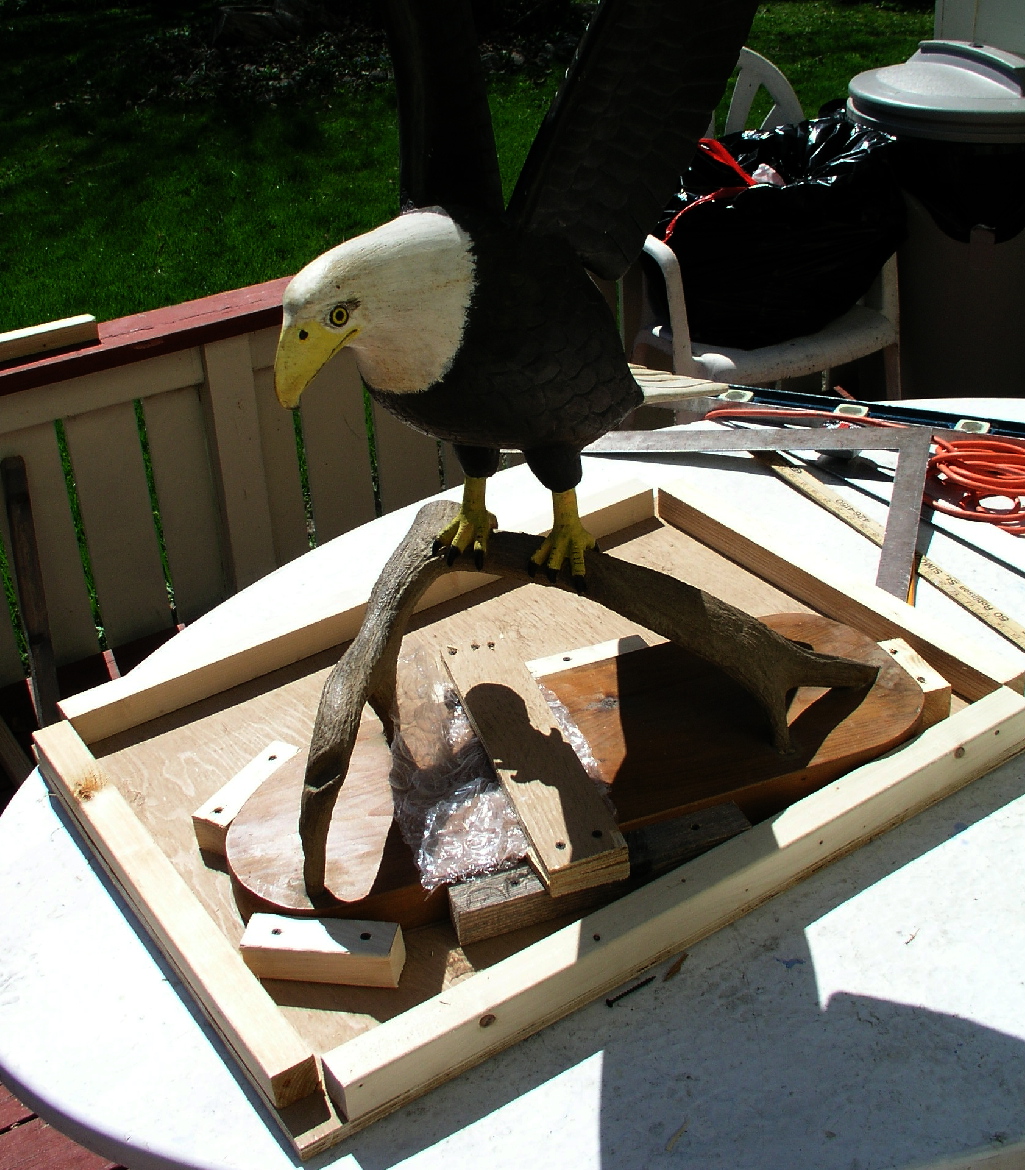
The Eagle has Landed – adventures in shipping

step 1 -secure to the base

step 1 -secure to the base

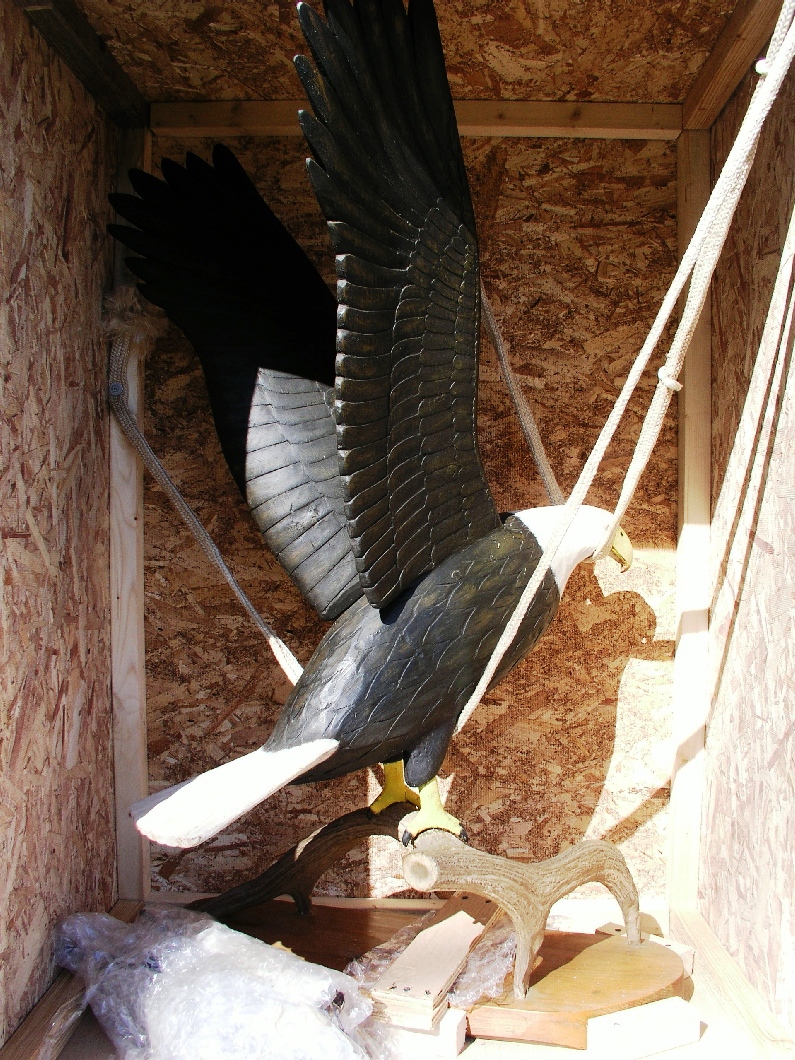
Every once in a while it is good to take on something that is clearly out of your range of ability.  Good to stretch, and persevere, and hopefully at a successful end feel that clean moment of well-deserved accomplishment.  It was that theory, along with my inherent desire to please people which lead me to say “yes” to a request to pack and ship a delicate and fragile piece of folk art to a buyer in British Columbia. A friend and regular customer from Victoria had built a nifty addition to his home and he spotted on my Collectivator web page a large spread winged carving of an eagle, perched on an antler no less, and decided he had the perfect spot for it above the entry door.  The carver balanced the heavy wooden body on two life-sized (read small) wooden legs and did not do the standard trick of adding a separate brace to the body.  These braces always detract from the piece but are almost a necessity to insure the piece will not break when moved.  I loved the way the piece looked but it was always my hope that someone would come along to the shop and buy it, and I could help them carefully wrap it in a blanket, place it on the back seat of their car and wave bye bye. No such luck.  It was flying to Victoria.

step 2 - frame the box

step 2 – frame the box

My initial thought was to hire a professional art packer and shipper, and pass off the responsibility of getting it there to a professional.  My friend, Dennis is easy going and didn’t mind paying for services rendered.  However, when the quote came back at $950, we both baulked and decided there had to be another way.   I have packed many things over the years and I am pretty good at it, with only a few pieces of broken pottery clouding my record, and so after exhausting any possibility of finding someone who was driving that way and could take it, I offered that I would do my very best to pack it and get it there, with the understanding that if something went wrong and it was broken in transit, Dennis would look after getting someone local to repair it.  Of course if this happened it would be a real pain to find someone with the necessary skills, and there would be no guarantee that it would ever be “as good as new”.  Still, I knew that if I took my time, and didn’t scrimp on the materials, Lord willin’ and the creek don’t rise, etc.  So with a gentleman’s agreement in place, it was time to pack the eagle.

step 3 - add three sides

step 3 – add three sides

One good bit of advice that I have always followed is that when you find yourself out of your element consult a professional. One advantage of an antique seller’s lifestyle is that you meet and get to know people in every profession.  It happens that I have a regular customer and friend named Paul in town who is a retired engineer. I knew I was in luck when soon after he came into the shop with a buddy who is also an engineer, and moments after my introducing and requesting assistance on the project, he and his pal were measuring things up and drawing diagrams.  Paul was on-board, and I had a short list of materials to buy, and a commitment for the following Saturday morning to build the box together out back of Shadfly on the porch.

We knew that the crate would need to stay in an upright position, but also that it may be tipped up or rocked about in shipping.  The 42” wide wingspan could not be pressing against anything, and the whole thing would need to be fixed down to the box so it could not shift around.  Then there was the weight and delicate balance of that heavy body on those tiny wooden legs.

step 4 - install rope supports

step 4 – install rope supports

Step one was to secure the base of the sculpture to the bottom of the box preferably without marking it up.  We screwed down blocks on all sides and then screwed down a piece which went straight across the base thus locking it down.  We attached 2”x4” skids so it could be lifted with a lift truck. We then built the 2”x2” frame up from the base which would hold the sides, putting the top on temporarily to keep the structure square.  Next we put on three of the sides. With three sides on, we next affixed two wide, soft nylon, flat ropes.  One under the belly, the other under the chin of the bird.  These allowed for a slight amount of movement but also continuous support.  On with the fourth side and taking the lid off we then filled it from top to bottom with Styrofoam chips and a layer of foam on top.  When the top was secured, she was ready to go.

step 5 - fill with chips and foam

step 5 – fill with chips and foam

I had been calling around to CN, Fed Ex, etc. before a friend told me to call a company called “Just ship it”.  They compare all the various carriers for you and advise you on who’s best.  I called up and a very helpful woman took down the particulars. Within a few minutes I received an e-mail from her suggesting a couple of alternatives.  Although it was a few dollars more than Fed-ex she recommended I use Day and Ross because they have a better reputation for being careful.  The total cost was less than $300, and the piece would arrive within five working days.   She suggested that I could go on-line to their website and complete the order, but did not mind when I asked if she could just go ahead and do it for me.  Sometimes these registering procedures can be complicated and not always successful using my then out of date browser.  Within minutes she sent me the papers I needed to attach to the box and the pick-up was ordered.  “When can I expect them?”.  “Oh, it will be today, probably this morning”.  Really? That soon.  So I hung up the phone, printed and filled out the papers, had a coffee, and set off next door to Shadfly to finish the prep.  To my total surprise there was a Day and Ross transport parked in front of the shop.  “Are you here for a pick-up?”  “Yes, I have an order  to pick-up at Shadfly Antiques.”  “That’s amazing.  I just got off the phone, and you are already here.  How did that happen? “well, I just happen to be in town picking up at another place and the order came through on my phone, so here I am. Just lucky I guess” “Great, well you will just have to give me a couple of minutes to tape on these labels and it’s all yours.  Nice fellow. No problem, he got his truck ready while I set to work with the labels and fifteen minutes later the big crate full of eagle was sitting in the front of an otherwise empty 40’ van.  He secured it in place and gave me his assurance that it would be looked after.  “It will be back at the warehouse tonight and will be put on the truck for B.C. in the morning. They’ll keep it upright and be gentle with it. Don’t worry” Easily said, but I did worry of course.  I was delighted four days later to receive a picture from Dennis entitled “snow in summer” because of the waves of Styrofoam chips surrounding the opened crate.  There in the middle of it, looking exactly as it had when it left was the eagle perched precariously on an antler.   Dennis managed to get it in the house and mounted without incident. A big sigh of relief all around.

step 6 - the eagle has landed

step 6 – the eagle has landed

“It’s not saleable!! It doesn’t get made in a minute” – The art of Edmund Chatigny

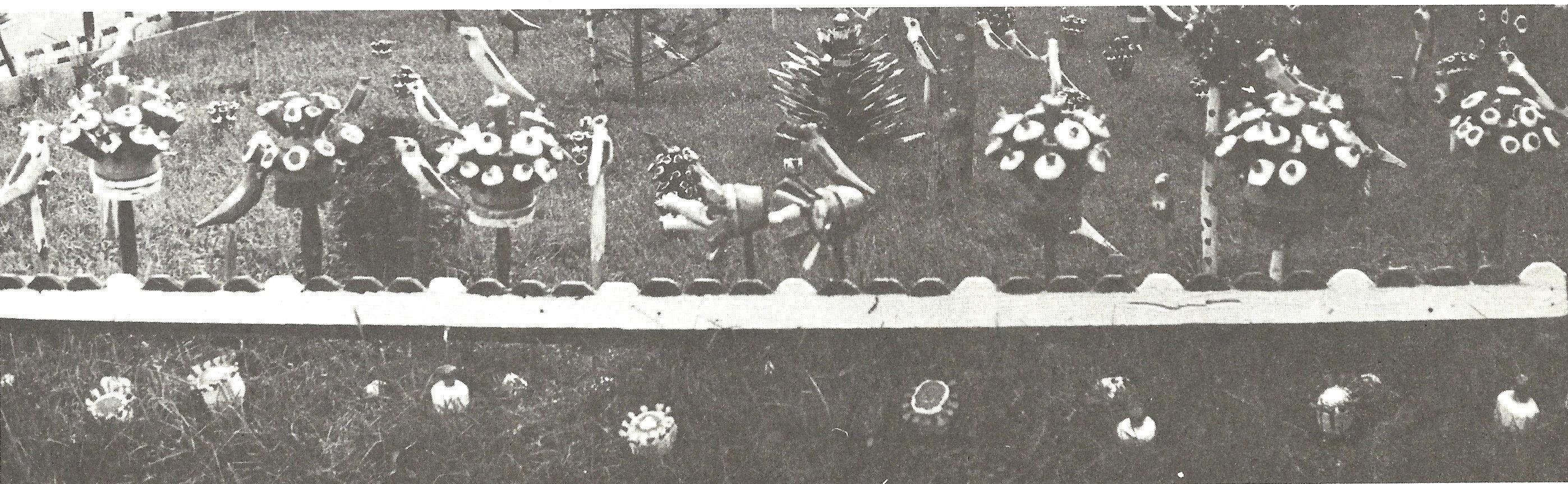
chat4We unfolded ourselves slowly out of the truck after the grueling ten-hour drive from our home in Wyecombe Ontario to Alan Chauvette’s picking barn near Victoriaville, Quebec.  We were met by a particularly animated Alan. He was excited, even for Alan who tends to run a little hot.  “What perfect timing.  I’ve got something exciting to show you.  Follow me to my house and we’ll come back here after”.   Ten minutes later we are entering Alan’s back yard and everywhere you look there are chip carved, splatter painted, flowers, birds, and other wildlife generally with a large figure at the center and a multitude of smaller components coming off in every direction.  Wild.   The total affect was that of a fantasy garden.  We were mesmerized. chat5

“They were all made by this crazy old guy in St. Isidore de Beauce who covered his yard completely. He’s gone into the retirement home and the family is selling the house, so I got them all.”  We were still looking around trying to take it all in.  “As you can see there are hundreds of pieces and I am selling them all as one lot. None of this picking the best, and leaving the rest.”  I was almost afraid to ask the price, but had to.  Alan gave me a serious look and a number in the high four figures. It was pretty much what I expected due to the quantity, but the first thing that sprang to mind was “We think it’s wonderful, but I wonder if anybody else will.  This is pretty eccentric stuff.”   We looked at each other for a moment, then I said to Alan.  “We’ll discuss it on the way back to the barn and give you an answer there.”  That was a pretty intense ten minutes that followed. We both loved the work, and “got” that his complex assemblages which could be reconfigured in different ways and still ‘work” was an exciting concept.chat1  Still, it was a lot of money to put down on an unknown horse. We talked it out and as we pulled in we concluded “What the hell. Let’s trust our instincts and do what we are here to do, so it was all big smiles and laughter, as we concluded the deal.  There were a couple of pickers standing nearby that we saw regularly, and they laughed at us.  “They’ll be burying you with that stuff”.  We didn’t care.  We owned the entire contents of Mr. Chatigny’s yard, and although we had never heard of him, we knew that it spoke to us as so few things do in this life.  We were half way home, somewhere around Brockville before we started to question ourselves.  We needn’t have.  Within a month we had sold enough to pay back our investment, and there was still a good half left.chat2

Edmond Chatigny was born in 1895 in St. Isidore de Beauce, Quebec. He was creative from an early age. “When I was young I used to take a knife and whittle.  My mother used to say “I think you could end up making something”.  He became a farmer. Married and had thirteen children.  Then the day came when he retired.  “When I was on the farm I used to work hard, then when I retired I had nothing to do and I became bored. That’s what decided me to start making little things – wooden flowers, birds, then all kinds of things. I do it with a little saw and a pocket knife.chat7 Sell them? They are not sellable. They are not made in a minute. It’s all green, white and red with a little brown. This year I think I am going to put a lot of green and white.  In the summer when I cut the grass, I clear them all off, then I put them all back.  It takes two days.” chat3

Although I never met M. Chatrigny, I am sure that it would bemuse him to hear me say that I think he was a uniquely innovative, and an important artist in his own right; and since I first laid eyes on his work, until present day, he remains one of my favourites.chat8

Remembering the Marjorie Larmon auction

Lot #197 selling price $75,000

Lot #197
selling price $75,000 Cigar store Indian, 2nd half, 19th cent.

This September 23 marks ten years since the historic clearing auction of the Marjorie E. Larmon Collection.  Based on Marjorie’s reputation (discussed in my blog of July 29), there was enormous anticipation building up to this one-time event.  The buzz continued to growing since the announcement of the auction months before, and it was clear that they would need the full capacity of the Simcoe Curling Club where it was being held.  By the time the Friday preview arrived the atmosphere was electric, and the place was crowded with dealers and collectors closely examining and considering their items of interest.  Whispering to each other. Some with poker face. Others unable to contain their excitement. Everyone jotting down little notes in their catalogues.  I noticed some dealers gathered in a quiet corner, privately sorting out how they might divide the spoils by not bidding against each other. Kidding themselves really, into believing that this may help against this determined crowd.

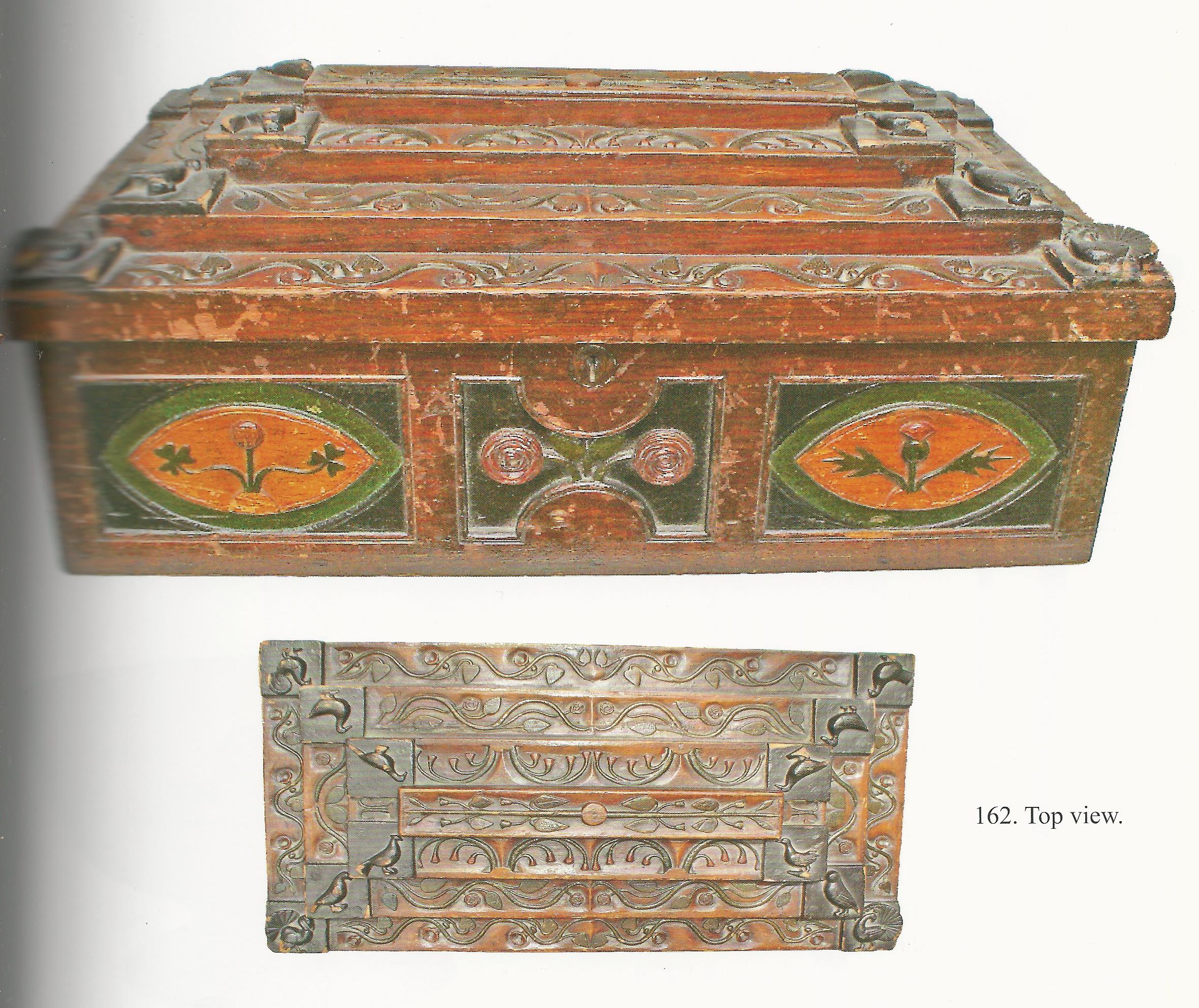
lot # 162 selling price $40,000 artist's box

lot # 162
selling price $40,000
artist’s box

Our strategy at auction previews is to focus first on the work, and leave the chatting until later.  This is tougher than it sounds in a room full of people you like and who rarely, if ever turn up in these parts.   I find it best to have a short friendly exchange and then be upfront with a “let’s get together and have a visit once we’ve finished looking.  I can’t wait to see the stuff”.  Most people are relieved because they are feeling the same.  And so it was that after a couple of hours of inspection and note taking we spent another couple of hours just getting caught up with old friends.  Many of whom we invited to drop by the following day after the auction, for a beverage and commiseration on the porch.  We had no idea who would want to take the time to come by rather than beating a path home, but we realized that there would probably never be another occasion when so many of our dealer and collector friends would be drawn to our area.  With the help of our daughter Cassandra, and her husband Anson who were also attending the auction, we got a lot of snacks together, and brought the giant metal wash tub for ice, and the folding chairs up from the basement to the porch.  We spent the evening discussing our wish list, and our strategy.

Lot #104 selling price $24,000 60" x 41", Perth County, 19th cent.

Lot #104
selling price $24,000
60″ x 41″, Perth County, 19th cent.

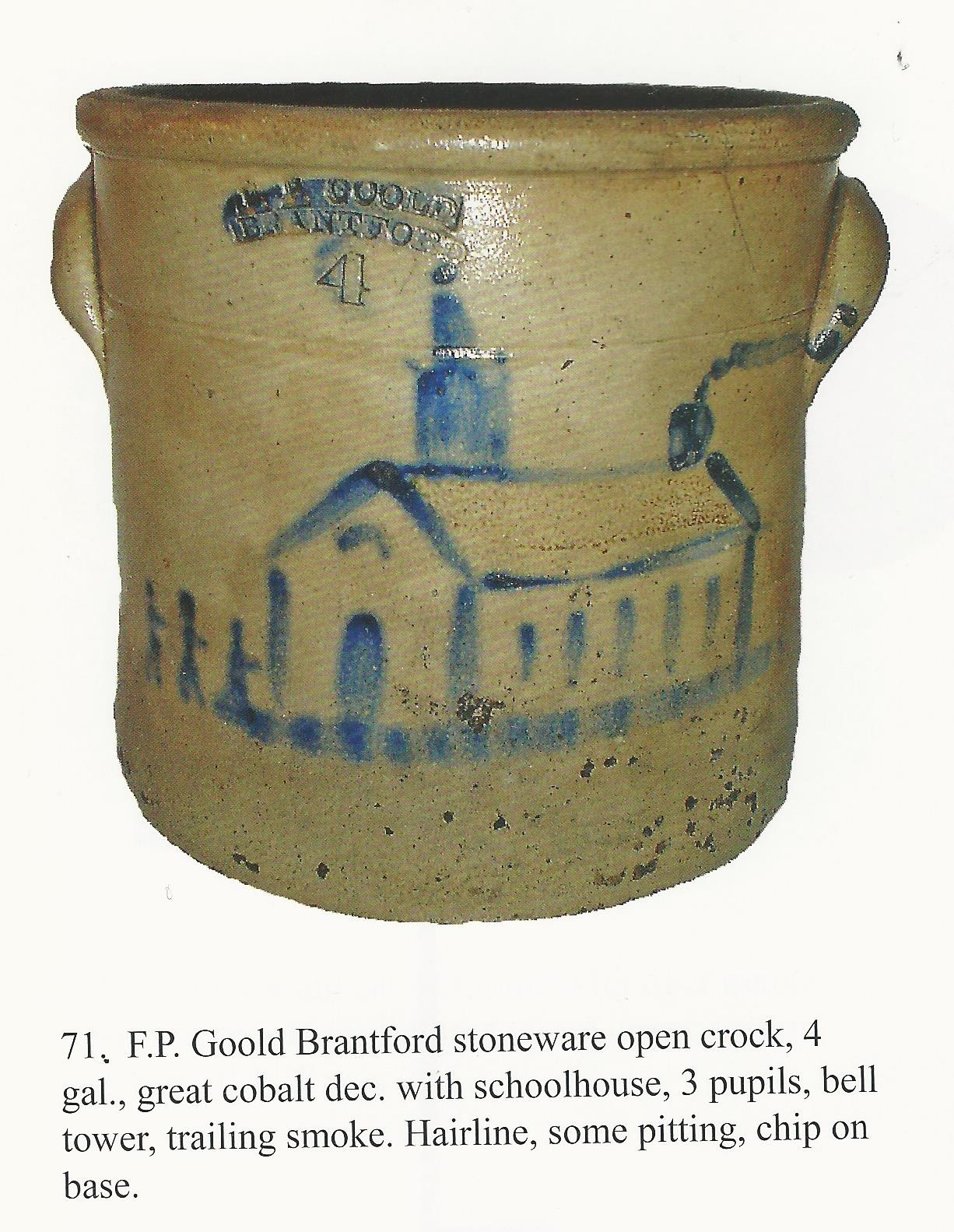
lot#71 selling price $24,000 F.P. Gould, Brantford

lot#71
selling price $24,000

Basically we didn’t feel we would be buying much for resale.  We would watch for things that may fall through the cracks, but it was unlikely for this to happen often given the overall quality of the items, and the hyped up crowd determined to take something home of Marjorie’s.  We would keep our eyes open, but decided to focus on a half dozen things we would love to add to our own collection.  Realizing we would be happy to get one or two of them.   We didn’t want any of the big furniture for ourselves, so we decided to focus on a few smaller items like hooked rugs Lot 128 an 1888 rooster, and lot #104 a rug with five black cats, Also lot #162, a spectacular poly-chromed artist’s box, and lot #101 a beautiful example of a Ceinture fleche or Assumption sash from Quebec.  We loved the Pirate weather vane dated 1846, lot # 74, but most of all we loved lot #217, described as a pair of folk art carved and original painted pine figures, a face and upper torso of a white man, and a face of a black man with a hand below. They were attached as pilasters to an old chest of drawers and were thought to be from Quebec.  I didn’t much mind where they came from, I just thought and still do that they are extraordinarily beautiful and mysterious objects.  Plus, they were obscure enough that I imagined they would have limited appeal, and so we hoped that we could get them for four or five thousand dollars.  Tops.  I mean with everyone fighting over the cigar store Indian and the chair table who was going to notice “our” little men.  That is what I dreamed that night.

Lot #74 selling price $24,000,

Lot #74
selling price $24,000,

At 9:30 on that fateful morning, we were seated in our chairs, catalogues in hand, coffee at our side, ready to roll.  So were a few hundred other people.   Marjorie was seated front and center, ready to observe and keep track of who bought what.  The auctioneers Jim Anderson and Jerry Brooks kept their opening comments short and sweet, and so after a big round of applause for Marjorie we were away to the races.  Within minutes the pattern was set.  Every important item realized astronomical prices.  Even most lesser things went through the roof.  It was relentless. Our first targeted item #74 the pirate weather vane realized $24,000.   By the time the Ceinture fleche sold for $13,500, and the cat rug sold for $24,000 we could read the writing on the wall.

lot# 101 selling price $13,500 Ceinture Fleche, Quebec, c1800

lot# 101
selling price $13,500
Ceinture Fleche, Quebec, c1800

Then the 1888 rooster rug sold for $15,000, and we gasped along with everyone else when #162 the artist’s box sold for $40,000.  Over the afternoon we did managed to buy a few pieces of tole and pottery, and a couple of rugs for resale but in terms of our own collection our last hope, and greatest wish was #217 the strange painted men.  As we soon learned, out projected hammer price of $6,000 was wildly optimistic.   Things looked good as the bidding began and there was a point where I thought we might get them for $3,000.  It seemed there was just us and a couple of other bidders, who seemed to stop.  Then a painfully long stretch of “do I hear $3,500. Someone give me $3,200.  Are there any further bids?”  My heart was pumping.   “Any advance on $3,000?” Going, going…. and then from the back I hear “I’ll give you $3,200.  Well there you go.  It was a new bidder. An American dealer I knew from New York who had been laying in wait.   I was disappointed, but not defeated as Jeanine and I had already upped our projected top bid to $10, 000 based on the rest of the auction and our lack of success with other items.  So away we go.  My preferred bidding method is to bid fast, with just the occasional slow gap right up to my top bid. It sometimes works especially at a local, lower profile auction because people realize you are serious and determined, and the quickly climbing price is intimidating.  It didn’t work here.

lot #217 selling price $14,000

lot #217
selling price $14,000

We said goodbye to our dream at $10,000 plus one bid as planned and then watched as it carried on up between two American dealers to a hammer price of $14,000.  You know it’s true what they say.  You never regret the things you stretch your budget to buy.  You only regret the things you let get away.  $4,000 isn’t much in the overall scheme of things, but then of course there is no saying how far past this we would have to go to get them.  Would my life be more fulfilled if I was able to look at them there on the living room wall every day?  The answer is both yes and no.  I’m not a guy who gets excited by a new car or sports jacket, but I truly do love being around items that inspire me so yes, but I am also happy enough to reach a predetermined point and walk away.  You can’t take any of this stuff with you contrary to what the Pharaohs believed.

About thirty people came back to the house afterwards and it was wonderful to compare war stories.  A lot of laughs and comradery, and a fair amount of B.S.   It was a special day in many ways. For the genuine feeling of community, and because it would be the last time we would be together with some of the dealers, who have since passed on.  I wish I had taken some pictures.  I was too busy just living in the moment. It was a great moment.

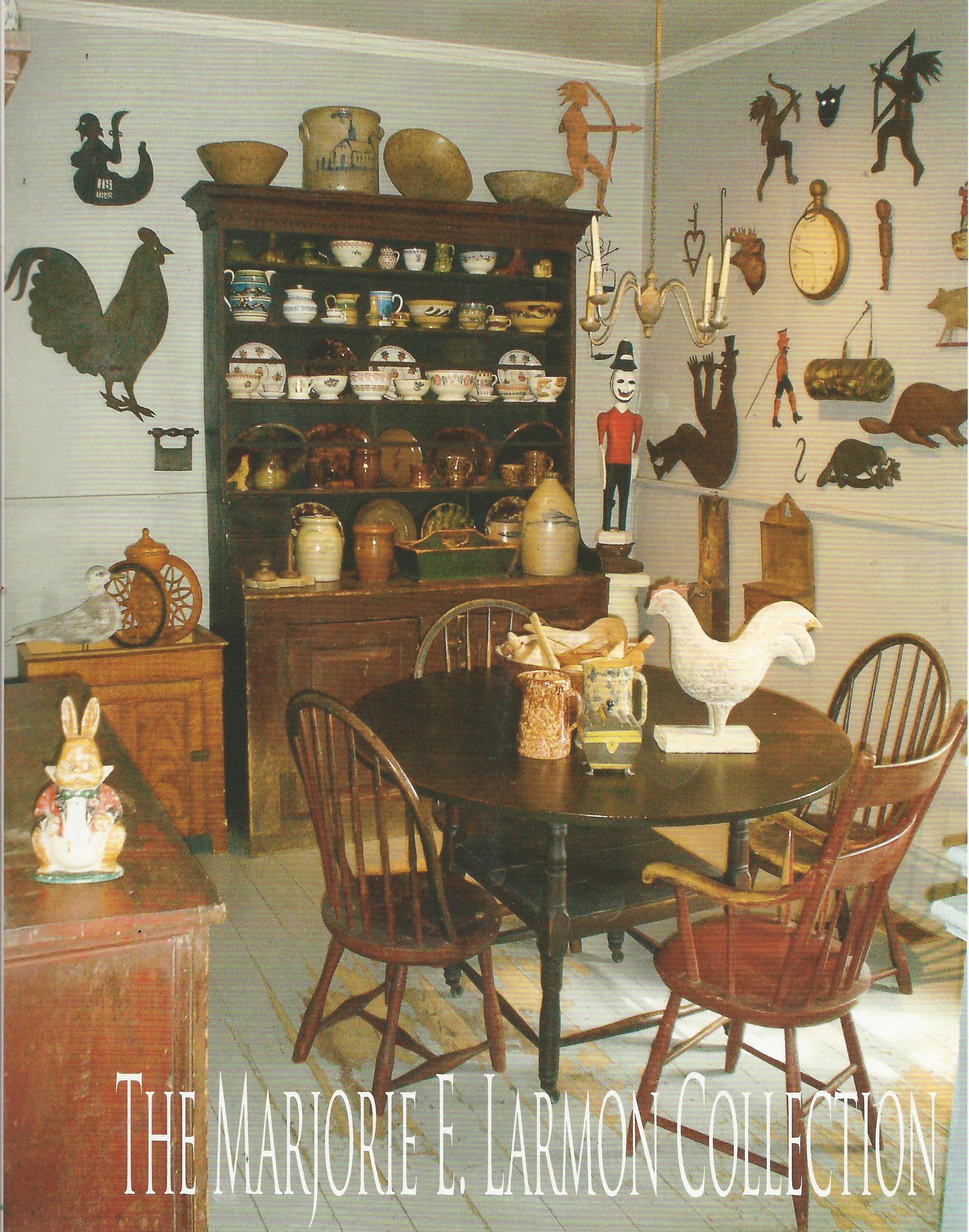
auction catalogue cover

auction catalogue cover

Looking back at over twenty years at the Christie Antique Show

Me (looking really heavy), and Jeanine  in our booth, mid nineties

Me (looking really heavy), and Jeanine in our booth, mid nineties

The Christie Antique show is coming up on Saturday, September 10th at the Christie conservation area near Hamilton, Ontario.  It is Canada’s largest outdoor antique show and draws thousands of people to both the spring and fall shows.  It was started in 1988 by Jeff and Wendy Gadsden in partnership with John Forbes, and a few others investing.  I remember everyone getting excited about the prospect of a new outdoor show in the Golden Triangle area.  At the time the Flamborough Antique show held nearby, also in the spring and fall by promoter Bill Hogan was the only large outdoor show, and it was uncertain how this new show would stack up.  We liked the fact that it was a one-day show held on Saturday so we didn’t need to miss the Harbourfront market in Toronto on Sunday which was still going strong. Also, Christie is an hour away from our home so we didn’t have to factor in staying overnight at a motel.

From the beginning the Gadsden’s and Hogan ran a tight ship.  There was active vetting and anyone foolish enough to try to pass off a reproduction or junky piece would be certain to be brought to task and made to remove the offending item, or in some extreme cases be thrown out altogether from future shows.  Older folk art was o.k., but mass produced, contemporary folk art was not; especially if misrepresented.  I remember one spring show when Jeff made the dealer next to me return the money to a customer, and accept back an Aime Desmeulles horse that the gentleman had bought for a large sum because he was told it was old and rare. He was not happy when someone had told him the truth, and so he went to the promoter’s office to complain.  There was no tolerance for early packing, no matter what the weather conditions.   You could be sure that everything would be on display right up until closing time at five. Load in and load out was carefully supervised.   It was in every sense a well-run show and collectors and dealers alike loved it.

Something is amusing Jeanine.

Something is amusing Jeanine.

Many dealers would come the night before to set up their tents, and then settle in for the night so they would be ready for the morning rush.  This continues to be the case.  You could not unpack your stock, so in the evening there was a fair amount of partying and card playing going on.  Not to mention a fair amount of subtle trading and purchasing; everyone being very careful not to be caught as this was forbidden. You were allowed to unpack starting at 6 a.m. and so those two hours before the field was open to the public at 8 was crucial.  Typically, you would do a lot of dealer business during this period quite often selling many of your nicer pieces as they came off the truck.  Clay Benson and others would race around buying, following up leads given to them on their walky-talkies by scouts also combing the fields.  The negotiation was accomplished quickly and when a deal was reached it would be completed later in the day when things had calmed down.  I loved to buy at the show but I would always stay in the booth during this critical period because I was most interested in selling, and the type of thing I buy was esoteric enough that it would still be there later on.   It felt great when on occasion you had sold enough to consider it a successful show before the public had even entered the field.  This was the hay day, and everyone was tuned up for it.

Like everyone else, we had our fans.  Early on, there was not a lot of folk art on the field so folk art collectors made our booth one of their first stops.  These “keeners” were also in a hurry to buy and move on, but many of them would circle back later for a visit.  Things were typically busy until about ten, when it would slow down enough that Jeanine could handle the flow, and I would take off for a couple of hours to comb the field, coming back about every twenty minutes to unload purchases, and check how things were going.  I could tell by the expression on Jeanine’s face as she saw me approached with my treasures if I had some “splaning” to do, as Ricky Ricardo used to say.  I loved it on the occasions when I would quickly sell again something she would flatly tell me that “you’ll be taking that piece to your grave with you”.  But then again she was often right, and we mostly agreed.  She would take her turn after lunch, and it was my turn to hold down the fort, and offer comments on her purchases.  We didn’t have any cell phones or walky-talkies at this point which was just as well.  There’s nothing worse in my opinion than trying to explain and convince another of the relative merits of a piece, talking on your phone in someone’s booth while they look expectantly on. It takes the fun out of it.

For the first several years we had a spot right in the middle of a row in broad sunlight.  It was awfully hot until we purchased a tent to provide shade and shelter.  As helpful and necessary as it was, the first twenty minutes in the morning setting up the wretched thing, and the last twenty minutes at the end of the day packing it, where my least favourite parts of the day. Some swearing was involved as you would inevitably at some point pinch your skin putting the stupid thing together. When Marjorie Larmond quit doing the show in the late nineties she was nice enough to bequeath her spot under a big shade tree to us.  Jeff went along with her wishes, and so after that we had a lovely spot at the back of the booth, in the shade to set up our picnic lunch.  These lunches started out innocently enough, but being French Jeanine kept upping the ante until it became quite a production with tablecloths, a range of excellent cheeses, beverages, etc.  Many friends got in on this, and it became a very pleasant way to spend the slow time after two, until it was time to start wrapping up the business and beginning to pack at five.  We tried to keep it subtle and behind the truck and we made sure that someone was always on duty up front should someone wish assistance. Still some people would give us some very odd looks.  This reminded me a bit of the shows in France where at mid-day, everyone sets the table, and puts out their lunches and bottles of wine and you carry on regardless.  The French have their priorities straight.chri4

We happen to agree with a no packing before show end policy so although we would have our boxes and packaging ready we would wait for the announcement that it was over and it was o.k. to start.  It usually would take a couple of hours at a leisurely pace to pack up and leave.  We were always exhausted, but most often happy and satisfied with our day.  There is a Chinese place we like called “the China King” going into Brantford where we would stop and eat before heading home.  I don’t think Chinese food ever tastes better than at the end of a long, arduous day which also provides the satisfaction of good visits, exciting purchases, and if lucky, lots of sales and a full wallet.

We did our last Christie in 2010 which as it happens is also the last year the Gadsden’s ran it.  Anyone who has attended regularly over the years will tell you Christie has changed dramatically, especially in these last few years.  To everything, turn, turn, turn; so let’s not get maudlin about it.  There’s still plenty of wonderful stuff turning up on the field, and many good dealers.  Look harder and filter out the stuff that grinds on your collector sensibilities.  You just might find something to cherish, and you’re likely to enjoy yourself.  Quite possibly snag a nice lunch.  We’ll see you there.chri2

“living the dream”, a church full of great stuff in the middle of nowhere

int5

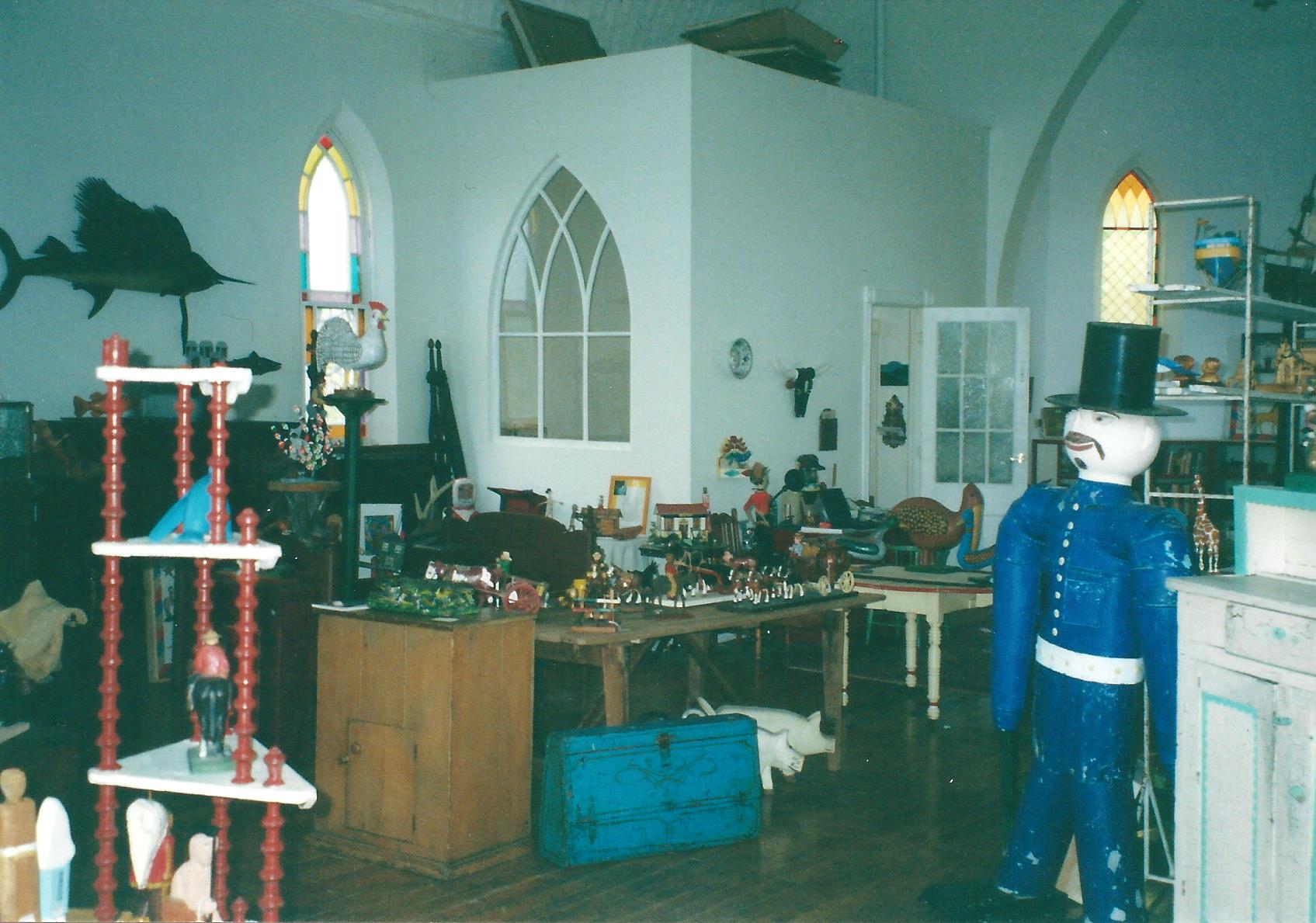
later on when most of the furniture was gone and it was largely folk art

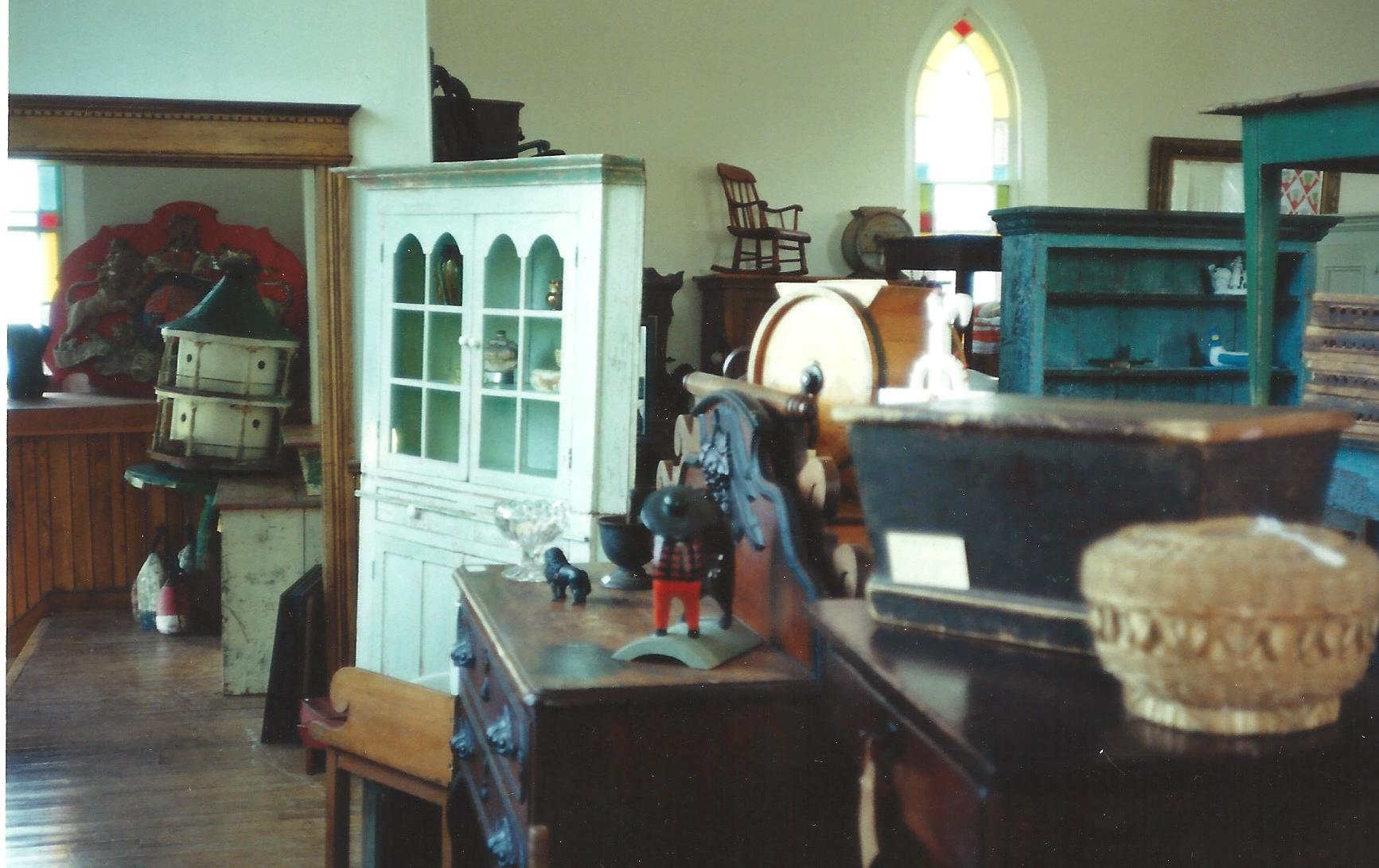
I can remember standing in the partially dilapidated main hall of the old Wyecombe Methodist church for the first time, and thinking “this would make a fabulous antique store.”  It’s 1981 and Jeanine has read a classified ad in the London Free Press about a church for sale in Norfolk County for $21,000.  We decided to take a ride in the country and have a look just for the fun of it. Seemed harmless enough.  Well damned if we didn’t fall in love with the vaulted, 28’ patterned tin ceiling, and surrounding 14’ Gothic windows.  We loved the size, exposure and location of the place and saw the potential; and so in spite of all our friends and family advice against it, we bought the dream.  Thus along with our new alternative life style we began several years of hard labor renovating and maintaining the joint.  We soon discovered why these church halls are typically taken on by a community, and not individuals.  Everything is large scale.  Thirty gallons of paint rather than four.  We loved the challenge. We could see the phoenix rising from the ashes.int6

As life demands, simultaneous to the renovation we began to buy and sell antiques, to meet our needs, and so our main concern was to sell every weekend at the Toronto Harbourfront market. We didn’t think many would find us in the outback and we were happy with the income from the market.  But it wasn’t long before dealers and other customers started to make the trip out to see what we had at home.  At first it was more of a warehouse than a show room, but over the years we refined and added showcases, and shelving and by about 1990 it was usually quite full and fairly organized.  Of course everything had to be dragged up and down the wide, front steps, but we were young and stupid; and didn’t care.  Like many of us at that time who found themselves being full-time antique dealers, it was the alternative lifestyle thing that attracted us. It was more out of an aesthetic interest than any well thought out business plan that the sales room of Old Church Trading came about.  That and the natural tendency for things to pile up as you continue in this business, and thus the need to find some place to keep them.int4

In the fall of 1996 a Quebec dealer friend of ours started to bring huge loads of mediocre stuff to a Guelph auction every other week, and proposed that he also bring along some good things for us to sell for him. Things were changing in Quebec.  We had the room, and had done good business together over the years so we said yes.  It was great.  He kept bringing us wonderful things.  Not a lot at a time, but excellent quality.  We loved to see him pull in.  It was like Christmas.

Our Harbourfront days were now behind us, but with some good dealer trade and with a schedule of about twelve shows a year we continued to go through a lot of stock.  People who had not been by for a while often commented that it was amazing how much the stock kept changing.  That, and it just kept getting fuller.  Cupboards were now in rows and stacked one on top of the other.  I felt proud that it was looking like a Quebec picker’s barn. I loved to stand at the front of the big room and look over the variety of interesting things.  Although visitors were few and sometimes far between, those who made the trip usually were serious and went home with something, or often with lots of things.  We really didn’t advertise all that much, or encourage passing trade.  There was a small sign at the road but that was all.  Most who came were people we knew from shows.  Or people who learned about us through them.  I guess we could have pushed harder, but we like staying a bit out of the way.  Mysterious and a bit aloof.  Not in a “pearls before swine sort of way”, but just by saying “here it is.  We think it’s great.  If you think it’s great and want to take it home, we are happy to help you carry it out. Otherwise, we hope you had a nice time and it was worth the drive.”  You could be that cocky back then.int3

Late in 1997 our Quebec pal’s arrangement with the auction house ended and he stopped coming, so we bought about half the stock we had, and sent the rest home with him.  The market was changing, and so were we.  We were becoming more interested in the folk art, and although I loved the furniture, my back was just about pooched, and the furniture market was slowing, so we decided to downsize and focus on smalls. Oh how dismissive a young me and my colleagues had been watching the “smalls” dealers bringing in their boxes, and now I was one of them.  Less and less furniture came up those stairs.int2

Our daughter Cassandra had left for Queens a few years earlier, so by the year 2000 we started to think about ourselves in the not too distant future being old, and a bit crazy, rambling around the church in old patched sweaters, so we decided that a move into town and a new scene was the next project.  It took us three years to wind down the church and move on to Port Dover, and don’t get me wrong.  We’re happy we did.  But for a while there we were living our dream.  A great shop, in the middle of nowhere, which almost nobody knows about.   Looking back, I can see that it was almost like building a folly.int1

The paintings of Barbara Clark Fleming

bcf1Artist’s Statement:

“All of my paintings reflect upon my country life. Paintings of rural landscapes and different animals, all of which are a link to my past. I was born in 1939 on a 150 acre farm in East Zorra, Ontario, where my father farmed with horses. My mom and dad had no boys, so I became my dad’s helper. As a result of these memories my paintings frequently reflect scenes of haying, threshing, fetching cows, and scenes of country villages.

I never took lessons in painting. I just wanted to put my feelings on canvas. I don’t like painting straight lines, I prefer curves and waves. I do all my painting at home in the country, and I use many different colours. I started painting in 1977 as I realized I had no pictures of my dad’s farm. To keep memories of that farm alive my first picture was painted, and it was entered into the Oxford County Juried Exhibition and won an award of merit. It still have that painting. I did not take my painting seriously until 1989 when an accident prevented me from working full time. I hope that everyone who views my paintings receives as much pleasure as I receive painting them.”

Barbara Clark-Fleming

As mentioned in my previous blog about the Canadian Contemporary Folk Art Festival, it was here in 1994 that we first encountered the work of Barbara Clark Fleming.   Shortly after we contacted her and made our first trip to her home near Woodstock, Ontario.

The first thing we noticed when we arrived at her neat little hobby farm was the pony in a paddock at the rear.  Barbara met us at the door and although obviously very shy was none the less welcoming and told us about her pet horse and her love for all animals.  We then went in to the house to discover a turtle crawling across the kitchen floor, a couple of cats lounging about, and a little white bunny who would hide behind the furniture and hop by occasionally.  We were introduced to her husband Stan, who was stretched out in a recliner chair in the living room.  A very nice man who was by this point very ill and requiring her full time care.  She took us into a little room beside which was her studio. Here she painted on a flat school desk over which hung a large combination lamp/ magnifying glass.  Barbara explained that she is very near sighted and required this set up for the details. She said that the painting was a great escape for her, as she was required to be at home, indoors most of the time. She essentially remembers happy scenes from her childhood and paints them spontaneously. Although she is not conscious of it, this method was and is the essence of what gives her work it’s spontaneous energy,  strength and beauty.. She paints because she loves to paint with no concern for conventional form or perspective. She is fearless and direct and simply works until she is happy with the painting. We love this about her work. We bought about twelve paintings that day and thus began a long relationship with Barbara and her art.bcf3

She looked after Stan at home until his death a couple of years later, after which she got out and traveled around the nearby countryside, observing and documenting those elements of rural life that she still related to her upbringing.  Thus she began to paint Mennonite farms, and old feed mills that reminded her of her youth.bcf4

We believe that the first rule of dealing with folk artists is “Do not influence”.  It is always tempting to “suggest” painting more paintings in a style which you find to be most commercial, but ultimately it is this type of influence which kills the natural wonder and instincts which nurtures an artist’s development. If an artist starts to paint to please you, it is not long before they grow bored and resentful.bcf5

In 1995 we took fourteen of Barbara’s paintings to the summer Muskoka Antique Show and sold all fourteen on the opening night.  I seriously considered driving home that night to fetch more, but it was eight hours round trip so didn’t.  Barbara’s paintings sold well at every show including Muskoka the following year, and continued to be very popular for about another five years before interest waned.  Interest and sales have gone up and down since, but nothing like when we first introduced them to the Canadian market at that time.  She continues to paint excellent paintings. bcf6

Buying my “wreck” from Kojak

A loaded truck ready to go.

A loaded truck ready to go.

Kojak’s barn was located on the outskirts of Victoriaville.  You may be acquainted with Kojak from my previous blog “discovering the picker’s barns around Victoriaville”.  Jean (Kojak) Deshaies was thus nicknamed because he was bald and had a rough voice.  He also had a disarmingly direct way of expressing himself which reminded me of the t.v. detective.  Across the road from Kojak was an Esso station with a good little roadside restaurant.  All the pickers used to gather there about 7 am to have breakfast and exchange tips and gossip.  It was a good place to be to find out what had come in, and what was going on.

One particular summer morning Jeanine and I arrived to find an unusually high level of

excitement amongst the natives.  It was 7 am and the boys were drinking brandy, giving high fives, and generally celebrating.  What’s up?  Kojak who seemed to be the center of attention answered, “have a brandy on me.  We’re celebrating the delivery of my new truck.  There she is out front.  Isn’t she a beauty.”  Sure enough a massive, brand new, chrome covered, custom painted one ton, four door Chevy sat glistening in the sun.   “It’s a little early for us for Brandy, but congratulations Jean, that’s a real beauty.”   We took our place at our usual table and ordered breakfast.

This was at a time when I was becoming known as a “regular”, and the boys liked me in spite of my beat up old pickup with the simple bolted together oak board rack.  Actually, I could tell that they laughed a bit behind my back as theirs was an “express my macho through my big truck culture.”  That and the big roll of cash which they would pull out of their pants is what made them impressive to their clients and each other.  They could not imagine why someone would come from so far which such a small potential for hauling things back.  The first time I tried to tie down a load, they stopped me and taught me how to do it properly.  Making a loop at one end of the rope and then pulling the other end through and pulling hard to cinch with a reef knot and the load was in place.  I was getting pretty good at piling the stuff up a little past the height of the cab and onto the lowered tailgate to maximize my load.

So we were enjoying the laughter and light heartedness of the moment, along with some bacon and eggs, when Kojak slid onto the bench next to us.   “Hey Phil, you should buy mon wreck.”  Pause. “Buy your wreck” ???  It was first thing in the morning and I was struggling to find meaning in Jean’s “Franglaise”.  Perhaps the shot of brandy would have helped.  “Yea, mon wreck.  Mon wreck from my old truck.  It didn’t fit the new truck because my last truck had the small back space like yours so I had a new one made. But it would work great for you, and then you would have a real rig for hauling a decent load.”  The fog lifted.  “Well what are you asking for it?”  At this Jean looked me directly in the face and held up five fingers.  Let’s see; another puzzler.  I knew that it could have originally cost $5,000 because it was beautifully made with a deck over the cab which had a metal mesh walking surface that came right out to the front bumper, and handy sailboat type rope tie downs all along the sides.  But it seemed too high, so I ventured, “how much Jean?”  “Five hundred.”  “Give me five hundred and we can go to the welder’s place right after breakfast and he will put it on for you. That’s included in the price”.  I looked at Jeanine.  She gave me a wink, and so I said “Sure. Sounds good”.  Thanks Jean.  We’ll go for it.”  Jean’s big smile displayed his satisfaction with this.  His old rack was sold and he knew I could buy a lot more from him with this new equipment.  It was a good investment on his part.

We finished our breakfasts and followed Jean about five clicks out of town to the home and shop of his welder buddy.  Jean had called ahead so by the time we arrived he had it suspended up above the bay ready for us to drive in.  Twenty minutes later our old oak rack was on the burn pile, and our new front to back rack was bolted into place along the sides and on to the front bumper.  The old truck dropped about two inches under the new weight, but it drove fine, and we were off on the hunt with oodles of more space for purchases.  The rack survived two new trucks and served me well for the rest of my time hauling big loads out of Quebec.  I was happy that we had been there for breakfast the day Kojak’s new truck had arrived.

My new metal rack bought from Kojak.

My new metal rack bought from Kojak.

Nobody wants to tell a mother that her baby is ugly

I got a call the other day from a local woman who was interested in having me do an appraisal.   The lady, who was elderly and spoke very politely, told me that she was downsizing and it was time for her to let go of a special item that she had inherited from her grandmother.  Something she cherished but had no further use for.  An item that reportedly her Grandmother had turned down an offer of $3000 some years ago. “Sounds interesting.  What do you have?”.  “Well it’s a collection of playbills and related records collected from all over the world.”

 Playbills and related records that she turned down $3000 for. Hmmm. I began to imagine that perhaps she was a regular theater goer and had built up a collection from plays she had seen. Perhaps it included rare autographed pictures of past stars, or was so comprehensive in nature that someone would offer such a sum.  If this was the case, I would suggest to her that she get in touch with someone who would be more familiar with such an item.  Someone like Ed Locke for instance who deals in nostalgia.  My imagination kicked in and I started to get a bit excited.

“O.K. Mam, you may have something here.  Is the portfolio handy, so that you can give me more details?”  “Yes, I will go and get it.  ”Grandma was very meticulous. It’s always been kept in a dry closet and it is in perfect condition.” More reason to be encouraged.  A few moments passed and she was back.  “As I said, this was her prized possession and she once turned down $3000 once from a person who was very interested in acquiring it.”  Evidently, I thought.  That’s a lot of money to offer for a collection way back when. I was now imagining letters from the authors and composers, perhaps some personal photographs.  The excitement was mounting.  She had the book in front of her.wgm4

“So please describe it for me.”  “Well it is in a box and there are over a dozen records, and a booklet that tells you all about each piece of music.”  What! I thought it was a personal collection. This doesn’t sound good.   She went on and my heart sank, “The title on the cover is Webster’s Basic Library of the World’s Greatest music.”  All the records and the book are in excellent condition.  “But Mam, what about the playbills?  I thought we were talking about something your grandmother has collected, but what you are describing is a commercial product.” “Oh well I haven’t looked at it for years and I guess I remembered incorrectly as there are no playbills.  However, it is full there of information on every piece of music.”  wgm6

I was on-line as we spoke so I googled Webster’s Basic library of the World’s Greatest music, and up popped a dozen examples.  E-Bay listings, and otherwise.  I went to the first E-Bay listing.  So there are 24 records, correct?  The first record is Bach, the next four Beethoven.   The sleeves have several pages of documentation included of the recordings called “The Listener’s Guide to Album 1” then in Volume 2 “The Listener’s Guide to Album 2″…and so on.  “Yes, that’s exactly right.”  That’s it exactly.  wgm5

“Ah, and this boxed set was released in 1958” It states here that there were several editions produced over a few decades, and you say you have volumes one and two.”  “Yes, that’s what I have.”  And there is no additional material.   No collected photos or playbills, or anything else.”  “That is correct.”  “Well, then I’m afraid I have some bad news for you Mam because the copy I am looking at here on E-Bay which is in excellent condition just like yours, is being offered for $62.99 plus shipping.”  The mood turned suddenly ugly.  “Well that just can’t be.  You don’t know what you are talking about.  My Grandmother was nobody’s fool and she turned down $3,000 back then so it has to be worth a lot more now.”  “I’m sorry to give you this news, but unless there is something else with that box of records, what I am looking at right now in front of me suggests your Grandmother should have taken the $3,000 when she had the chance.”  “No.  that’s just wrong. It’s worth at least $3,000, and you can’t fool me.”  I tried to reassure her that I had no interest in trying to fool her, or in acquiring her grandmother’s treasure.  I was simply trying to let her know that as it so often happens in families, myths get started and can easily be perpetuated until someone comes along and bursts the bubble.  Nobody likes to have their hopes dashed, and having to do so in all honesty is the worst part of the job, but the truth must come out eventually.  I apologized once more, wished her luck, and hung up the phone.wgm4


Remembering top dealer Marjorie E. Larmon

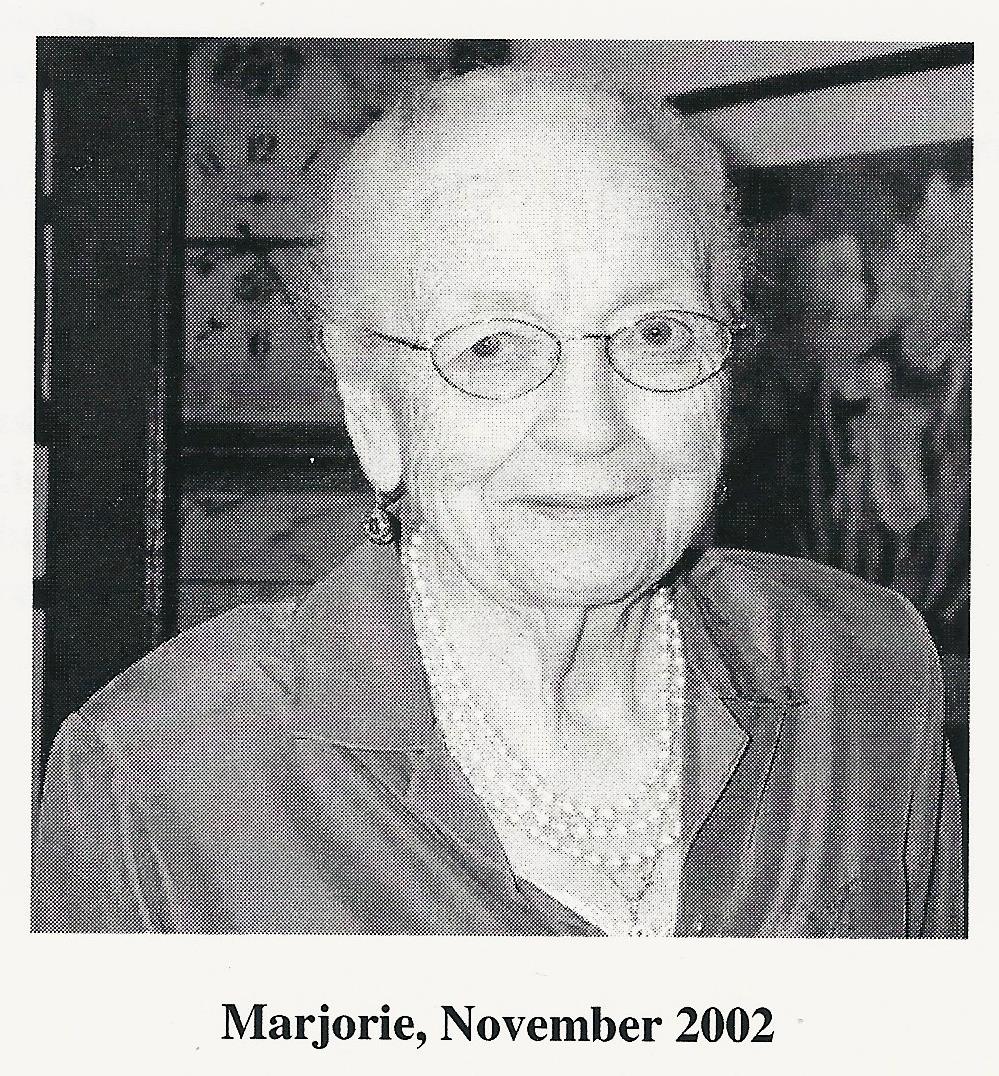
marg6Marjorie Larmon did not suffer fools.  Born on November 14, 1912, she had been interested and involved with antiques since an early age.  Her parents Roy and Ruby Sackrider were both interested in things from the past.  At an early age, she and her father would look for antiques while selling maple syrup door to door.   In the 1960’s she and her husband Clarence were able to buy the family homestead just outside Burgessville, Ontario, and Marjorie came into her own as an antique dealer, naming her business “The Pig and Plow”.  If she got to know you, and liked you, she would tell you stories of her glory days, driving her hearse to Quebec and filling it with merchandise. Going into the ditch on the way back from a winter auction, etc.  She placed many antiques in important collections over the years, and was an enthusiastic collector herself.  Her barn was full of wonderful things, but the real treat was if she were to invite you into her home, where she kept the best stuff. marg3

Over the years she gave lectures, interviews, and conducted study classes at museums and historical societies. In 1982 the Art Gallery of Windsor held a show of her folk art collection entitled “Celebration”. In 2005 she brought out a little book outlining the story of her life entitled “Diamond Buckles on my Shoes”  She was the real deal.  She developed many lasting friendships and was always friendly and welcoming to knowledgeable collectors, but if she found you to be rude, or boorish, she did not hesitate to send you packing.  When we moved to the church in Wyecombe we were told by other dealers to go and see her, but be careful in our approach, especially in trying to get a better price.  Frankly we were intimidated and didn’t even go to see her for a year or two later, at which point we felt we had enough knowledge to not be rejected outright.marg4

On that first visit we realized that there was no reason to worry.  She had heard of us through her main picker Jim Sherman, who had occasionally bought things from us for her.  So when we gave our names she was immediately warm and welcoming, suggesting that after we had finished in the barn she would make us a cup of tea and show us her collection.  We made a couple of purchases that day, and in the way of negotiation we simply asked her for her dealer price.  She looked a bit stern at first, but then offered a fair reduction and so we accepted without argument. We had made her good books.  Actually, that’s the way we have always preferred to negotiate.  Most people respect this approach and give you good prices. Also, I find it saves a lot of energy.marg5

So we loaded our purchases and made our way to the house for tea and a tour.  Mind blowing.  What a wonderful way to spend a couple of hours. Her collection was better than what you would see at most museums, and she was sharp witted and quick to give you the story behind every piece.  We made several trips to see Marjorie over the following years. She and Clarence were always welcoming.  So it continued until after the death of her beloved sister Ina in 2000, and Clarence’s death in 2002 when it gradually became too much for her to continue even with the generous help of Jim Sherman, and so in 2006 she decided to retire.   She and Jim Sherman arranged a classic one-day auction, with nearby auctioneers Jim Anderson, and Gerry Brooks, and everything went up for sale.  It will be ten years since that historic auction this September 23rd, and will be the subject of a future blog.marg1

There are a few funny stories of Marjorie turfing out dealers for one transgression or another, but I prefer to remember her by telling about a visit we had with her shortly before she closed the shop.  She had called and offered to sell us back a beautiful pair of large finials that Jim had bought for her a few months earlier.  We couldn’t quite figure out why she would want to do this, but we liked the finials and the Bowmanville show was coming up so we said yes, and made the trip to pick them up.

We finished our business in the barn and headed to the house for tea.  We had a lovely chat and then she said “Come into the living room.  There is something I want to show you.”  We sat ourselves on the couch and waited feeling very curious.  “Phil open up that corner cupboard and you see that decorated box on the top shelf; bring that down for me.”  I brought down the most gorgeously carved and polychrome painted Scandinavian wedding box I had ever seen. “Jeanine, you are French, and this wedding box is French so I want you to buy it from me and take it to the Bowmanville show, and sell it for a lot of money.”  We knew it was not French but we were smart enough not to contradict her, and so we timidly suggested that yes it was a lovely thing to offer us, and how much did she want for it? We were bracing for a big number and wondering if we could afford it.  “Give me $200.”  We could not believe our ears.  We wondered if maybe she was losing it a little bit or we hadn’t heard right, or perhaps she meant to say something else, so we questioned her. “Marjorie, that’s a wonderful offer, but are you sure that’s all you want?  I mean….”  She cut me off.  “No that’s the price and I won’t take a dollar more.  You’ve been good friends and customers and I want you to sell it at Bowmanville.  Do we have a deal?  Of course we do Marjorie and thank you.

We took it the following month to the show as she requested.  We labeled it correctly as a Scandinavian wedding box in pristine condition with no repairs, and from the collection of Marjorie Larmon; and then we were totally shocked when the vetters came by and said we could not show it because it was not Canadian.  Feeling a mix of rejection, disappointment, and some relief as we were happy to take it home and keep it for ourselves we put it aside.  Then within moments, the vetter who had rejected it for inclusion in the show circled back and asked, “So what’s my dealer price on that.”  We held our nose and sold it to him.   Marjorie was thrilled when we told her what we got for it. We didn’t tell her the circumstance.

One of the last times we saw Marjorie we were delighted when she pulled up with Jim Sherman to see our newly opened Shadfly Antiques shop in Port Dover.  By this point she was using a walker and she moved slowly and carefully, and of course this was after the auction and she was living in a retirement home so she was not considering any purchases, but she seemed to really enjoy herself and wrote a nice little note in our visitor’s book.  Short and sweet.  “A great little shop”, and her signature.  She looked up at me with a twinkle in her eye and said, I would have written something longer, and better but you gave me a lousy pen.”  Ah Marjorie, you were an original and we miss you.

Marjorie inspecting a quilt

Marjorie inspecting a quilt