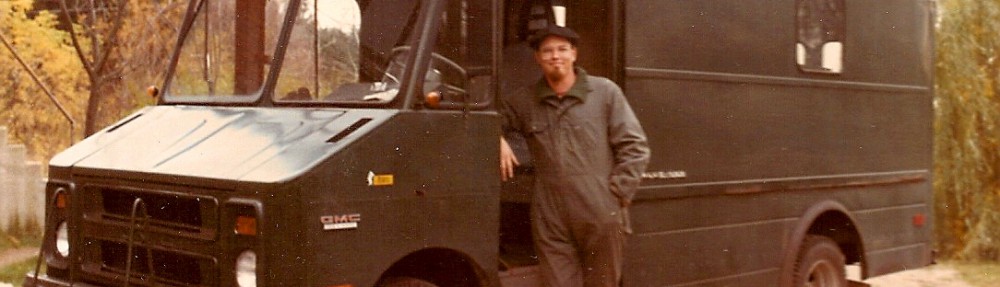
Finding Fournier – how we met the acclaimed Quebec folk artist, Leo Fournier

Leo and Jeanette Fournier at home

Leo and Jeanette Fournier at home

Leo Fournier has always been one of our all time, favorite folk artist for his whimsy, elegance and balance. Leo’s sculptures cover a wide range of subjects from the religious to the erotic, as well as animals and everyday life scenes.  The work is composed mostly of figures and animals in various forms of shared or confrontational activities.  .
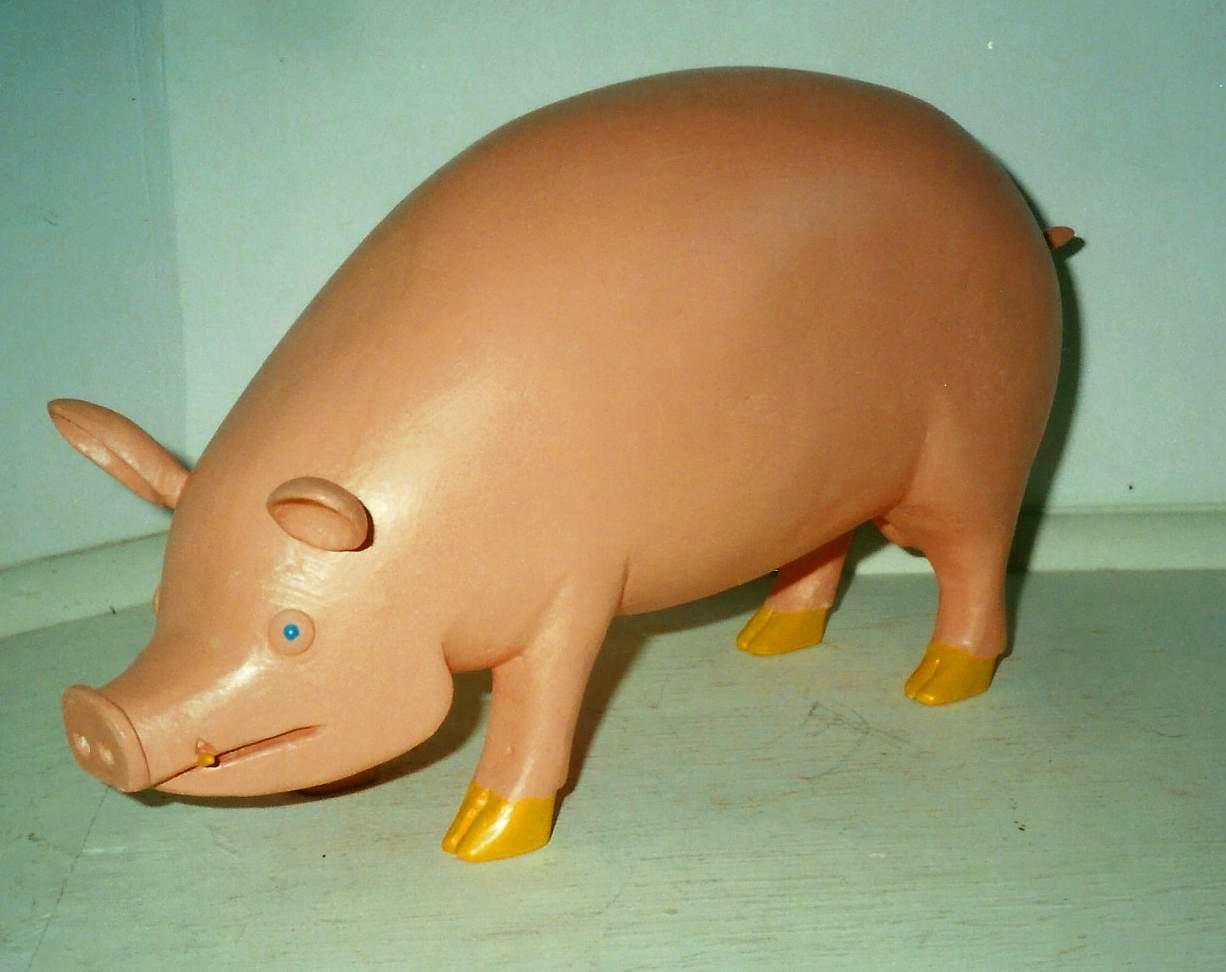
pig, by Leo Fournier

pig, by Leo Fournier

He had a keen eye for detail, a great sense of fun and a love of life.  You can recognize a Fournier from across the room, and we would purchase the work when we came across it, in picker’s barns, shows, or auction.  It was always our desire to find and meet Leo, but of course the pickers were not anxious to have us contact him directly so would not provide information, and his address was not listed in the reference books.   All we had to go on was that  he lived in the town of La Prarie (pop 23,000), on the south side of the St. Lawrence River, across from Montreal.
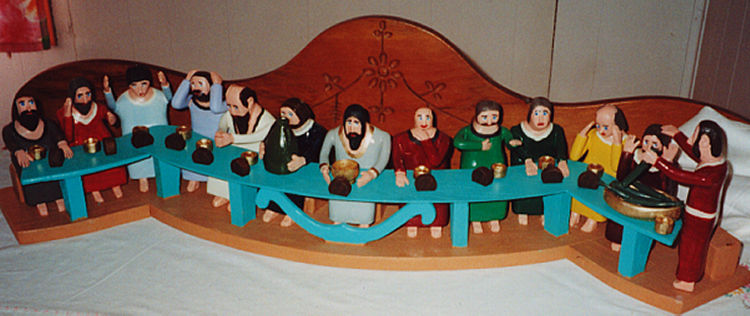
last supper, by Leo Fournier

last supper, by Leo Fournier

Sometimes our trips to Quebec were straight there and back affairs, but on other occasions we would take a few days to meander and explore, and it was on one such occasion in the early nineties that we found ourselves in La Prarie late in the afternoon with some time to kill before we hit one of our favored road side motels.  I pulled up to a phone booth, and said to Jeanine “let’s see if we can find Leo Fournier in the book.  Maybe we’ll get lucky.”  Our hearts sank a little when we realized there were over thirty Fourniers listed in town and only one L. Fournier.  Of course we tried this number first and it was not Leo, and furthermore they did not know of him, but we were not so easily discouraged and just started with the first listing and kept dialing.  Jeanine was getting a little tired after about a dozen dead ends, with not everyone being delighted to participate in our little search, but she persevered, and low and behold after about another six calls she spoke to someone who was a relative, and she was happy to provide his number.  “Well that was sort of easy.” I quipped. “O.K. well not that easy, and yes it was you doing all the calling”. In any case we dialed him up directly. and spoke to his wife Jeanette who said he was out momentarily but would be home soon, and he would be happy to meet us.  She gave us good directions to their house which we soon found on a quiet little street right across from a Depanneur , or variety store.

Old man fantasy by Leo Fournier

Old man fantasy by Leo Fournier

Leo met us at the door and warmly invited us in to the sunporch, where he liked to entertain visitors.  Leo was a very charismatic storyteller, and he launched right into some great stories while sit ting in his rocking chair sipping on a big can of Molson Export.  “ I like my beer but I only buy them one at a time.  That’s why I’m happy there is a depanneur right across the street” he laughed.” I noticed there were four empty cans next to his chair, but then again it was getting on in the day.  Jeanette arrived directly with some coffee for us and we spent a very pleasant hour or so listening to his stories.  He was a retired auto body man of good reputation, and was involved in the scrap business.  He told us about and showed us his first carving which was a crucifix done  in 1967 when he was 43 yrs. old.  Since that time until his death in 2007 he continued to be a prolific carver, selling to friends and the occasional picker, Nettie Sharpe among others who would come by to see what he had been up to..  He was aware that his work was included in books and exhibits, but he never felt he was really appreciated until sometime in the nineties when the Quebec government commissioned him to produce a series of about a dozen sculptures on food production.(See the butcher with hog’s head below) With this big pay cheque he chose to go to Leningrad on his own where he spent two weeks at the Hermitage studying the art there, rather than fix the roof on the house which was what the rest of the family was pushing for.  Leo was that kind of guy.  He lived his life the way he wanted to and never thought twice about convention.  We bought the six or seven pieces he had available that day and his house became a favorite stop on subsequent trips.  We always took the time to stop and listen to his stories. According to his pal Andre Laport who phoned to tell us of his death in 2007 “he lived his life just the way he wanted to right to the end, with no lingering illness, and a beer in his hand”.  Like so many others who knew him, we really miss him , and his infectious spirit.  One of the greats.
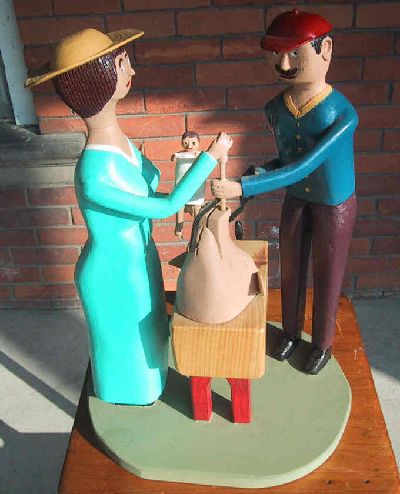
one of the works commissioned by the Quebec government
one of the works commissioned by the Quebec government
Opening doors – a view from France

FullSizeRender (1)

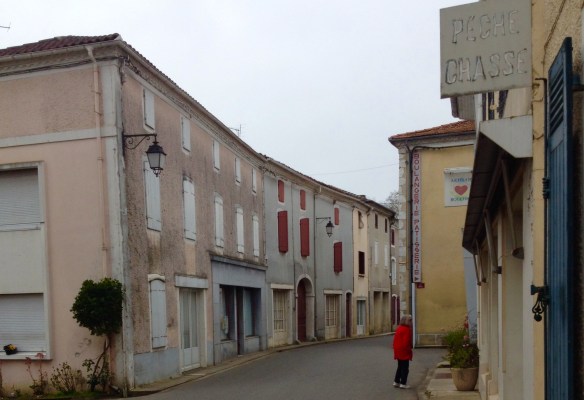
the village of Amou

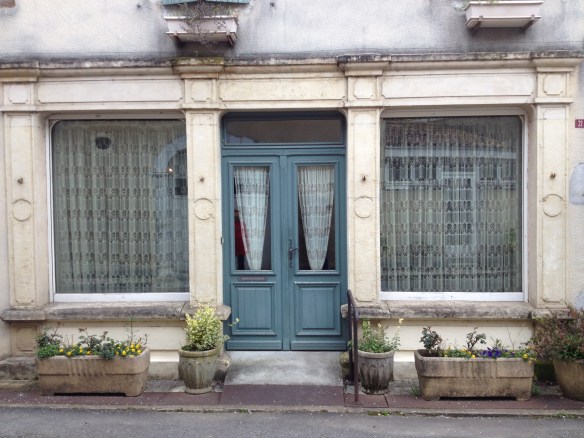
Now, after three weeks in this little town of Amou, in the south west of France, I can offer that my perspective on antiquity has changed, and developed by being here; and I find it invigorating. So much of this place remains essentially the same as it has been for a hundred years, and more. Old here is medieval, not circa 1900. Taking daily walks around town, you absorb the subtleties of age. You notice the details, and you feel that minus the cars, things might look much the same as they were in your grandfather’s time, or even his grandfather’s time. People just don’t change things unless they need to. A different perspective.

IMG_1202 (1)

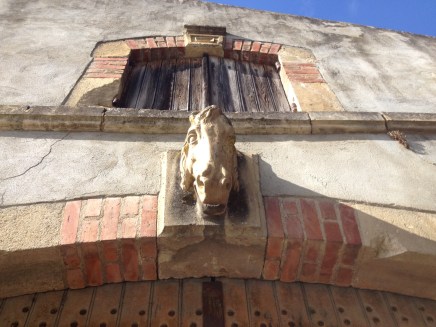
door to a shop which sold horse meat

I would offer that this is a good argument for travelling to one place and staying put for awhile, as opposed to the way we travel these days which is the seven cities in seven day’s concept. Take a selfie in front of the Arc de Triumph, and move on to Brittany. Tomorrow we will be in Vienna. For example, you will see people in the Louvre walk by a monumental 18th century painting of a shipwreck; stop, take a shot on their I-phone and move on to the next. It seems the concept is just to document that you were there. What’s the point? Stop and smell the roses.

IMG_1146

17th cent. door in Amou

There are many opportunities to buy antiques in France. Now in spring “Vide-greniers” or “Empty the Attics” occur at the weekends in several small towns and cities. If you go on-line and google “Vide-Greniers – les Landes” which is the name of this region, you will get a list of what’s happening around here. These are typically on a Sunday, and everybody participates, much like the town yard sales at home. There’s a lot of junk, but you can also find some real treasures if you are there early enough. Bigger cities often have a weekly “Marche d’antiquites”. We have found fantastic things by arriving about 6 am Thursday morning in nearby Bayonne . Again get there early or forget about it. By noon the bottles of wine and lunches are spread on the tables, and then it’s pack up and go home. Again you can find them listed on the internet. “Depot-Ventes are the French equivalent of consignment shops. Hey were very popular a few years ago, but I notice there are less around these days. A” Brocante” is a shop which offers antiques and vintage items. A bit of everything or anything which is collectable. There are also “Shops de Antiquity” which offer only older and usually more upscale items. Last but not least you have the “Salle d’expositions” which are the French equivalent of our Antique shows. Held either indoors in a hall, or outdoors like the Christie show. There is one this weekend in nearby Somoulu which we plan to attend. I’ll give you a report next Friday.IMG_1144

Folk art arrives at the door – The Barbara Browne Collection

BBrown5

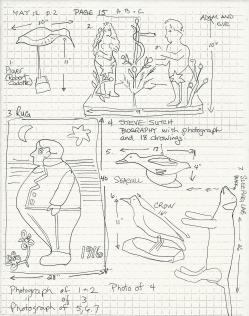
drawing by Liz Barrett-Milner

It was a sunny, August day in 1995, and we had just finished our lunch when there came a knock on the back door.  We weren’t expecting anyone, and it was rare for anyone to visit without calling ahead.  This, because we were so often on the road that our friends knew to give us the heads up before coming by.  We opened to find a small elderly lady standing there with a big smile and a portfolio under her arm.  “Are you the folks who buy folk art?”  “Well yes, we have been known to do so.  How can we help you?” “My name is Barbara Browne, and I live down the road in Port Rowan, and I have a collection of folk art which I would like to sell.”  “Come right in and tell us about it.”

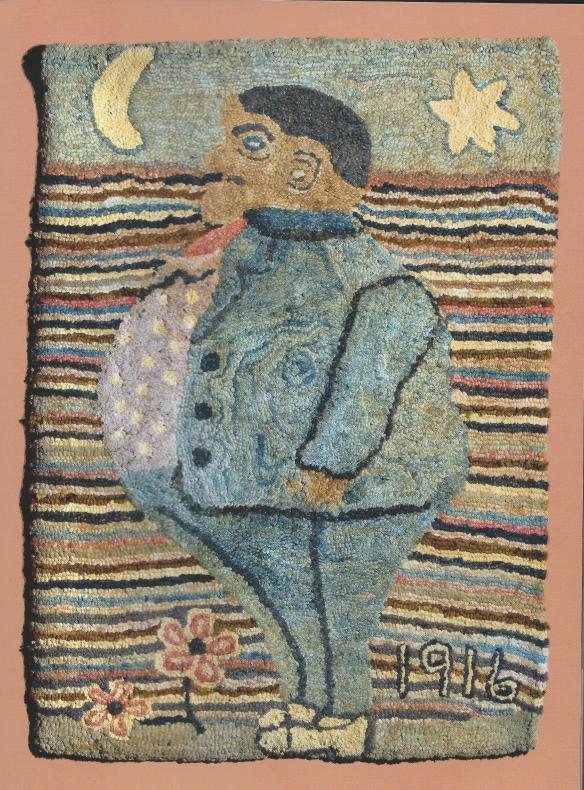
She explained that she was an artist who had collected Canadian folk art for the past twenty years, and she was about to buy a smaller house in Simcoe, and thus needed to downsize, and recoup her investment to help with the purchase.  “What is the nature of your collection?”  She reached into her portfolio and produced a twenty-page booklet of meticulously hand drawn illustrations of folk art with dimensions, which we later learned were produced for her by her niece, well-know Norfolk artist Liz Barrett-Milner.  “It’s all in here.  There are 185 pieces all told, and I am only interested in sell the whole thing.  No picking and choosing.”  There was some mind blowing stuff, including works by Nova Scotia artists Charlie Atkinson, Charlie Tanner, and Everett Lewis; as well as many Ontario artists such as Clarence Webster, Joe Lloyd, Steve Sutch, and Robert McCairns.  Most pieces were smaller in nature, but there was also a big wall-mounted cow’s head, a couple of 8’ totem poles, a full size deer, and last but not least, the best folk art hooked rug I had ever set eyes on, depicting a fat man and dated 1916.

BBrown2

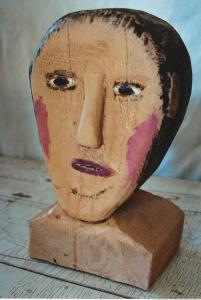
head by Robert McCairns

“We won’t beat around the bush.  It’s all of interest, but of course it depends on your expectations” She then produced an itemized price list of what she felt would be current list prices.  “I understand you need to make money, so this is what I think it is worth, and I would therefore expect half”.  “In principle that sounds fair so let us go over it and get back to you.”

What followed was four or five meetings at her house where we viewed the items and discussed the prices.  It became a bit complicated as each time we arrived we she had decided that there were a few more items that she felt she needed to keep, but it came to pass that we arrived at a final list and a final price, and so a date was set to complete the deal and pick up the pieces.

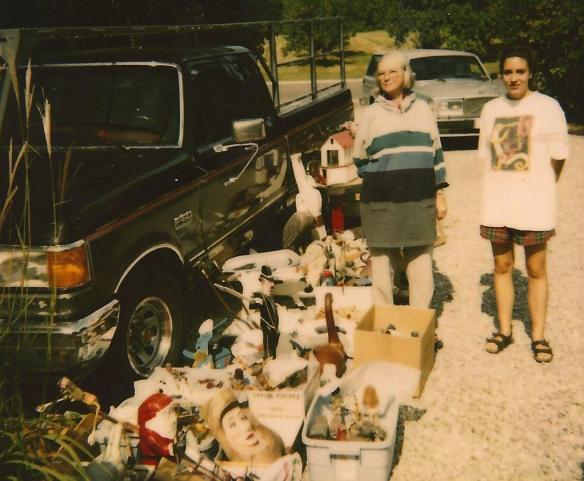
On that day, she informed us that she didn’t want to be there as we removed the pieces as it would be sad for her, so she wanted to go for a walk and return when we were finished.  We weren’t at all comfortable with this, but agreed on the condition that we would line up the pieces outside by the truck, and she would review the load before we left, and that’s how we did it.

BBrown1

Barbara Browne and Cassandra by the truck

Barbara was an excellent artist in herself, and continued to be a friend and inspiration until her death several years later.  The collection sold well, and the fat man rug was featured prominently in the John Fleming/ Michael Rowan book on Canadian folk art.

fatmanrug

the fat man rug

Canadian Contemporary Folk Art Festival -part 2

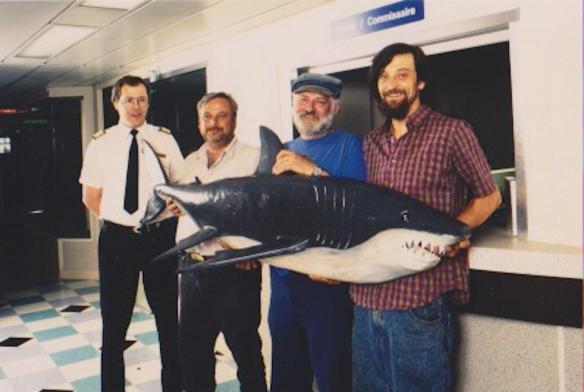
digby ferry

June 1994. Stephen Outhouse (middle with cap), Mark Robichaud (right), and David Stephens standing with the purser on the Digby ferry – on our way to Paris! We had this shark – a carving by Stephen – mounted to the top of the the truck cab.
I received this photo and note from Nova Scotia artist David Stephens shortly after last weeks post was published. Thanks David for permitting me to post it here. It’s a long drive from Nova Scotia for a one day show. This illustrates the dedication of all involved to this unique folk art event.
In looking over my support material, I came across some interesting definitions of folk art in the initial correspondence from promoter Michael Hennigan.  I include them here to add to the dialogue which we as collectors and enthusiasts continue to have on what constitutes folk art; and what of this art is worthy of study and preservation.
“The working definition of folk art for this show is: “the personal or naive expression of untutored creators”.  You will note that this definition deviates from those presented by folklorists and material culturalists which tend to emphasize context and tradition over aesthetics and individuality.  Rather it adheres to the connoisseurs or Art Historian’s definition with emphasis on form, line, and color.”
“I am trying to avoid ethnically based arts and crafts such as knife making, canoe building, basketry, newly made fish and duck decoys, or any mass produced craft lacking creative inspiration.  For the purposes of this show, Craft involves head and hand, while art involves head, and hand and heart.”
“I am also avoiding highly commercialized or slick assembly line work, or neo-folk art.  Which is defined as work made by self taught artists who get their ideas from seeing folk art elsewhere such as in books or museums. For purposes of the show such art is not folk art, but rather is about folk art.”
“Also, I am avoiding faux naif art, which is defined as art produced in a naif style by fine artists. Finally I am avoiding amateur or so called “Sunday” painting, as difficult as it may occasionally be to distinguish such art from folk art.  Folk Craft is also not allowed.  Folk craft is the folksy, cutesy pie, overly sentimentalized stuff seen at craft shows.”
With the inclusion of contemporary folk art at such distinguished shows as Cabin Fever, coming up February 6 and 7, 2016 in Kingston, Ontario, and the Bowmanville show which every year is on Good Friday, we have an opportunity to compare the work presented there to these definitions. I think that you will find that for the most part these shows rise to these standards.  I wish I could say the same for the field shows, but perhaps they will be inspired to improve as the knowledge of what constitutes folk art is understood by more and more people.   Here’s hoping.
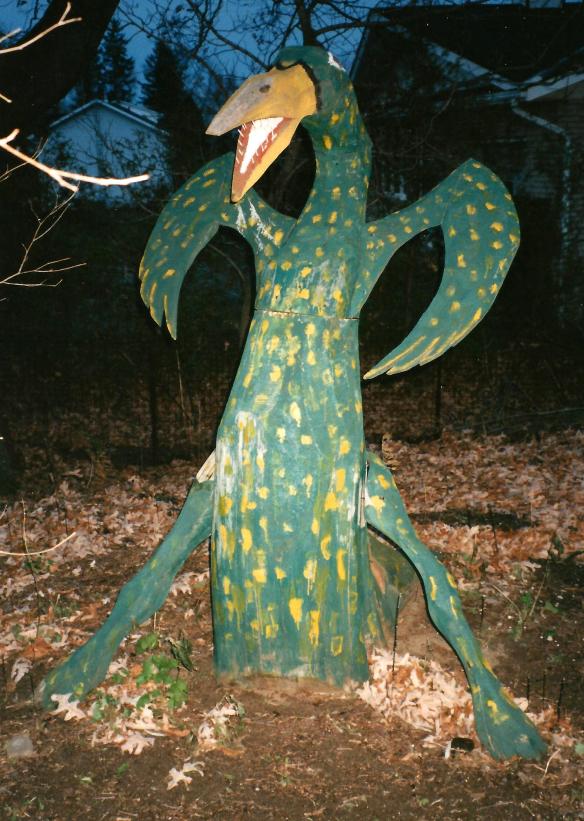
I went through my photos and found a picture of one of the dinosaurs we brought to the show.  Imagine being greeted by two of these 9′ monsters.
dinosaur

9′ dinosaur by Roger Raymond

Canadian Contemporary Folk Art Festival- remembering a significant, one time, folk art happening

CCFAFposterBack on Sunday, June 26, 1994,  my wife Jeanine and I as Old Church Trading participated in an ambitious, extensive, and ultimately one time special event that was, and remains the largest and most exciting folk art festival ever to take place in Ontario, if not all of Canada.  Acknowledging here the annual Nova Scotia Folk Art Festival.  It included 2 lectures, displays by a half a dozen folk art dealers, and the work of about 25 Contemporary Canadian Folk Artists, many who were in attendance. It all took place  on one glorious summer day from 7 a.m. until 7 p.m. at the Paris Ontario fairgrounds. It was an extraordinary opportunity for collectors, dealers, and folk artists to interact and network and to honor and support Canadian Folk Artists.  I remain enormously  grateful for having been included in this great event; and we sold a lot of folk art too.

The whole thing was conceived, organized, executed and financed by Canadian Folk Art collectors Michael and Peggy Hennigan, of Grosse Pointe, Michigan, and it was a giant undertaking.  Not only for the set-up, and extensive promotion associated with a first time show, but also for organizing and paying for many artists to come from as far away as Alberta, and Nova Scotia. Many folk artists chipped in to help get the word out.  I remember Michael’s gratitude to Joe Lloyd of Brantford who made up and distributed signs. We brought 25 of our best pieces by Ewald Rentz, Edmond Chatigny, Aime, Desmeules, Jacob Roth, and others, and were particularity happy to bring along two recently acquired six foot tall dinosaurs created by Quebec folk artist, Roger Raymond.  They looked fantastic gracing each side of the entrance walk.  Looking back it felt like it was over in a flash, but at the time it was a long day of exciting exchanges, sales, connecting with new (to us) artists, and last but not least, education.  We met and started to carry the work of Woodstock area artist Barbara Clark-Fleming, and I was delighted with the opportunity to meet and hang out with the likes of Joe Lloyd, Garnet McPhail, Stephen Outhouse, and Mark Robichaud, not to mention all of those passionate collectors.

It was well attended  for a first time event.  A few hundred people as I recall, and most of those being driven and engaged;  but it was less than anticipated, and less than required for the Hennigans to consider doing it again when weighed against the enormous workload, and expense. No one could blame them, as they certainly gave it their all, and none of this diminishes the fact that this event lives on in the memories of those involved as a unique and exciting day for collectors, dealers and artists alike, and a prime example of just how rich, fun, and informative a folk art festival can be.

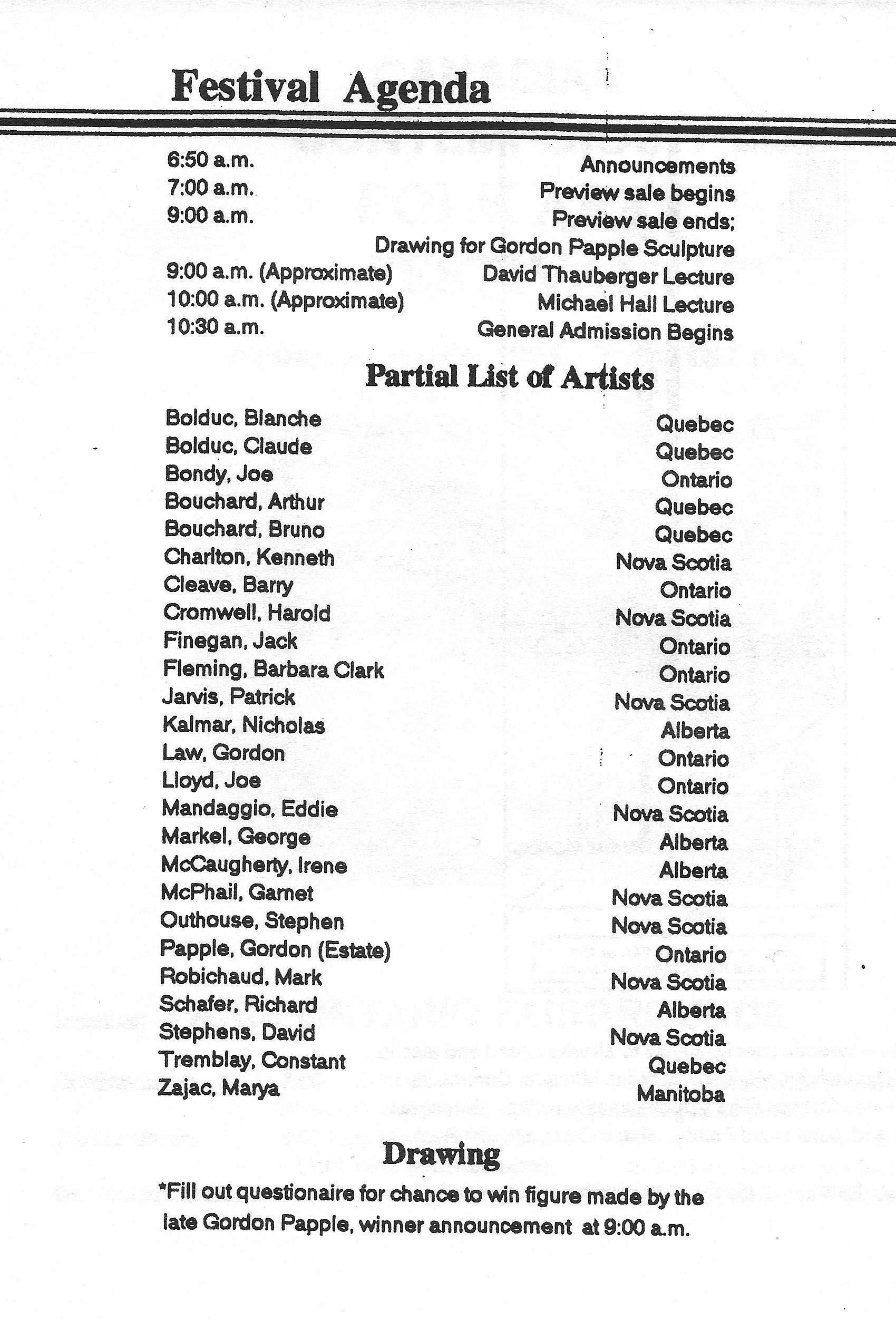
I am reproducing the program here, and next Friday I will post a further look at some exciting and defining ideas about folk art brought about by this event.  I am even going to look through my old photos and see if I can find a shot of those dragons.  No promises  I’ll do my best.

CCFAF3CCFAF2