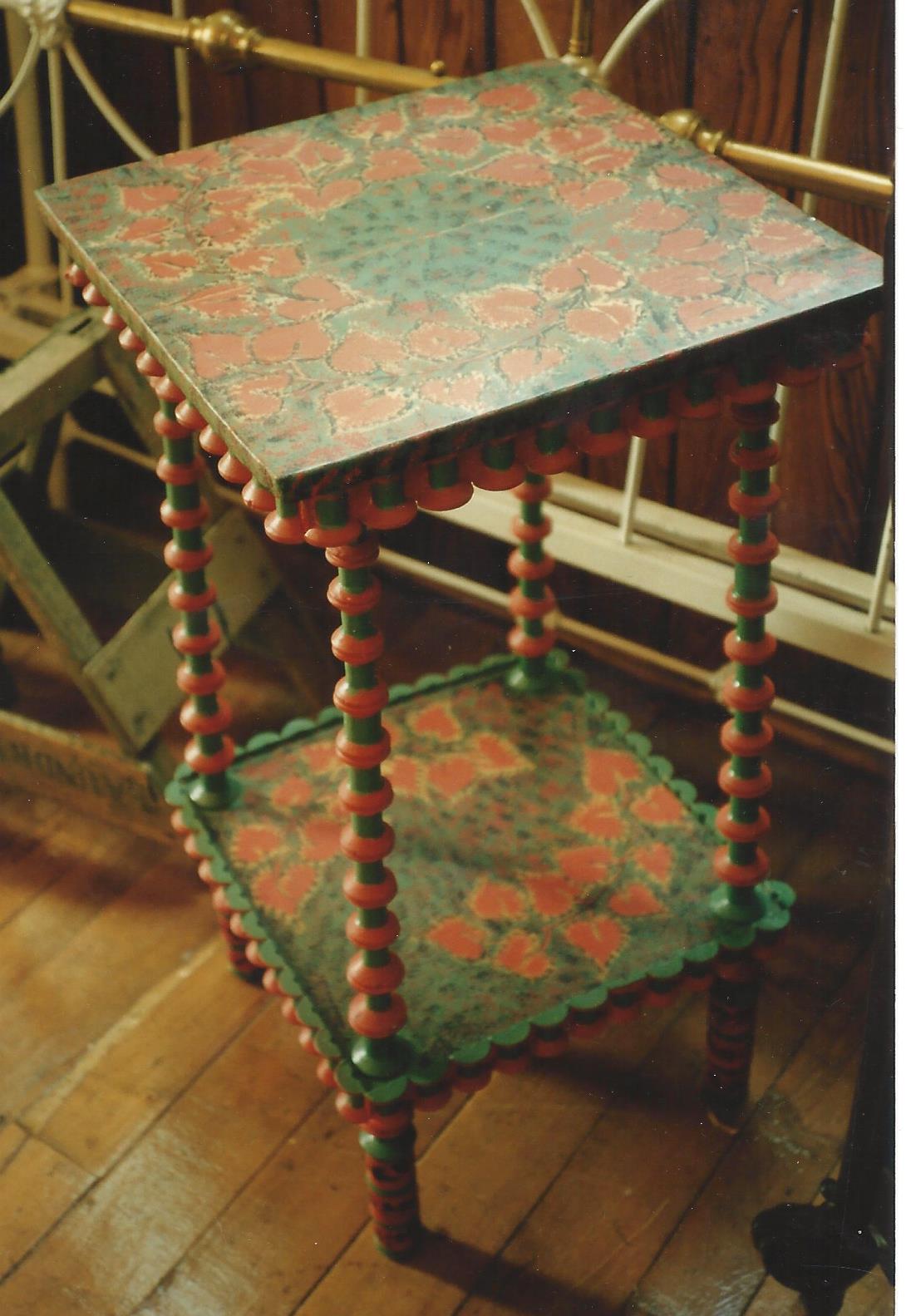
It started innocently enough. It was in the 80’s when we were either selling as found, or on occasion if the surface was bad, but the natural wood was good, we would strip and refinishing as was popular at the time. One day we bought a small handmade side table made from empty thread spools and crate wood because it was charmingly made. However, it lacked a good surface. The original white paint over the entire surface hadn’t developed a nice patina, and therefore could not be considered “shabby chic”. We were going to sell it as is and let the new owner figure out what they wanted to do with it.
But, as it happened we were at coffee break in the workshop one fine winter morning when Jeanine silently looked over at the table for several minutes and then said, “I think I want to do a decorative paint job on that little table. I’ve got an idea for it”. Jeanine is a talented visual artist in her own right, and had taught art at Beal Art in London, and St. Clair College, so great. Go for it. Knock yourself out.
Right after break she set to work by painting the entire table with leaf green oil paint. When that was dry she created a stencil of a leaf and proceeded to paint orange leaves radiating out from the center of the top, and in graceful arches on the lower shelf. Next she highlighted the edges in a buttery yellow and put a potato stamp texture of black on the background. What followed was a time consuming task of detailing each spool in orange. This took a while and a steady hand, but when she was finished the piece was transformed. Finally, when it was thoroughly dry she took 0000 steel wool and gently burnished the oil paint surface to soften the look. She signed and dated the paint job on the bottom, and we took it an outdoor show we were doing near Collingwood the following weekend.
It didn’t take long before it was noticed by a vibrant, and well- appointed middle aged woman who went into raptures about it’s “freshness”, and warmth of the design. She loved it and bought it without hesitation, obviously pleased to be buying from the artist. It quickly followed that she asked Jeanine if she would be willing to paint other pieces of furniture for her. She had inherited some pieces from her parents that had sentimental value to her, but did not appeal to her aesthetically. They were all quite typical turn of the century manufactured maple furniture. Well made, but not particularly interesting. She explained that she was an interior designer, and wanted the pieces to be transformed into something that would fit in to a modern décor. Some would go to the cottage. A few others to the house in the city. She gave Jeanine carte blanche to do as she wish, and urged her to push the limits of her imagination. Jeanine offered that she would be interested in “riffing” on traditional faux graining techniques, by using traditional tools and techniques, but shifting to a more vibrant palette, and freer organic designs. An hourly rate was established and it was agreed that she would start on a typical two door, over two drawer sideboard. But one that at least had quite a free style headboard and side pillars.  We picked the piece up and took it home, and three weeks later we were dropping it off the back of our truck at her home in Toronto. It was an almost psychedelic sunburst pattern of multi coloured sponge painting. All free hand, and in a wide range of muted greens, and blues, with highlights in reds and yellows, as was discussed with the client beforehand, and after observing the room it was going into. We loved the piece, but it was definitely a statement, and we were anxious as to how she would react. A moment of anticipation as the shipping blanket comes off, and then big smiles all around. She loves it. She would have never imagined it, but she loves it. We were off to the races.
What followed was several years of regular commissions from the same patron, who collected many pieces herself, and before long had friends and clients looking for something similar. We never took any pieces of Jeanine’s work to shows, because she was as busy as she wanted to be with commissions, and antique shows of the time, generally frowned upon pieces that have been “repainted”, so we didn’t need the hassle. She signed and dated all the work not only as recognition, but also to assure that the age of the paint was not misrepresented in the future.
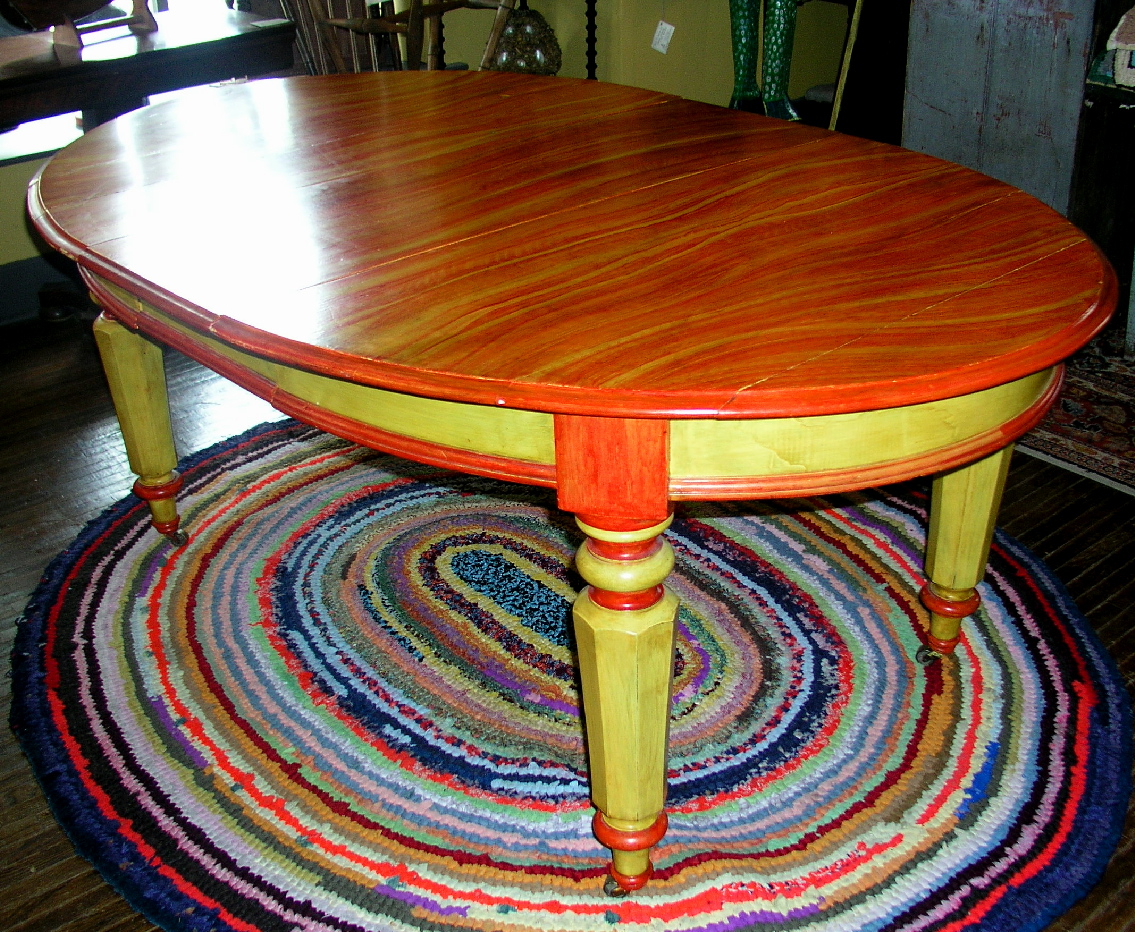
This rainbow table in vinegar paint is the last piece Jeanine painted, about the year 2000. Looking over these photos I wish she would do more.


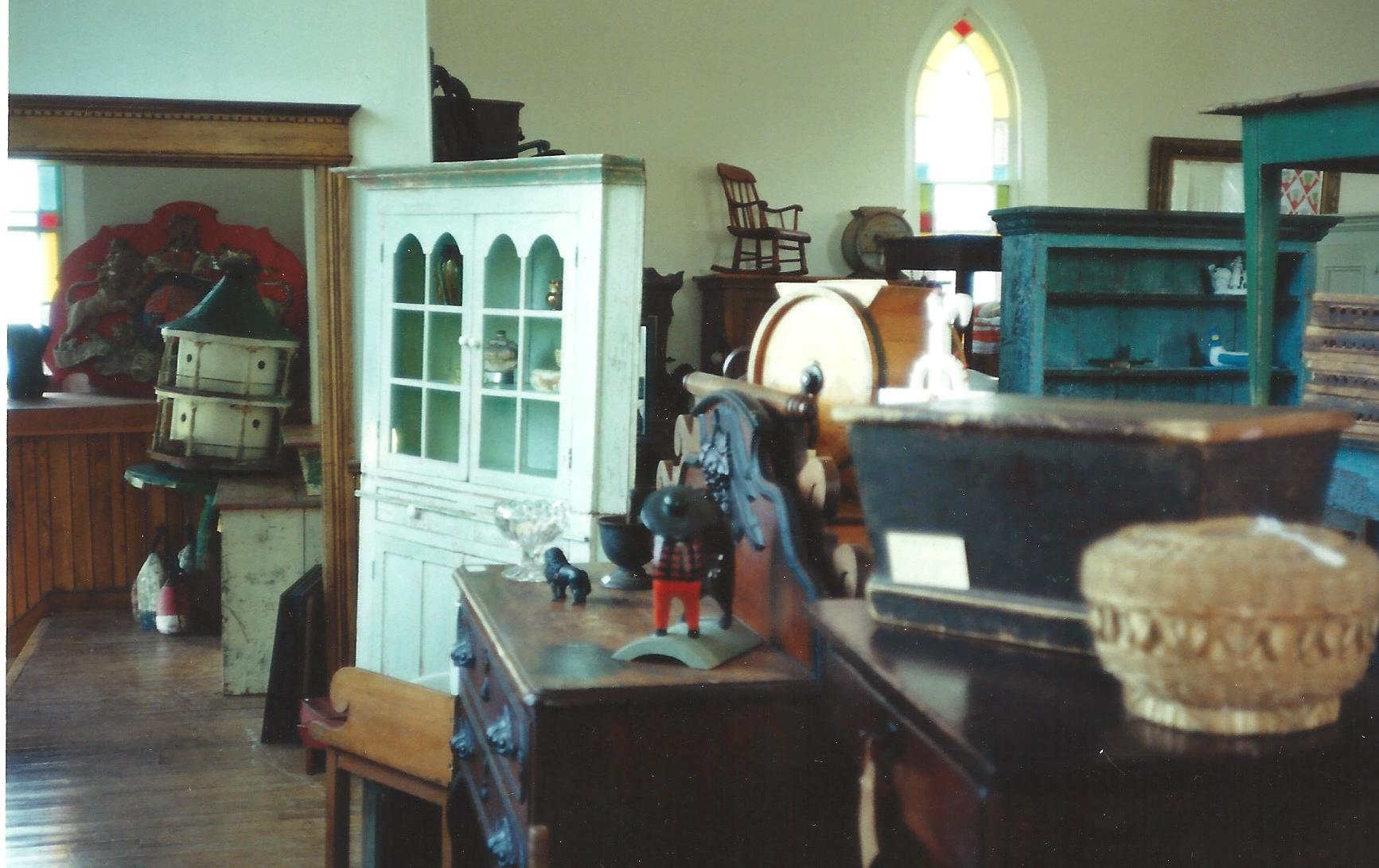
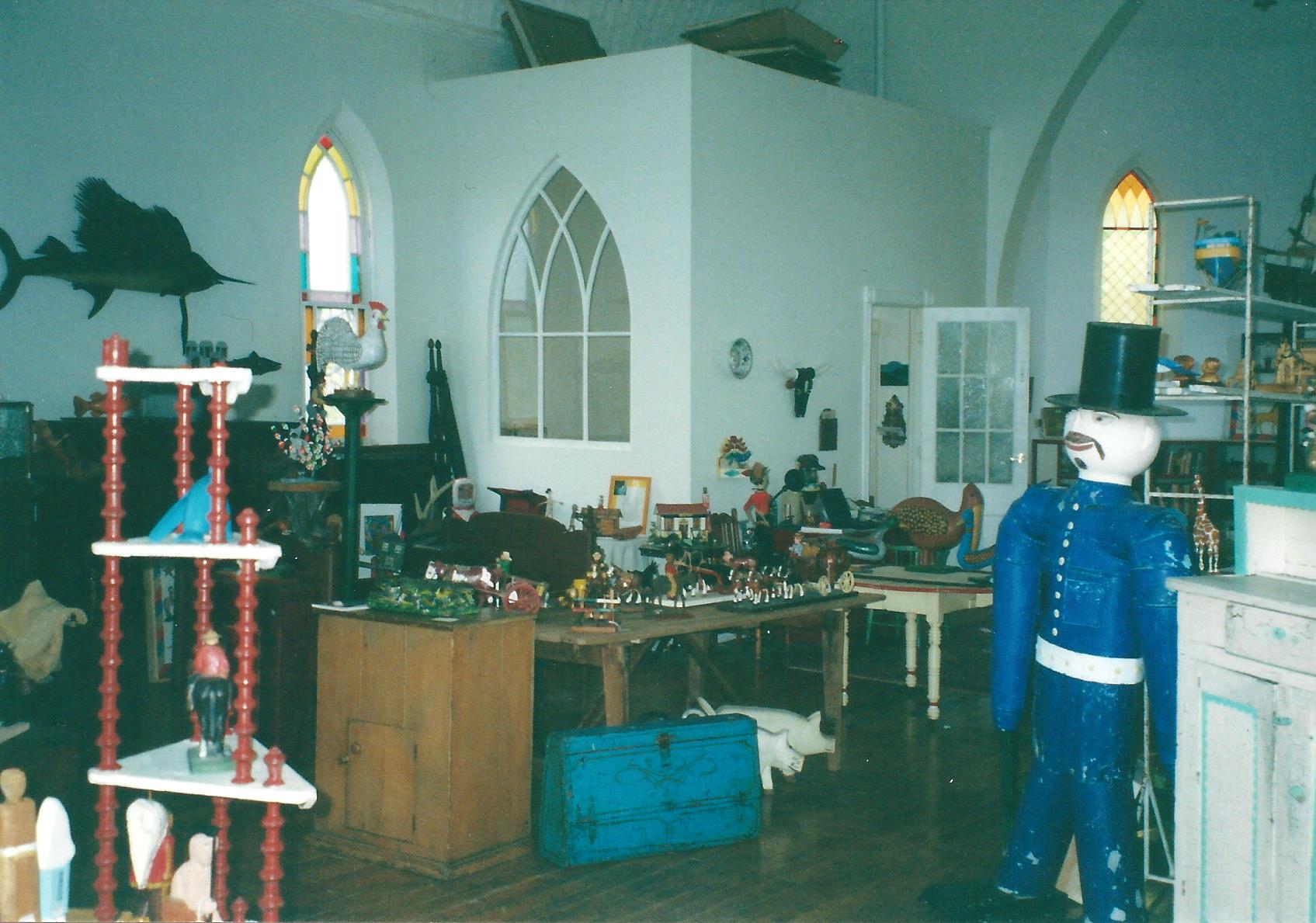

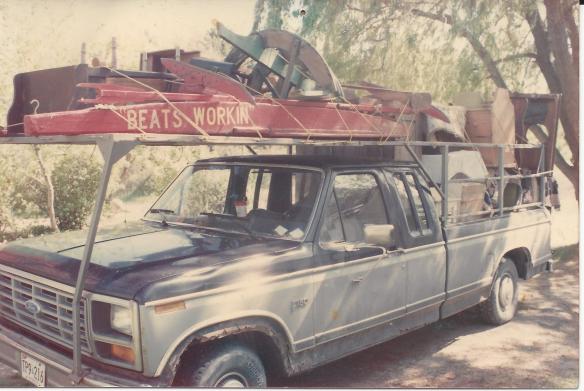 It had been a successful Odessa show. On Saturday at opening we had just arrived due to a flat en route , and were bringing things off the truck as people came in. Turns out people get excited by getting first crack at things, and several pieces were selling as they hit the ground. The mood was jovial and spirited. Dan Ackroyd and his wife came by and they were attracted to a two piece painted cupboard that they could see glimpses of on the still tied down load. She told him to stay there until it was unloaded while she went on down the line, and he was good enough to suggest helping me unload rather than just standing there watching me. Nice guy. It turned out not to be the cupboard for them, but regular Toronto customers bought it right after, so this combined with other sales indicated a strong start. It’s a great feeling to sell enough in the first hour that you have “made your table” as the expression goes, and you can relax a little knowing that even if nothing else sells you have had a good show. It didn’t happen that often even then in the heyday of the nineties.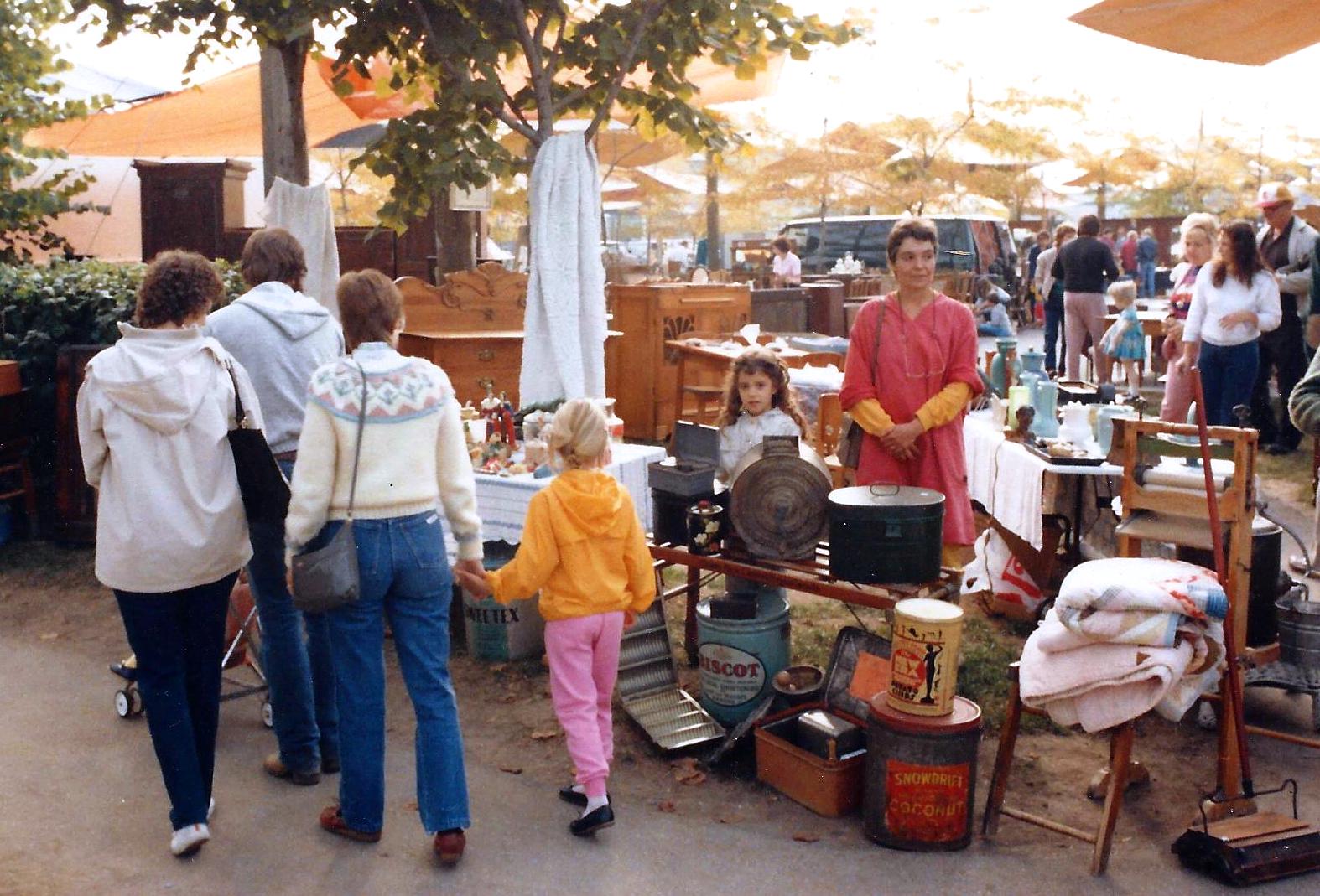


 The first Sunday of every month, there is an antique market in the town of Soumoulou, 10 km from the city of Pau in the South West of France. It goes from 8 am until 6 pm, and on average has about 100 dealers in attendance. Twice a year, in the spring and fall they have a large show which brings in about another 100 dealers. In this it is roughly equivalent to the Aberfoyle antique market held near Guelph, Ontario. Because my wife Jeanine is from this area, we have been visiting this market from time to time over the past thirty years, and like Aberfoyle we have seen changes. Primarily, a rise in interest and prices until about 2008, followed by a precipitous fall. There is still good attendance and sales taking place, but the packages being carried are smaller and fewer in number.

 I have brought back several of these wine bottle drying racks over the years. People made and bottled their own wine here so the bottles would be cleaned out and dried to be reused.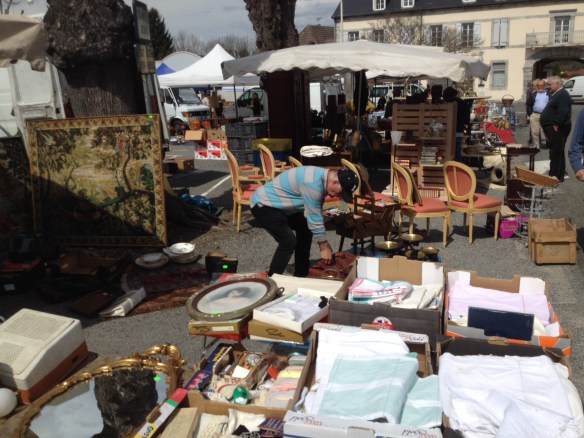

 shadflyguy