Remembering top dealer Marjorie E. Larmon

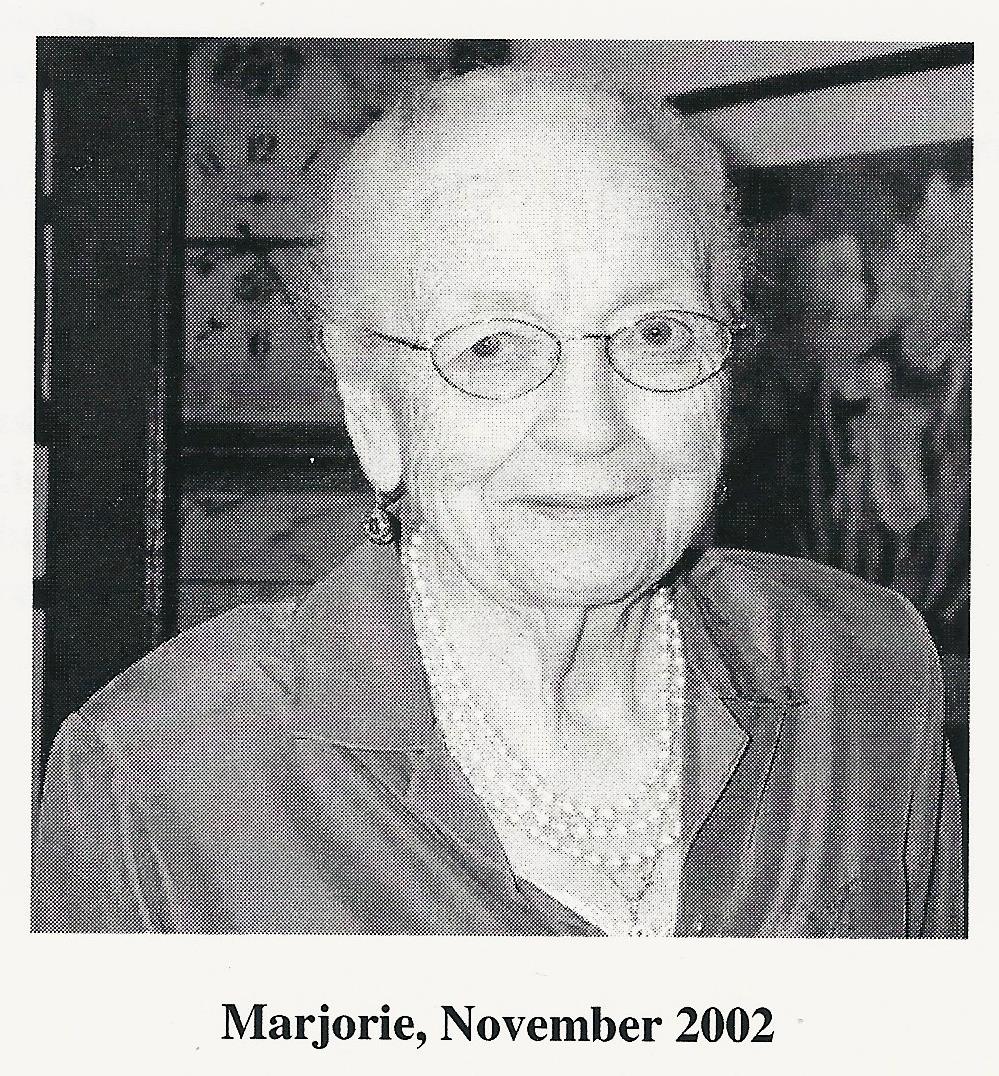
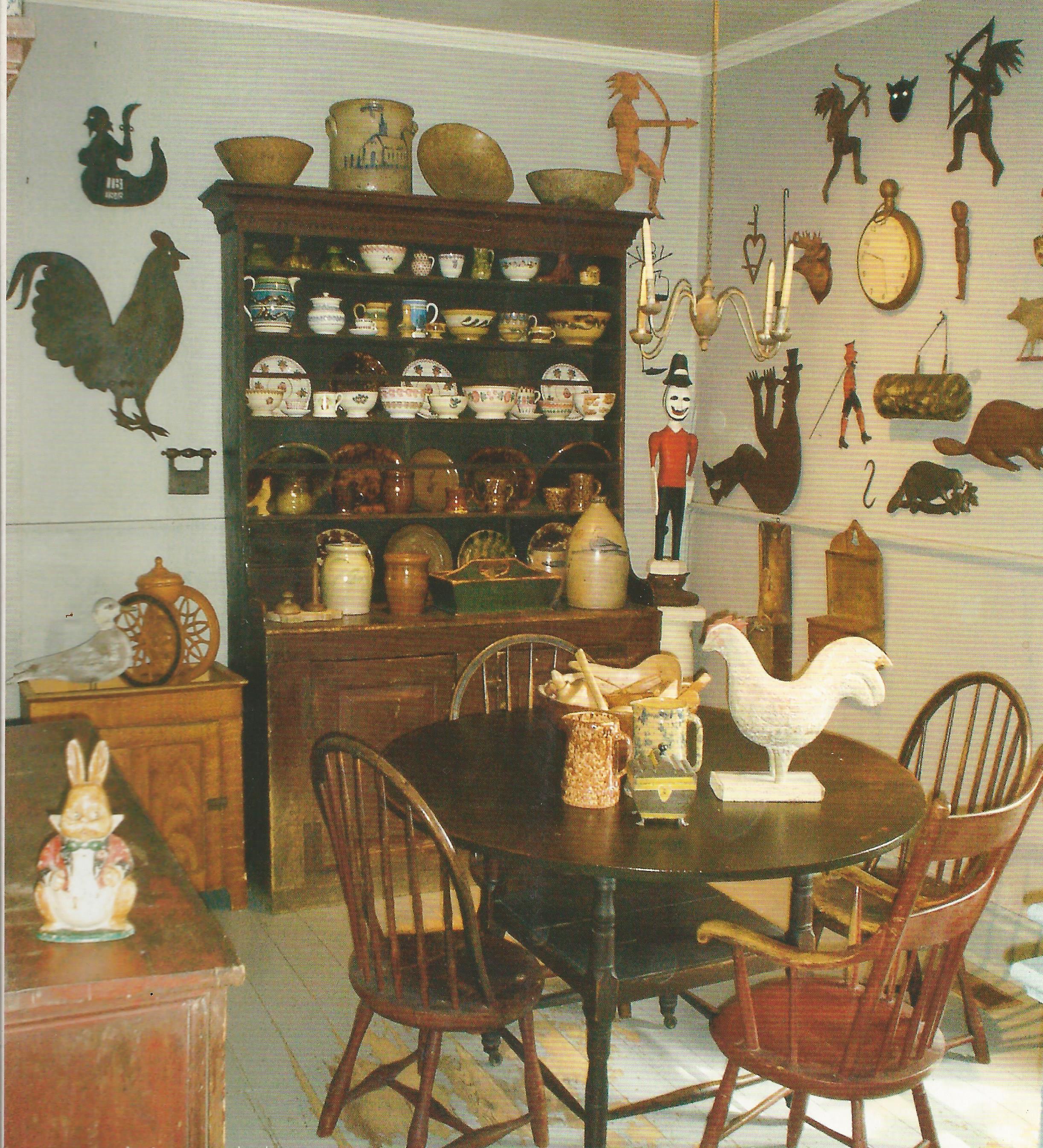
marg6Marjorie Larmon did not suffer fools.  Born on November 14, 1912, she had been interested and involved with antiques since an early age.  Her parents Roy and Ruby Sackrider were both interested in things from the past.  At an early age, she and her father would look for antiques while selling maple syrup door to door.   In the 1960’s she and her husband Clarence were able to buy the family homestead just outside Burgessville, Ontario, and Marjorie came into her own as an antique dealer, naming her business “The Pig and Plow”.  If she got to know you, and liked you, she would tell you stories of her glory days, driving her hearse to Quebec and filling it with merchandise. Going into the ditch on the way back from a winter auction, etc.  She placed many antiques in important collections over the years, and was an enthusiastic collector herself.  Her barn was full of wonderful things, but the real treat was if she were to invite you into her home, where she kept the best stuff. marg3

Over the years she gave lectures, interviews, and conducted study classes at museums and historical societies. In 1982 the Art Gallery of Windsor held a show of her folk art collection entitled “Celebration”. In 2005 she brought out a little book outlining the story of her life entitled “Diamond Buckles on my Shoes”  She was the real deal.  She developed many lasting friendships and was always friendly and welcoming to knowledgeable collectors, but if she found you to be rude, or boorish, she did not hesitate to send you packing.  When we moved to the church in Wyecombe we were told by other dealers to go and see her, but be careful in our approach, especially in trying to get a better price.  Frankly we were intimidated and didn’t even go to see her for a year or two later, at which point we felt we had enough knowledge to not be rejected outright.marg4

On that first visit we realized that there was no reason to worry.  She had heard of us through her main picker Jim Sherman, who had occasionally bought things from us for her.  So when we gave our names she was immediately warm and welcoming, suggesting that after we had finished in the barn she would make us a cup of tea and show us her collection.  We made a couple of purchases that day, and in the way of negotiation we simply asked her for her dealer price.  She looked a bit stern at first, but then offered a fair reduction and so we accepted without argument. We had made her good books.  Actually, that’s the way we have always preferred to negotiate.  Most people respect this approach and give you good prices. Also, I find it saves a lot of energy.marg5

So we loaded our purchases and made our way to the house for tea and a tour.  Mind blowing.  What a wonderful way to spend a couple of hours. Her collection was better than what you would see at most museums, and she was sharp witted and quick to give you the story behind every piece.  We made several trips to see Marjorie over the following years. She and Clarence were always welcoming.  So it continued until after the death of her beloved sister Ina in 2000, and Clarence’s death in 2002 when it gradually became too much for her to continue even with the generous help of Jim Sherman, and so in 2006 she decided to retire.   She and Jim Sherman arranged a classic one-day auction, with nearby auctioneers Jim Anderson, and Gerry Brooks, and everything went up for sale.  It will be ten years since that historic auction this September 23rd, and will be the subject of a future blog.marg1
There are a few funny stories of Marjorie turfing out dealers for one transgression or another, but I prefer to remember her by telling about a visit we had with her shortly before she closed the shop.  She had called and offered to sell us back a beautiful pair of large finials that Jim had bought for her a few months earlier.  We couldn’t quite figure out why she would want to do this, but we liked the finials and the Bowmanville show was coming up so we said yes, and made the trip to pick them up.

We finished our business in the barn and headed to the house for tea.  We had a lovely chat and then she said “Come into the living room.  There is something I want to show you.”  We sat ourselves on the couch and waited feeling very curious.  “Phil open up that corner cupboard and you see that decorated box on the top shelf; bring that down for me.”  I brought down the most gorgeously carved and polychrome painted Scandinavian wedding box I had ever seen. “Jeanine, you are French, and this wedding box is French so I want you to buy it from me and take it to the Bowmanville show, and sell it for a lot of money.”  We knew it was not French but we were smart enough not to contradict her, and so we timidly suggested that yes it was a lovely thing to offer us, and how much did she want for it? We were bracing for a big number and wondering if we could afford it.  “Give me $200.”  We could not believe our ears.  We wondered if maybe she was losing it a little bit or we hadn’t heard right, or perhaps she meant to say something else, so we questioned her. “Marjorie, that’s a wonderful offer, but are you sure that’s all you want?  I mean….”  She cut me off.  “No that’s the price and I won’t take a dollar more.  You’ve been good friends and customers and I want you to sell it at Bowmanville.  Do we have a deal?  Of course we do Marjorie and thank you.

We took it the following month to the show as she requested.  We labeled it correctly as a Scandinavian wedding box in pristine condition with no repairs, and from the collection of Marjorie Larmon; and then we were totally shocked when the vetters came by and said we could not show it because it was not Canadian.  Feeling a mix of rejection, disappointment, and some relief as we were happy to take it home and keep it for ourselves we put it aside.  Then within moments, the vetter who had rejected it for inclusion in the show circled back and asked, “So what’s my dealer price on that.”  We held our nose and sold it to him.   Marjorie was thrilled when we told her what we got for it. We didn’t tell her the circumstance.

One of the last times we saw Marjorie we were delighted when she pulled up with Jim Sherman to see our newly opened Shadfly Antiques shop in Port Dover.  By this point she was using a walker and she moved slowly and carefully, and of course this was after the auction and she was living in a retirement home so she was not considering any purchases, but she seemed to really enjoy herself and wrote a nice little note in our visitor’s book.  Short and sweet.  “A great little shop”, and her signature.  She looked up at me with a twinkle in her eye and said, I would have written something longer, and better but you gave me a lousy pen.”  Ah Marjorie, you were an original and we miss you.

Marjorie inspecting a quilt
Marjorie inspecting a quilt

YOUR TRUCK IS ON FIRE!!!

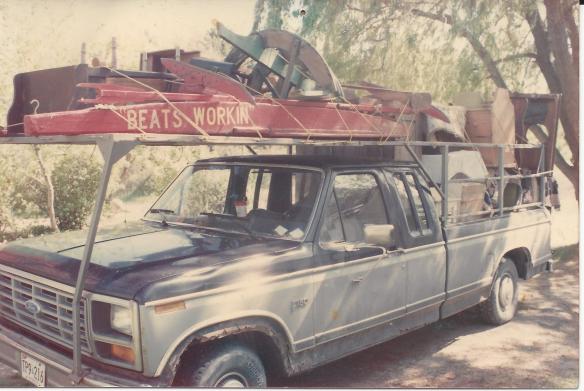
truckIt had been a successful Odessa show.   On Saturday at opening we had just arrived due to a flat en route , and were bringing things off the truck as people came in.  Turns out people get excited by getting first crack at things, and several pieces were selling as they hit the ground.  The mood was jovial and spirited.  Dan Ackroyd and his wife came by and they were attracted to a two piece painted cupboard that they could see glimpses of on the still tied down load.  She told him to stay there until it was unloaded while she went on down the line, and he was good enough to suggest helping me unload rather than just standing there watching me.  Nice guy.  It turned out not to be the cupboard for them, but regular Toronto customers bought it right after, so this combined with other sales indicated a strong start.  It’s a great feeling to sell enough in the first hour that you have “made your table” as the expression goes, and you can relax a little knowing that even if nothing else sells you have had a good show.  It didn’t happen that often even then in the heyday of the nineties.

The day continued to go well in spite of the sweltering August heat, and we even had a few sales on Sunday. So, when five o’clock closing came, we were happy not to have a lot to load back on, although the Toronto couple needed the cupboard delivered to their home, and I bought a few things in the rough to take home.  By about seven we were loaded and on the 401 heading west.  We checked the radio for traffic and found out that things were moving slowly all the way to Toronto due to an accident and so decided to pull off at Belleville for dinner at a place we like down by the marine.  We felt a bit celebratory, and content to relax, sip wine, and eat seafood while looking out over the boats in the harbor, so by the time we finished our espresso it was probably pushing ten before we were back on the road to complete the five hour (in total) drive.  Feeling good and awake thanks to the espresso.   Of course we were younger then and able to stay up past ten.

So everything was going swimmingly. Traffic was clipping along, the CBC was playing an interesting documentary, the windows were down and the breeze was cool.  We hit Toronto about midnight and I was enjoying the fact that all four express lanes seemed almost empty.  Occasionally a big transport would go whooshing past me in spite us traveling at 120 Km per hour.  I was “in the zone” and enjoying the oddly luminescent mercury vapor lighting and passing cityscape when suddenly there is a pick-up right behind me flashing his lights, and hitting his horn.  “Alright already.  Go by me there’s another three lanes.”   What is with this guy?  Next thing he has pulled up right beside me, and a guy leans out the window and screams “Your truck is on fire!!”  Whaaat?  Looking in the rear view I see flames flaring up into the night off the top of my load and realized he’s right. Yikes! It was several minutes before I could pull off safely, all the while watching the flames get higher due to the combination of plenty of oxygen , and all that dry 100 year old wood.  I jumped out and surveyed the scene.  Indeed, I could see that at least three things were on fire and several blankets had ignited, and of course all this was tightly secured by ropes which are also on fire by this point. The situation looked dire. First things first.  Jeanine was by this point sleeping, and was not at all pleased to be woken up with the news that it was time to abandon ship and run for your life.  We both ran down into the ditch thinking that at any moment the thing may blow just like in the movies.  Then slowly reason supplanted panic, and we realized that the pieces on fire were up on top and we would have to stand there and watch it burn for a long time before it came anywhere near the gas tank.  Let alone heat up the steel of the truck bed enough to ignite anything, so we got busy and started untying things as fast as we could, throwing the burning blankets and ropes into the ditch and stomping them out.  My kingdom for a fire extinguisher.  I have always carried one thereafter, and so there’s a cautionary tale for you.  Other than gloves, all we had to fight the fire was a couple of large bottles of water which we saved to pour right on the burning wood parts of the furniture that had ignited. We unloaded and stomped and smothered for about fifteen minutes which seemed an eternity and before you knew it, the flames were out. The fire was mostly in the blankets as it turns out, and we quickly assessed that only three pieces of furniture were seriously damaged.  Unfortunately, one of them was the sold and paid for cupboard to be delivered to Toronto.  We sat in the ditch for several minutes making sure all the fire was out, as the traffic roared by quite oblivious to our drama.  Nobody stopped and the half expected police never showed up.  We settled our nerves, and tried to figure out how such a thing could happen.  Our best guess was that a trucker had thrown out a lit cigarette and it had landed in among the blankets.  A close call, but half an hour later we were reloaded and back on the road heading home, feeling grateful that things had not gotten worse.  The insurance paid for some of the damage.  Giving us the money we had paid for the cupboard before restoring it, and not the amount we had just sold it for.  However, something is better than nothing.  The hard part of course was phoning our good clients in Toronto and having to inform than that their beloved cupboard had met a deathly fate on the road home and we were tearing up their cheque.  Very nice folks, they were quite understanding although they didn’t entirely believe that we hadn’t sold the cupboard for more money and then made up the story, so they accepted our invitation to come out and see for themselves.  They were quite reassured when they saw it and marveled that the fire had not spread further to destroy more of the load.  We felt the same.  We were able to come up with another cupboard for them, and no one got hurt so I guess you can say that all’s well that ends well. Still, I would advise that get yourself a fire extinguisher, especially if you carry furniture on an open truck. The moment may arrive when you would give your left arm to have one, God forbid.

The manufactured “folk art” of Pierre et Claire Inc.

the cover of our mail order brochure

the cover of our mail order brochure

Last Saturday at Christie in anticipation of this article, I looked to see how many animals I could find which were manufactured by this small Quebec company.  Although it was too hot to cover the entire field, I did manage about ½ of it, and in that area I found five.  I noted that we as Old Church Trading had painted three of the five.  This gives you an idea of the scope of production of this company.

Rene Beaudoin was one of the original, and possibly the most successful of the Quebec pickers which started up in the 1960’s in the Victoriaville region of Quebec.  There were several small farms in the region, and everyone seemed inclined to keep all the old furniture and accessories as it was replaced in the barns, basements, and attics on the property.  The popularization of antiques brought in part by Expo 67 signaled the start of the antique picking industry, and Rene, although reportedly not able to read or write, had a keen understanding of business and quickly became the main man, hiring several men to go out and knock on doors, and they fetched all and everything available, bringing it back daily to his large farm near Defoy.  After becoming enormously successful in the antique trade, in 1978 he decided to create a small manufacturing business, employing some of the wonderfully talented wood workers of the region to create high quality reproductions of antiques, and copies of wood carvings which were prevalent in the area.  In 1983 his daughter Claire, who is married to Pierre Trudel, bought the company from Rene, and thus Pierre et Claire Inc. was formed.

unfinished order arriving from Pierre et Claire

unfinished order arriving from Pierre et Claire

The company exists to this day at its original location of 1197 Rue Principale, St. Anne Du Sault (Defoy), Quebec, and continues to manufacture reproductions of antiques and animal carvings with about five full time employees.  When we discovered them back in the early 80’s we decided to set up a mail order business for the animals which we called Old Church Trading.  We advertised in Harrowsmith magazine in Canada, and Country Home magazine in the States.  We offered many different animals both in the sanded, unfinished state that we bought them in, and varnished or painted which we did ourselves. We sold hundreds of them both through mail order, and at the Harbourfront market in Toronto, which we attended every Sunday.  At the time it seemed everyone wanted a nice pine, carved goose or swan to sit on their harvest table or cupboard.

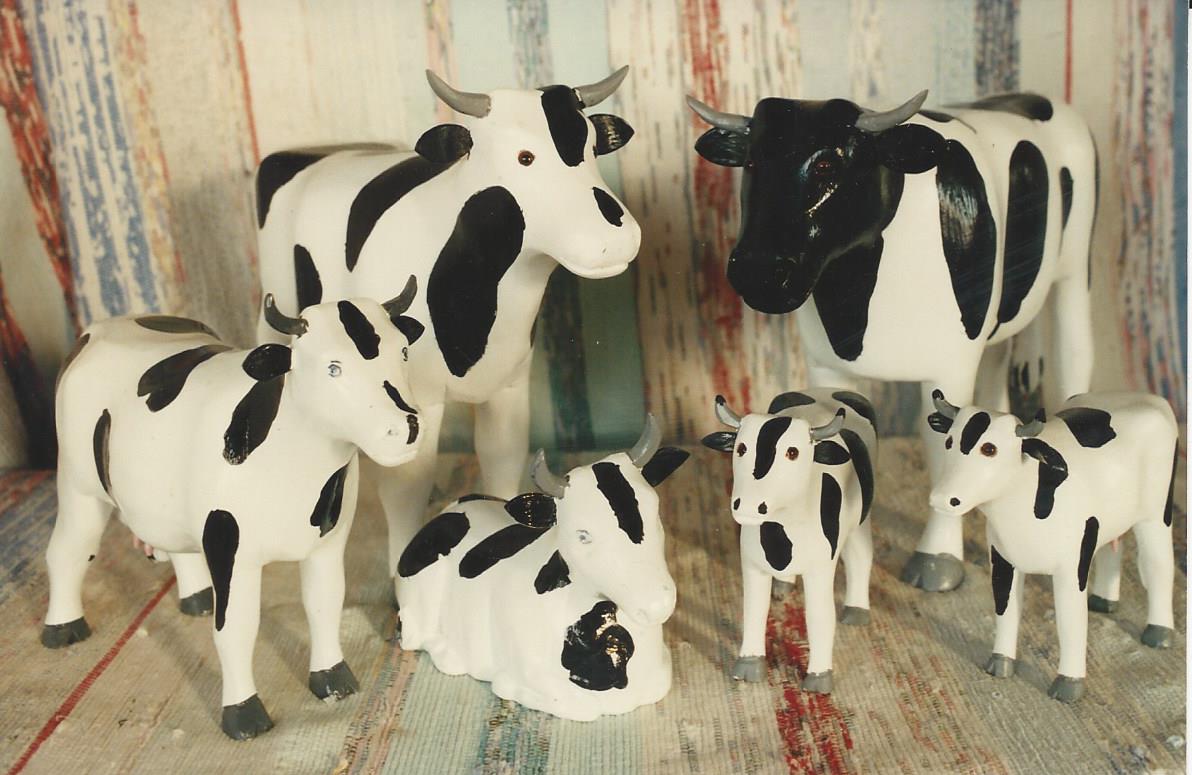
various cow models

various cow models

We would stop in every other week or so and fill out our orders, going through the bins of carvings and picking out the nicest ducks, geese, swans, loons, roosters, and other animals.  We were always interested to see what new models they would come up with.  Penguins, buffalo, bears etc. would appear.  The prices were always reasonable.  I recall the standard size goose would cost about $16 each.  Although there was some variation in quality, (sometimes they would have large knots, or be slightly malformed) overall they were very nicely done.  Initially, all the models were cut out from solid pine, but sometimes these pieces would crack with time, especially if they were not adequately finished, so eventually they started to offer laminated models at a slightly higher price.  This solved the cracking problem, but didn’t look as nice and natural in varnish.  Of course they were the best ones to buy for painting.

inside the factory. Note the pile of geese in the background

inside the factory. Note the pile of geese in the background

As far as I know this small company was, and is the only North American company to “manufacture” folk art type carvings.   Although by the fact that they are manufactured and mass produced they cannot truly be considered as folk art.  And yet you cannot really call them reproductions either because in many cases they are an original design.  For folk art collectors it is important to know of these carvings, and be able to spot them.   They are fine for decoration when bought at the right price, but should not be confused with “real” folk art, which are items of individual expression, and not mass produced.  Although we must also acknowledge that many folk artists, Maud Lewis springs to mind, would repeat favored images over and over again, it is quite different than banging out 100’s of identical ducks using templates and modern wood working tools.   Ironically, I think their market has been effected when the Chinese started to reproduce copies of their work.  I’ve seen lots of these too.

the very popular rooster, and hen with our paint jobs

the very popular rooster, and hen with our paint jobs

note how this is modeled after the Black Horse Beer display

note how this is modeled after the Black Horse Beer display

Pierre et Claire continue to be in business, and have a web site at www.pierreetclaireinc.com, but it is in French only, and does not show many of their available carvings.

Our painted versions of Pierre et Claire animals

Our painted versions of Pierre et Claire animals

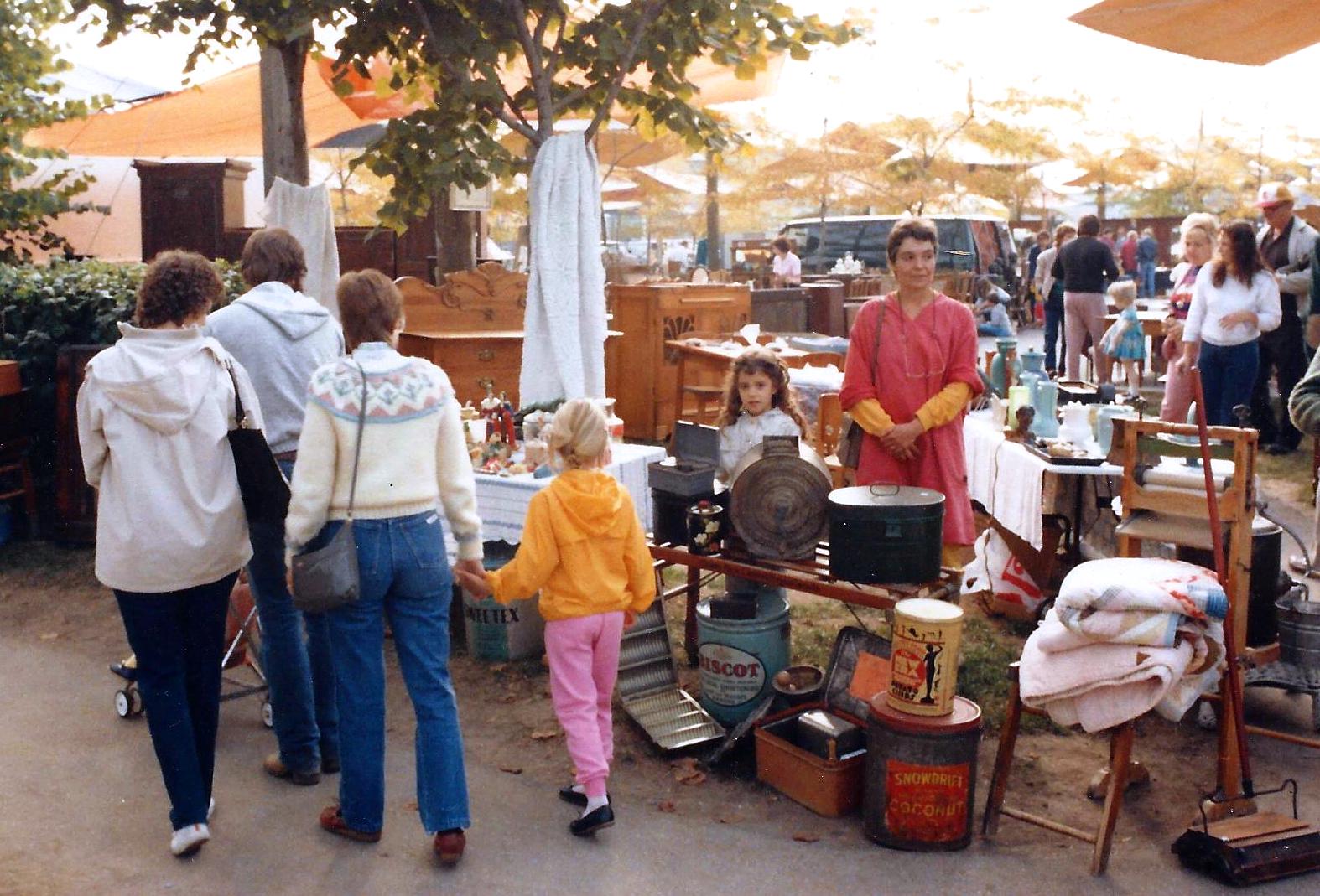
The Toronto Harbourfront Market in its Heyday

Our Harbourfront offerings circa 1983

Our Harbourfront offerings circa 1983

Every Sunday morning from the early 80’s to the late 90’s, the alarm would go off at our house at 4 a.m. The truck would be packed and the load tied down the day before, the lunch would be made and ready in the fridge, and our cloths would be set out. We would hop out of bed, get dressed, grab a coffee and get underway. An hour and a half later we would be pulling in to the Toronto Harbourfront Market, ready for another day of buying and selling. Rain or shine, we would make the journey, full of hope that the furniture and small items that we were offering would meet the approval of someone there.

When we started in the early 80’s the market would be held on about an acre of parkland near the terminal building, with the 100 or so vendors being set up in parking lots and green spaces right alongside the water. In the winter we would go across the road and inside an old one story warehouse. These were the glory days. It’s hard to imagine now just how “hot” the market was. The boomers in general had done well enough that their Toronto houses were paid for and they were madly buying up all the charming little farms and cottages within about a three-hour drive of Toronto. These rural places demanded antiques of course, being sympathetic to the rural environment, and a refreshing contrast to the city digs.

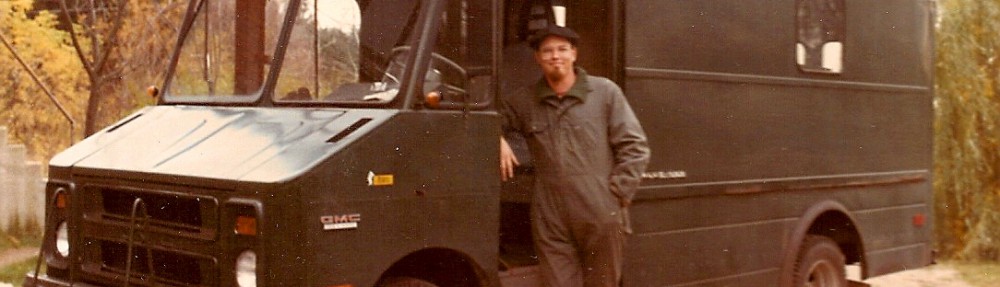
A loaded truck ready to go.

A loaded truck ready to go.

So in these days there was a large number of motivated collectors and dealers arriving about 6 a.m. vying to pick the best of what was being offered as it arrived. It was a thrill to arrive in our open pick-up truck, and have people run along beside us, racing up to the window to ask the price of the pieces they could see tied to the load. Often they would just say “yes, I’ll take it” even before it was unloaded, because they knew the competition was right behind them. It would happen occasionally that by the time we arrived at our spot, most of the furniture which could be seen was sold. Sometimes we had completely sold out by noon, but would still have to stay until five as to not create a disruption. We had our regular dealers whom we got to know would buy certain items without hesitation if the price was reasonable. You had to pay close attention. Sometimes two or three dealers would be right there as a piece was coming off and you had to be very conscious of who asked about the piece first, and who was next in line. It was easy with two people selling, under this kind of pressure to even sell the same piece to two different people. Tempers would flare. It was not always easy to sort out, and have everyone be happy with the results. It didn’t happen often, but it was difficult to avoid altogether.

Then by the mid-nineties, the Harbourfront development had other plans for the summertime parkland, and the wintertime warehouse, and so they built a brand new market at 390 Queen’s Quay W. As so often is the case, these new quarters under new management meant higher rents and lower sales. It continued to deteriorate until it was not profitable for us by the late nineties, and it eventually closed in early 2003.

Our friend, and avid collector Rod Brook used to say that he wanted to produce a book which presented exclusively all the incredible pieces that had been bought by collectors at the Harbourfront market during those glory years. Sadly, he died before he could accomplish this, but I’ll bet if someone took up the cause it would be an amazing document. For a while there it felt like it would never end, but then like everything else in life, it did.

harbour3-1

loading the truck for another Harbourfront Sunday.