Unknown's avatar

About shadflyguy

Owner/ operator of Shadfly Antiques.

When we hit the Motherload in La Malbaie

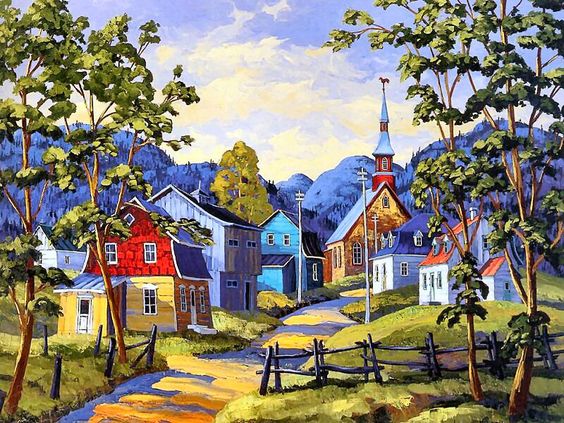
lamalbaieIn the late nineties when we were making regular picking trips to Quebec,  we would sometimes combine work with pleasure, and take an extra day or two to go exploring after making the rounds of the regular picking barns.  It was on one such trip in mid-summer when we had finished combing the barns around Victoriaville, that we headed up route 183 on the North Shore past Quebec city, to the Charlevoix region, and the town of La Malbaie.   Champlain named this place La Malbaie, or “the Bad Bay” when his ship got stuck in the harbour,  but it was known locally as Murray’s bay for years until 1967 brought a new awareness and emphasis on preserving our history.  Whatever you choose to call it, it is a beautiful and magical region of large rolling hills leading down to the mighty St. Lawrence river.  The wilderness is dotted with tiny, quaint villages made famous in paintings by Clarence Alphonse Gagnon, Marc Aurele Fortin and A.Y. Jackson, to name a few.  It has retained much of its early, rustic charm because the region was not easily accessible until the early sixties when the Quebec Government built the big highway, route 183.  However it has been a summer playground for the rich, both Canadian and American since the early 1900’s because its untouched natural beauty was accessible by boat along the St. Lawrence.  For this reason, you still find many impressive estates, and the magnificent Manoir Richelieu, established in 1899, with the current building being built in the style of a French Chateau in 1929.  It’s a wonderful region to explore, and only a two hour drive from Quebec city.
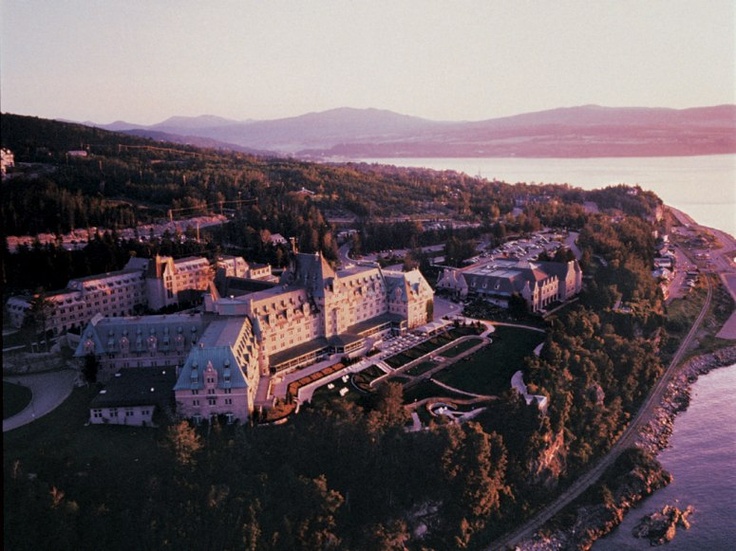
Manoir Richelieu

Manoir Richelieu

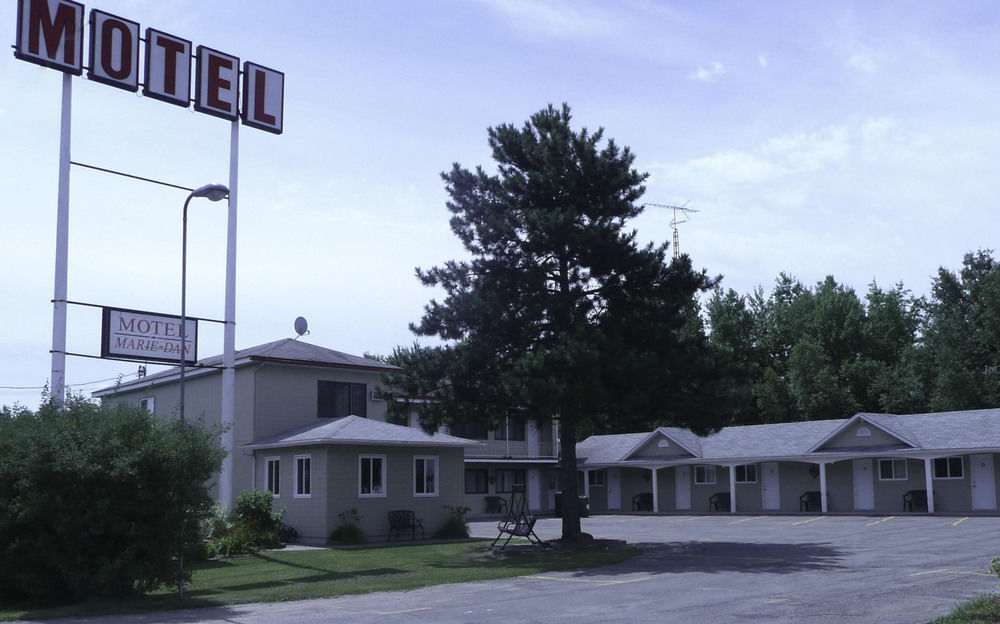
So on this occasion after a full day of enjoying the region we settled on a small strip motel along the river in town, which looked clean and inexpensive.  We had a great meal at the small, attached restaurant and settled in for a good night’s sleep. In the morning, we had breakfast and set about packing up to leave.  I was putting the cases in the truck when a pleasant looking middle aged man approached me.  “So I can see from your truck that you an antique picker.  Would you be interested in looking at some things I have for sale?”  I was a little taken aback as I was thinking about getting on the road, but answered “Well that’s what I’m here for so sure, what are we talking about.”  He explained that the antiques were not at the motel, but in a barn on the family farm, about a half hour drive away.  As it happened they had just sold the farm which had been in the family for years, and before the deal closed in a month’s time they had to clear a barn where they had stored the contents of their grandfather’s museum when it closed in the mid-sixties.  Their grandfather had  run a private museum in an old fishing boat which had been dragged up on shore along the river.  The kind of place you pay a quarter to go through. When they needed the land to build the new highway, he had to close, and at the time just moved everything, lock, stock and barrel to the barn on the family farm.  It had remained there untouched.   He explained that his grandfather was an eccentric who collected and displayed everything he could get his hands on, so that not everything in the barn could be considered a valuable antique.  There is a bit of everything there, furniture, farm implements, old signs,  bottles, eyeglasses,  furnishings, you name it.  Although the time frame seemed ominous, I was curious so we agreed to go and have a look.  What harm could it do.

by A.Y. Jackson

by A.Y. Jackson

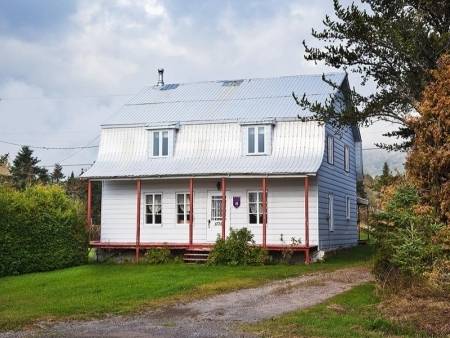
We followed him up and down the twisting country road, until finally reaching a charming, old Habitant farm house and barn looking out over a picture perfect valley.  We drove straight up to the barn.  It was not a large barn, but when we opened the door we could see that it was packed from wall to wall with every sort of thing.  So packed that there was no possibility of entering without hours of shifting large cupboards and the like.  And dark.  As our eyes adjusted we could see about a dozen large armoires absolutely overflowing with objects.  The whole space was chock a block with everything you could imagine.  We spotted several old bicycles, one being a tandem. Lots of books and paintings. Right away I spotted several nice old signs, both commercial on tin, and hand painted on wood. There were quite a few cash registers, dressers, tables, and six glass store display cases. There were benches  and beds, and dozens of cardboard boxes filled with God knows what.   . I could see that four or five of the armoires were really nice, and it seemed he was making an honest appraisal when he suggested that about 80% of it was good but not extraordinary, but that there was some very good things in there as well. As he spoke I scanned the room and made a mental note of  everything I could see. malbaie4
“So here’s the deal.  I want $20,000 for it all with the condition being that the barn must be cleared of everything by the sale date.  When you have everything you want, I know a couple of scrap dealers who will come and scoop up anything that is left, especially metal. There has to be about forty cash registers in there, and a lot of them are newer and nothing special, not to mention heavy so I doubt you will want to take them.”  I stood there in the sunshine, looking out over that beautiful valley and thought “this is a tough one. It would seem the value is there, but it is a hell of a lot of work, and this place is a long, long way from home.”   Jeanine looked over at me and shrugged.  “ O.K.”I said, “it’s a lot to take in. We are interested, but we need a little time to think about it.  Give me your number and I will call you back within 48 hours with an answer.”  He agreed and gave us 48 hours.

We then left after saying our goodbyes, turned west and headed towards home.  We didn’t talk about it until we had travelled for a couple of hours and stopped for a bit of lunch at a roadside food truck. When in Quebec I always have to get my poutine and “vapeur” fix.  A “vapeur” being a steamed hotdog in one of those funny Quebec buns. As we sat there at a picnic table looking out over the St. Lawrence towards Ile d’Orleans  we finally got around to discussing the elephant in the room. I started, “So, I’ve been thinking a lot about it, and we have to recognize that it is a rare opportunity to buy so much from one source.  Also, from what I could see there is easily $20,000 value, but how much more I’m not sure, and it is definitely a lot of work and expense getting it all back home. Not  to mention we only have a month to accomplish it.”.  Jeanine agreed and added “well let’s make a list of everything we could see, and assign what we would think to be a low retail value, and go from there.” We did this and determined that of what we could see, there was about $35,000  worth. Of course we also recognized that what we could see was just scratching the surface of what there was in total.  We drove a few hundred more miles and then Jeanine said “I think we should offer him $15,000, and if we get it fine. If he says no then let’s just pretend it didn’t happen.”  I agreed. It was obvious he was under pressure to find someone fast and if we were going to take it on, we had to be sure it was worth all the trouble.  Jeanine phoned him right away on the cell, her French being so much better than mine, and I was surprised to hear her offer what sounded to me like $10,000. Then there was a pause, and she gave me a big smile and thumbs up .  A moment later she was concluding the conversation by saying, “O.K. it’s a deal and we will be in touch when we got home to arrange the details.”  I looked at her and laughed.  “Am I correct that you made a snap decision there to offer him $10,000, and he agreed?” “Yes, well I was going to say $15,000 but then I started thinking it’s typical in Quebec to ask twice what you really want because everyone negotiates so fiercely, and $10,000 just came out of my mouth.  He jumped at it.”  Good work Jeanine.  Now we just have to go home and figure out what we’ve gotten ourselves into.

Next week – Bringing it back from La Malbaie.malbaie7
Lunch in St Eulalie

vue-aerienne-ste-eulalie Just as many of the dealers and pickers active in the Victoriaville area in the eighties would meet at the Esso Station across from Kojak’s place on the outskirts of town for breakfast;  the same bunch would  turn up for lunch at a trucker’s diner twenty miles away, on the north side of the big highway 20,  in a tiny place called St. Eulalie.  At lunch time the parking lot of this busy establishment would have from 6 to a dozen pickers trucks lined up, and typically you would find small groups of men checking out what was tied down there, and discussing the possibility of a transaction.  Most of these pickers were loyal to one or the other of the half dozen antique centers in the area, so they would not sell to you directly, but they may tell you where a piece was going and to whom you needed to  inquire about it.   There was always a lot of lively dialogue and laughing going on.  Tips, news and gossip in equal measure.  Sometimes you would witness heated arguments.  Eventually everyone would make their way inside, and take their favorite seat in the crowded dining room, and the talk continued.

I loved the scene.  If we were nearby at lunch time we would turn up there along with everyone else.  After checking  out the action in the parking lot, we would make our way inside  to order a lunch special, or sandwich, followed by a nice piece of sugar pie.  A Quebec delicacy that is as disgustingly sweet as it sounds, but it goes well with a cup of coffee and dialogue.12260907_4_z

It was always crowded with locals, and those who were travelling on the Grand Route 20, and the wait staff was plentiful and efficient. The joint was jumping.

I remember one sunny summer day in particular sitting in a booth looking out onto the parking lot with one of the main dealers of the area, and a good friend, Ben.  Ben was always smiling, and his sunny disposition rarely changed.  On this day however, we were sitting there peacefully having a coffee before ordering when he looked out the window, saw a man get out of his truck, and suddenly jumped up and said” I’ll be right back.”  I watched as he raced out the front door, crossed the parking lot, and went right up to the fellow, parking himself about an inch from his face; and then started yelling.  I could not hear the conversation but you could see that it was heated.  The intense conversation continued back and forth for another moment and then suddenly, bam, Ben hauls off and punches the guy in the face.  The guy falls back a couple of steps rubbing his chin A few more angry words are said, and then to my surprise both of them come together back into the restaurant and sit down at our booth.  “You didn’t have to hit me like that Ben.  I told you I was sorry about the deal.”  “I didn’t have to but I wanted to, and I told you that if you ever crossed me again like that, you’d pay for it.”  Well, o.k. I was wrong but I’ve apologized and now it’s water under the bridge, right?  “ Yes, but don’t you ever try to pull anything like that again.  You know I will find out about it and It’s no way to treat me after all the business we have done.”  “You’re right Ben. I’m sorry.”  After that it was all sweetness and light.  Pleasant conversation, jokes and eating a good meal together, as if nothing unpleasant had happened.  I realized then that the Quebec guys ran a little hotter than we do in Ontario, and they have ways of resolving differences that we wouldn’t consider.  I respected that they could be so open in expressing their feelings, and that  issues got resolved quickly, and then they moved on.  Still, I made a mental note to avoid pissing off Ben.15798173115_46487d98c9

I cannot remember the name of the place.  It was something  generic like Voyager’s Inn or the like;  so I went on to google map to see if I could see the sign out front.  I was shocked to discover that there is nothing there now save for the big paved parking lot and a lot of weeds.  The place must have burnt down.  It made me feel sad that if we were to go there now, we would have to discover where the new place to meet is,  if they are still even doing it, and it would surely not be the same.  That’s the problem with going back after so many years.  Everything changes and some things disappear.  Brings to mind Thomas Wolfe who so succinctly put it in his 1940 novel, “You can’t go home again.”facade-immeuble-commercial-a-vendre-ste-eulalie-quebec-province-large-592792

Cabin Fever beats the winter blahs

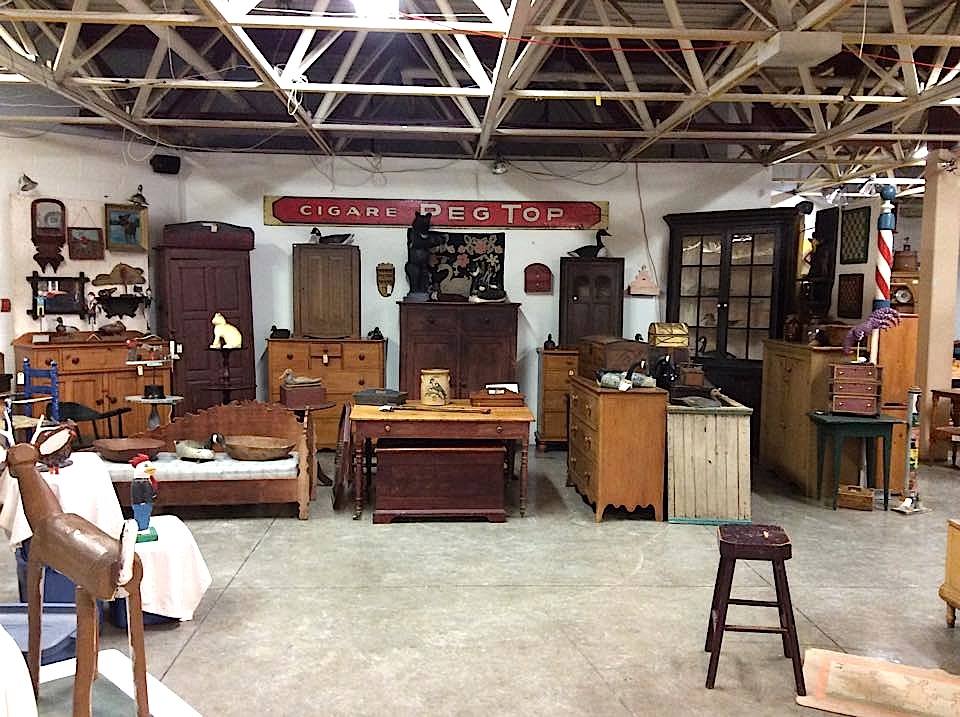
cabfever2As I write this the approximately 40 dealers who will be participating in the Kingston Winter Antique show or “Cabin Fever” as it is known, will be waiting patiently in line for their turn to enter the big loading doors and unload their truck inside.  Only two or three dealers can enter at a time and you are expected to unload as quickly as possible and exit to let the next person have their turn.  There are four or five strong, willing helpers provided which definitely speeds things up, not to mention lessening the wear and tear on the dealers.

Cabin Fever is the first important Canadian antique show of the season, being held early in February, and it is always filled with top quality dealers and items.   Many dealers showing here do only a couple of shows a year, with the Bowmanville Spring Antique show being the other big show for “serious” collectors of Canadiana and folk art.cabfever1

Kingston, and Eastern Ontario in general have traditionally been the home to many of the most serious collectors of early Canadian country furnishings  so the dealers work hard to offer their best.  People really look forward to this show.  They line up hours before the 10 a.m. opening to be certain that they will be first through the doors, and directly on to their favorite dealers.  Many of the best items are sold within an hour of opening.

When we were doing shows, Cabin Fever was our favorite.  It’s run by some very nice folks who make it their business to take care of everyone’s needs.  Your rent includes two nights at the nearby Fireside Inn, and coupons for free breakfasts and Saturday night dinner. Because everyone stays at the same place they cut a deal, and pass  it on making it quite reasonable for the individual dealer.cabvever6

The promoters do a good job bringing the dealers and collectors together. They offer a good rate on rooms for collectors,  and throw a big party on Friday night.  Everybody relaxes, has a drink and snack and mixes it up. You overhear conversations like “what did you bring me that’s really special”, and “ did you happen to bring any redware” etc.  The savvy collectors are lining up their plan of attack for those first vital minutes.  Some arrangements to put things aside are being subtly worked out.  It’s all part of the game.cabfever8

It’s funny what you look forward to.  One of the great pleasures of doing this show for me was the coffee room. During set up  they always present a tray of the biggest, gooiest cinnamon buns you’ve ever seen, made by a local bakery.  They are delicious and are sure to raise your sugar levels high enough to provide plenty of energy for all that unloading and unpacking.  That and a good strong cup of coffee and you are away to the races.  The coffee room remains open throughout the show and is the place everyone likes to come to hang out and tell stories. In the old days it was also the smoking room.  It got so smokey in there it was ridiculous, and the nonsmokers eventually forced the organizers to see reason and kick them out.  First to a dinky little closet near the furnace room, and eventually right out of the building.  The smoke was hard to take, but the stories  being told by the old-timers in those days while they enjoyed their smoke and coffee was almost worth the potential lung cancer.  Talk about your picker’s stories.  Once these guys got started it didn’t stop.  Then when everyone gets set up and you are back at the Inn, everyone goes for a cocktail and again the stories begin to flow.   Maybe it is the actual cabin fever effect of the season, but people do seem awfully glad to be getting together, and shooting the crap, as it were.  The set up on Friday can see a lot of dealer business.  You notice a lot of items moving from booth to booth. Deals can continue to be made well in to the night.cabfever3

Saturday morning, 10 am. The flood gates open, and you are run off your feet for the next couple of hours while the keeners swoop through and make their selections.  At a show of this caliber, the first three hours can either make it, or break it.  Sure, you can have a good sale anytime right up to the last minute, but your odds are greatest with this first wave. It can be very exciting or quite frustrating.  People hardly slow down to look.  You can stand there quite a while answering questions and greeting your regular customers before someone breaks the ice and buys something.  You can also sell five or six things in rapid succession right off the bat, and then sell nothing for a long time. While people continue to move in and out of your booth you do your best to stay engaged and make the sale where possible.   By the time you are sending somebody out for lunch sandwiches about 1 pm you’ve got a pretty good idea of how your show is going to shape up.  That being said, it usually worked out well for us and we felt pretty comfortable early on.  It’s a whole other crowd in the afternoon.  More of a general crowd like you would encounter at any outdoor or mall show.  There’s typically a lull in the middle of the afternoon, and then sometimes a bit of action towards closing.  People coming back for something they had looked at earlier, for the most part.  “We’ll think about it over lunch”.  Ya right, but then once in a while they do come back.  Win or lose, by the tie five o’clock rolls around you are ready to head back to the Inn and put your feet up.  Then you’ve got a little bit of time, or a lot of time to relax and enjoy a beverage before dinner, either at 7 or 9 pm.  Being basic, farmer types we always went for the 7 pm dinner so we could be in bed sooner.  The real fun people all went to the 9 pm sitting.  We would hear about it at breakfast the next morning.  Reports on all the fun and festivities which often included the throwing of buns. Too much fun for yours truly.  I remember one year when our friends David and Mary Jo Field introduced me to the joy which is  the martini.  I liked it so much I had another and then had to go to bed, missing even the 7 o’clock dinner.  cabfever7

Sunday is a good day to really look over the show, and get caught up on news and rumors with the other dealers.  Somebody is typically designated to go and fetch a wonderful lunch from a downtown bakery and café called Pan Chancho.   Whoever has the biggest harvest table will host and we would enjoy the spread while everyone kept an eye on each other’s booth.  By 2 p.m. you are anticipating the 4 o’clock finish,  and starting to pack up in your mind.  By 3:30 everyone is getting their boxes ready, and getting their trucks in the line up to be brought in as soon as the show closes.   Everyone waits until closing time and then swings into action.  Some who have no large furniture will park beside the door instead of waiting to come in, and will bring everything to the truck.  This was my routine the last several years of doing the show.  For the most part it was o.k. but I remember a few years when it was -20, and your hands are just burning as you stand out there in the blinding snow trying to tie down your load.  Facing a five hour drive home, and that is on a good night.  If you drive through a snow storm, it can take a lot longer. Mind you, if you are coming off a good show you are feeling great anyway, so you can take that positive energy, tune in a good station on the radio,  and just head towards home.cabfever4

More about door knocking

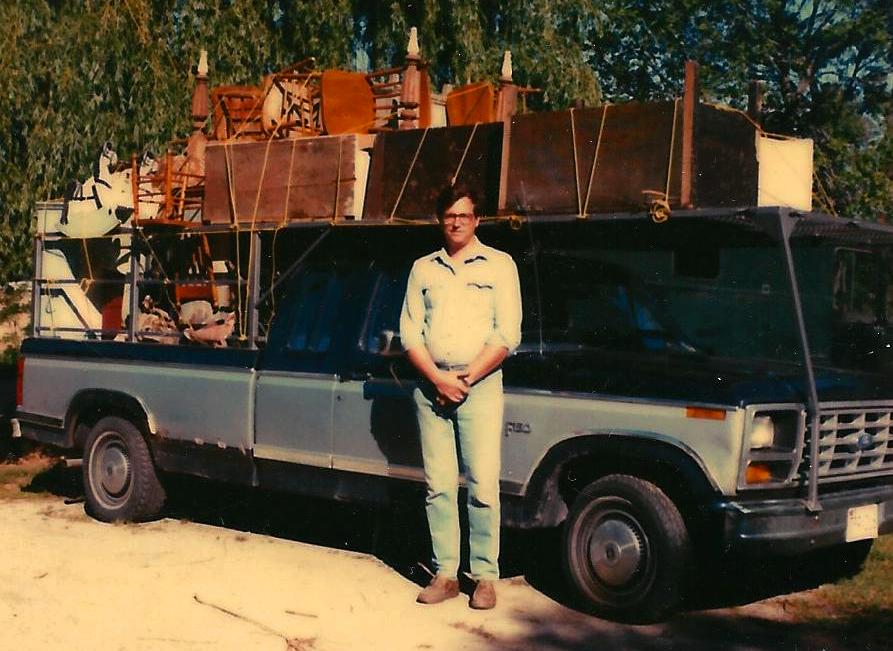
truck2Early on in the game I  realized that the truest adventure of the antique business lay in door knocking.  It’s one thing to source from auction, other dealers and collectors you know, it’s quite another to pull up to a lonely,  run down farm in the middle of nowhere, and knock on the door. You don’t know what type of person you are about to meet.  It’s a bit like hitch hiking in that respect.  Most people are o.k. but if you keep at it long enough you are going to meet up with your fair share of weirdos, some who can even be dangerous.

I  was never a full time picker, but I wanted to experience the excitement of it so I would go out for a couple of days to a week every so often, usually with a buddy, and treat it like a  fishing or hunting trip with BBQ and beers, and lots of bullshit stories.

It is always a good idea to be picking with someone else. Not only for security, but for the more mundane legal reason that you have a witness to verify the transaction, should the kids come back at you, or the like.  You have to trust and respect your picking partner though, and have some fair way of distributing the booty.  The ordinary stuff isn’t hard to figure out.  The problem arises when you come upon something wonderful that you both lust after.  You can take turns buying and leave it up to chance, or do what I liked to do  and agree that if you come up with a real treasure that you both want you own it together.  On my picking trips with buddies we came across some nice gear, but nothing that fell into this category.

I would occasionally go out on my own. I liked to go down to Kent and Essex county where my dad had owned and run farm papers.  A lot of people knew my dad and it would quite often be the ticket indoors.  For the most part people are pretty nice around there, and I could leave early in the morning, pick all day, and come home with a fairly full truck the same evening. It also just felt good being around the old parts.  It’s desperately flat country, but it has its charm. I wasn’t like the guys you see on t.v. buying anything that had value.  I didn’t want to haul and distribute a lot of o.k. but ordinary stuff.  I cherry picked. China stayed in the cabinets but I would do my best to leave with that nice wall box found buried under junk in the shed. It’s funny because nobody wanted much for good primitive furnishings but everyone was looking for top dollar for the silver plate.   At the base of it, it’s a treasure hunt. Much like we played at as children. That treasure just might turn up at the next stop.

One thing I noticed early on is that it is not often the house that looks like it would have a 1830 flat to wall in the back kitchen that actually produces much. It’s likely been picked several times. It’s just as likely to be in the basement of the 60’s ranch style house that the farmer built himself next door.  People have been picking for a long time.  Almost every rural property has been visited at least once over the years. Inevitably you would confront the story that it’s too bad you didn’t get here ten years earlier.  But it also worked out sometimes that people would come to regret refusing an earlier offer, or their situation had changed, and you could buy something for what they had been offered. Or at least what they said they were offered.

Looking  mostly for primitives  it is fairly frustrating how many of these turn of the century farms are filled with turn of the century manufactured mail order furniture.  An awful lot of maple stenciled to look like oak. Your best chance was in the basement, outbuilding, or barn.  Not always rural either. Some of the best things I have found came from homes in small towns.

You like to feel that you get a gut feeling, but this is a romance, and often just something you tell yourself to keep pressing after several disappointments.

What’s worse is after hours or days of finding nothing you come across the crown jewels, and they refuse to sell it.  This is when you need to use your head and stay cool.  I never played games with people by feigning disinterest. Without revealing my hand I would show genuine interest in the things I was genuinely interested in. Too emphatic and they might close down and send you packing.  I would never try to belittle the item, recognizing most people can spot a phony.  No, best to tell them that you respect and value an item and offer them a fair price.  You don’t necessarily give up at no. You do your best to keep the conversation open and positive, eventually coming back to a second offer.  Mind you this is just the way I did it because I like to sleep at night. Even if I couldn’t get them to budge after several attempts I always left my calling card in case they changed their mind, and then check back in with them for a friendly hello from time to time.  Just a general chat with a casual reference to how much you still like the piece.  It’s sometimes worth it.   You can go back five or six times unsuccessfully and then be delighted one day to hear that they have decided to sell.  Picking with respect.

Not everybody works like this.  There are some hair raising stories of some legendary pickers especially from earlier days who were essentially bullies.   They would get in a house and aggressively brow beat the poor old couple until they would give in.  Picking using fear.

Like any human endeavor, with picking there is a light and a dark side.

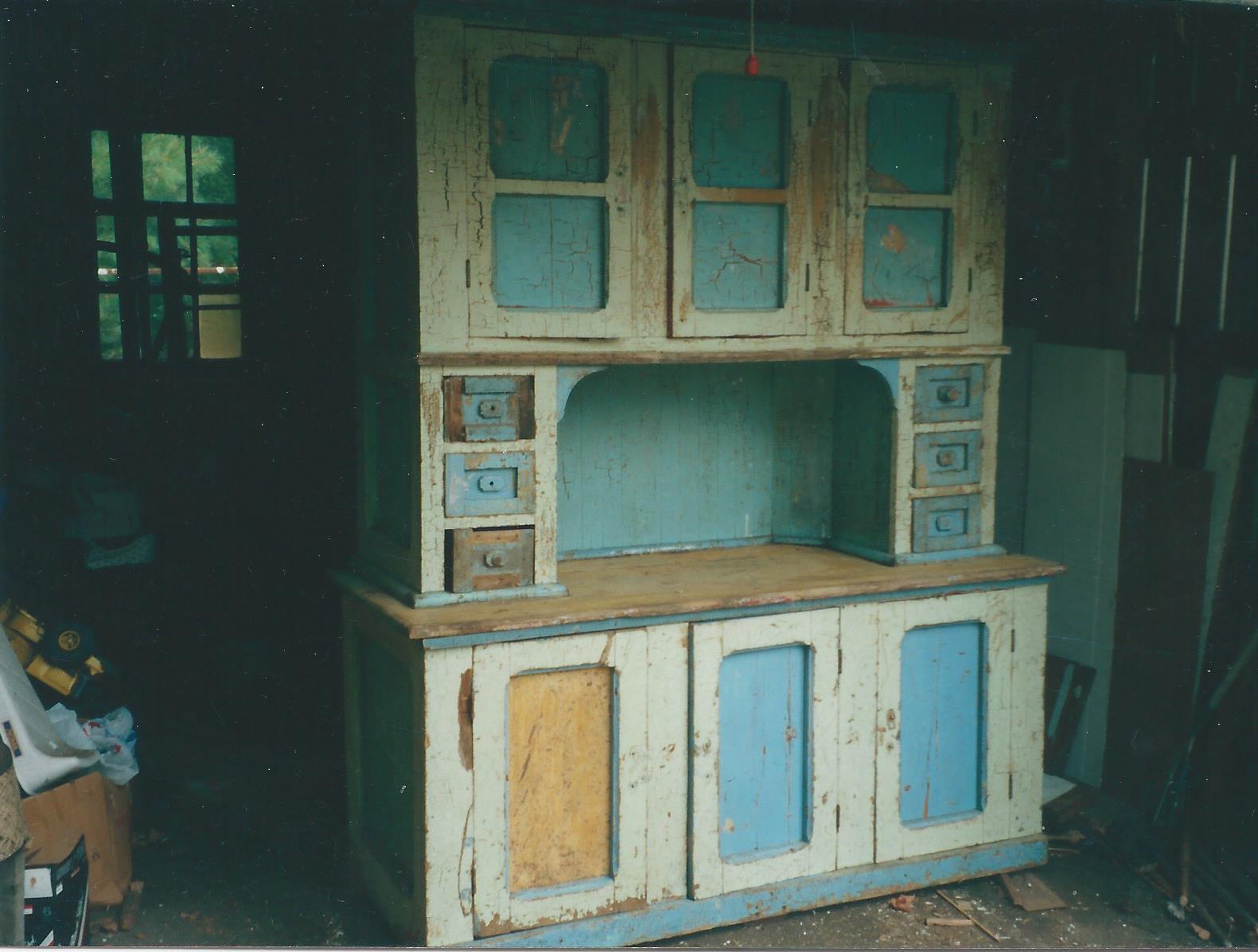
It came with this topper

It came with this topper

Door knocking – picking from the source

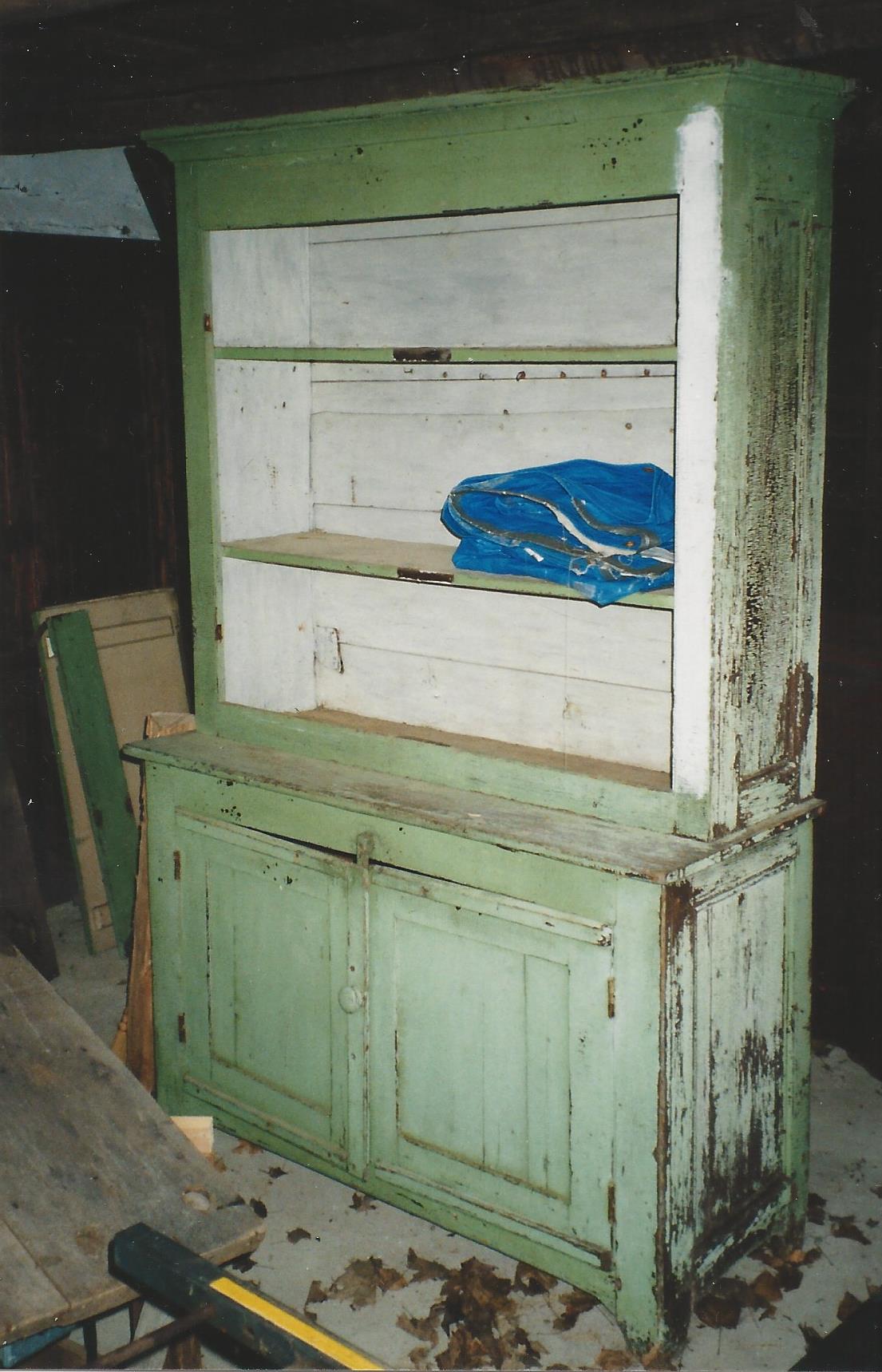
cupboard found in back kitchen

cupboard found in back kitchen

People, including myself will refer to a day of going to shops, and other dealer and collector’s homes for the purpose of finding stock as “picking”, but the origins of the word “picker”, and the true meaning of the word “picking” more correctly refers to the activities of the foot soldiers of the antique trade.  The guy or gal who goes out, and “cold call” knocks on doors of people they do not know, in an attempt to buy from the source.  There is a technique to the process of door knocking which can be learned in theory, but the success of a “door knocker” is determined by personality, communication skills and an ability to be rejected over and over again without becoming morose.

The trick is to get inside. If you knock and after a pleasant good day simply ask if they have something for sale, most people will send you packing.  The trick is to engage in some casual conversation and let them get to know you a little before you ask about buying anything.  You need to develop trust.  One technique pickers use is to say that they are a hobby collector of old bottles just out for a drive and they thought you’d just drop by and ask if there might be any old bottles in the basement.   Who doesn’t have old bottles in the basement, so if you seem trustworthy enough you are in. Once down there you can look around and casually notice the old flat to the wall cupboard holding old preserves.  It’s best to start small.  Get them to sell you anything easy to part with. Offer them $10 for something you know is not worth more than $2, to start the process and a little enthusiasm, and you may come away with a full truck.  It sounds easy, but it’s not.  You knock on a heck of a lot of doors before there is even a slight hope of success.  A lot of people these days are not that happy to be disturbed, and if you go to the wrong place, it can even be dangerous.  You need nerve and a thick skin to be a picker.

she's rough but she's a survivor

she’s rough but she’s a survivor

When I started in the business over thirty years ago, there were many of these “door-knocking pickers”.  In Quebec, all the Antique distribution barns had several associated pickers who would head out each day, returning late with their finds. Some pickers developed long standing relationships and sold everything to the same person. Others, acted independently and would make the rounds. Meanwhile, the pickers from Ontario, seemed for the most part to work independently, making the rounds to dealer’s shops, but also turning up with their fresh picked stock at outdoor shows, and markets.  Times and attitudes have changed and now this type of picker is almost extinct.  Another endangered species which is moving quickly towards extinction.

But even thirty years ago, most of the great door to door picking was behind us.  You need to go back to the fifties and sixties to hear stories of the almost endless bounty those first door knockers could come up with.  Rural people, especially on the smaller, less prosperous farms saved everything.  New kitchen table in, save the old one in case you need it to butcher chicken’s on it one day, and so forth.  So, when those pioneer pickers would turn up with a pick-up truck, a smile, and a pocket full of cash, there was enthusiasm to sell them whatever they wanted.  No Antiques Roadshow to fill people’s heads with big ideas.  Here comes a guy who is willing to give me twenty bucks for that old table in the back of my barn. No problem. Here, let me help you load it.  There are even stories of pickers bringing along one of those shiny new, easy to clean Arbourite and chrome tables, and very kindly swapping for that nasty old eight foot pine harvest table that had come with the family from the old house.  It took a while, but eventually word got out after somebody went to town and looked in the windows of the antique shop. Then pickers had to work harder, and pay more.

used to hold old paint until it was found in a garage

used to hold old paint until it was found in a garage

Today, as I said, there is only a small fraction of these ground level pickers in our midst.  People are savvy, or they think they are, and somebody told them that old book was worth $1,000.   You may know that it’s worth $400 so you try to buy it for $300 from them. Good luck. That’s how it is today. Also, people don’t inherently trust one another anymore so if someone they don’t know comes up the driveway and knocks, they are just as likely to phone the security company as they are to answer.  Not to mention the price of gas.

There are some legendary picker’s stories out there, some which I will recall here in the future, but there are many, many more which have disappeared with the breed.  There’s still a few people around who could entertain you for hours with their picking recollections, but they are getting up there.  Best to ask them to tell you some stories soon before they forget.

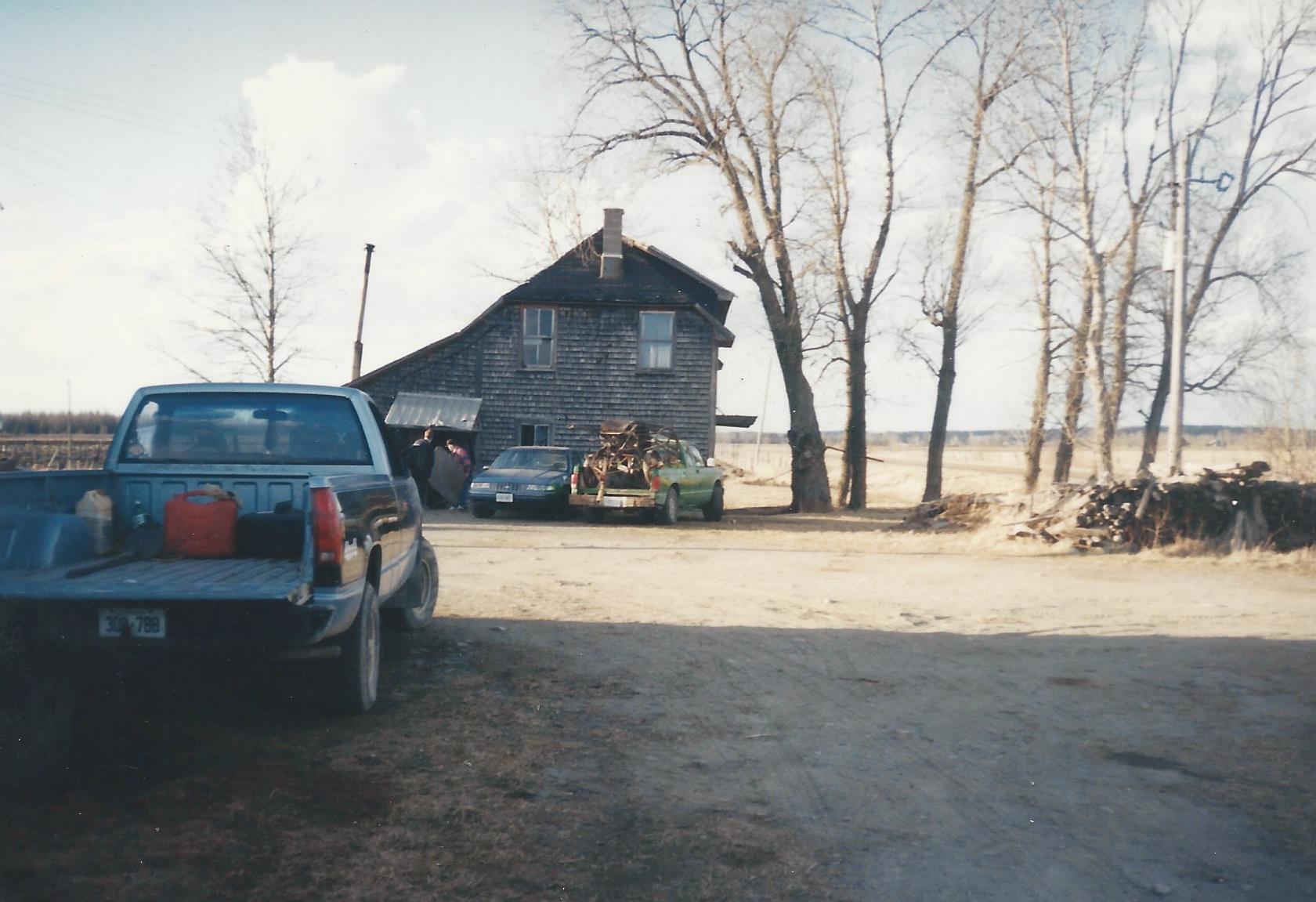
picker's truck pulled up to an old northern farm

picker’s truck pulled up to an old northern farm

First, we take Manhattan – part two

newy6We had outrun the snow storm, and arrived at the Puck building in Soho before the morning rush.  Although it was two hours before the designated set up time of 8 am, Jeanine and I had already had a morning coffee and a lovely smoked salmon sandwich on rye.  One thing you had to say about this promoter is that he really fed you well, knowing that dealers think with their stomachs.  None of the crew that would help dealers unload would be there for two hours, but we hadn’t slept and were running on nervous energy. Anxious to get at it and set up, so that we could get to the hotel and sleep.  We had rejected the idea of a nap.  So, nothing to do but drive the truck up to the nearest door to our booth and start lugging.  There was no traffic so this was a snap.newy2

We pulled up the door of the cube van and became intimidated for a moment by the size of the load.  We had a good-sized booth and wanted to do well, so we were loaded for bear.  Just then as we were stretching out our muscles in anticipation of the task ahead we spotted a young, black guy, in a black hoody sliding up the sidewalk.  He stopped as he reached us, smiled, and said “Can you use a hand”.   “Well, if your offering, we could actually. I’ll be glad to compensate you”. Without a beat. “Let’s get started. I’m Leroy.  Where are we going with this stuff”?  “Right in here, Leroy.  I’m Phil and this is Jeanine.” A little bow and a handshake. “Nice to meet you both. So what I’d suggest Phil is that Jeanine stays at the booth, you bring the small stuff to me off the truck, and I’ll look after the middle. The big stuff we’ll have to do together. ”Sounds great Leroy. Let’s get at her.” He was a wonderful helper, remaining positive and up-beat the whole time. Full of suggestions; “Well I think you should put that cupboard over there Jeanine”.  It was actually fun.  Within an hour and a bit everything was in front of our booth and we were already half set up.  We thanked Leroy, and asked if he might come back on Sunday night at 6 when the show was over to help us reload. “Well that depends. I’ll try, but I can’t promise.  No problem Leroy, so let’s see” We’ll call it an hour and a half, so how about 30 bucks? Does that sound fair?”  “Oh no Phil.  You’re in the big city now you know.  Everything costs more.  I think you’ll have to do better.”  He was right, of course. My Scottish nature had made me offer him a country wage.  “Alright Leroy, let’s make it $50.”  That’s right, Phil. Now you’ve got it. Now you’re in a New York state of mind.”  Leroy shook our hands, wished us a great show, and headed off in the same direction he was going before. Sometimes help arrives when you need it.newy1

By the time I had taken the truck to the parking lot ($125 dollars there for the weekend.  Now I know what you mean Leroy.) , and we had finished setting up, we were totally pooched.  It had started to snow heavily about 10 a.m. so in the cab on the way over to the hotel later that afternoon we were becoming concerned as to whether anyone would be able to make it to the show the following morning.  We were too tired to care much at that point.  All we could think of was a shower and a bed.

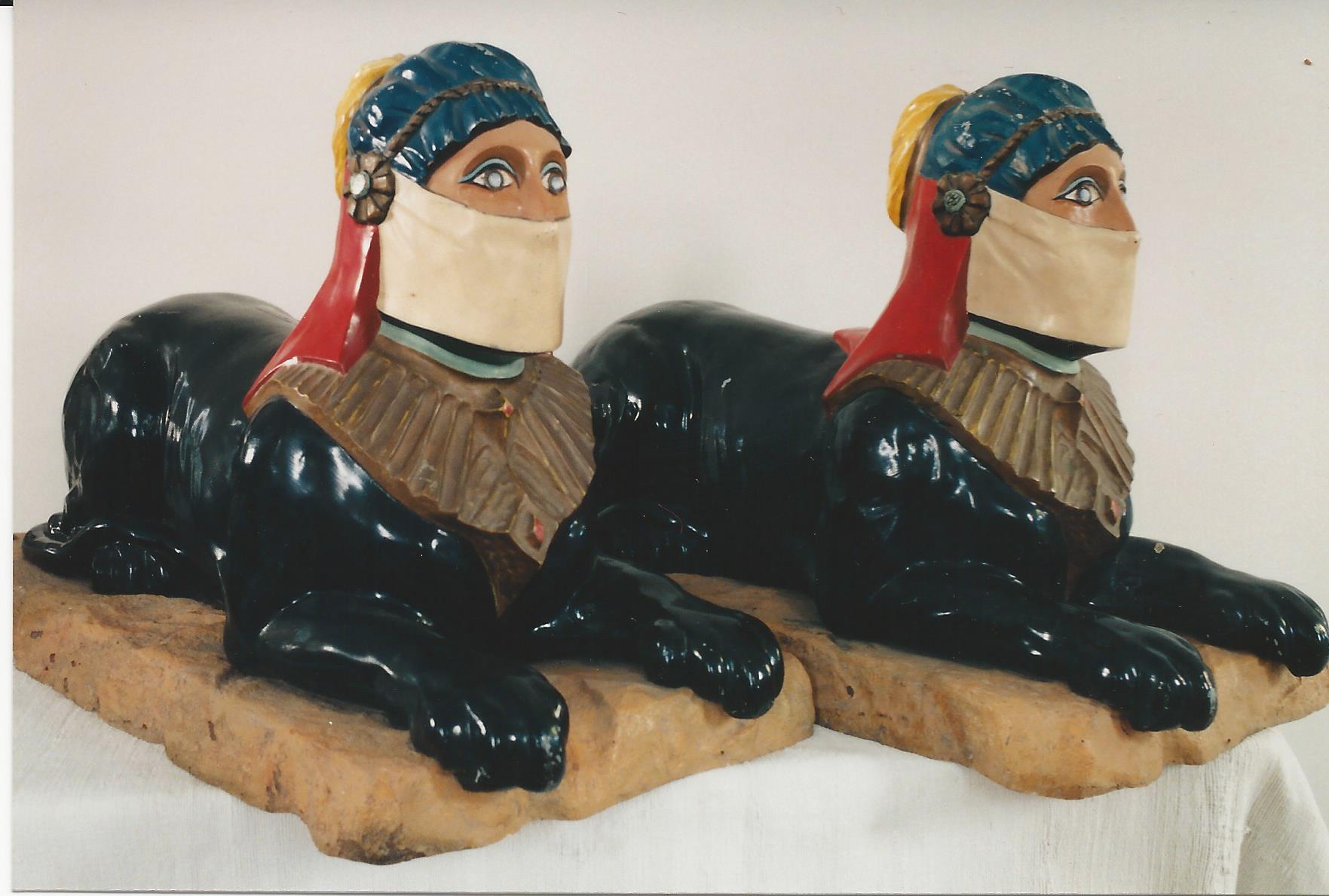
We arose to snow covered streets, but nothing that would stop a dedicated antique show lover.   At 9 am when we arrived at the show there was already a small line of people waiting.  By the ten o’clock opening, there was maybe 60 to 80 who rushed in.  Not a Bowmanville opening night crowd, but serious shoppers none the less.  The first person to approach us was an interior designer from Brooklyn who could barely contain herself with excitement over the sphinx’s.  She asked for the dealer discount which we provided and she immediately said yes and gave us $100 down, pleading with us not to sell them to anyone else while she went to a cash machine to come up with the rest.  We reassured her that with the deposit they were hers, no matter how much extra someone might offer.  I can’t imagine reneging on a deal once money has changed hands, but I suppose there may be some who can justify it to themselves. Somehow.  It wasn’t a problem in any case because although others did admire them, everyone respected the sold tags, and she was back within the hour with the cash and a van to take them.  Several more sales followed over the next two days despite the relatively low attendance.  At least those who came were keen, and decisive.  What surprised us most was the high number of people who knew about Canadian folk art.  Many people would recognize a Charlie Tanner, or Edmund Chatigny, and everyone seemed to know who Maud Lewis was.  We were told by several people that they had gone to Nova Scotia on a field trip arranged by the Museum of Folk Art.  We were in high spirits at dinner on Saturday evening when we met our friends who live in Manhattan.  We had delicious Japanese food that was still quite a novelty to us, in a place our friends frequented.  A couple of glasses of sake and we really started to feel the buzz of the city.

Sunday was cold and blustery, but we did a bit more business and knew that we would go home with considerably less stock and more money, which is of course the point of the exercise.

Leroy was a no show at pack-up, and the gang of young Russian thugs the promoter hired to help load just about gave me a heart attack with their careless and at times downright brutal loading techniques.  At one point I was having to catch boxes full of delicate items thrown at me from the back door of the truck.  Hair raising stuff, and they looked like they might kill you if you complained. Still, we were packed in about an hour and heading down the West Side highway, heading to the George Washington bridge   as the sun set, and the street lights came on. The icing on the cake is when I heard the immediately recognizable first chords of waw waw guitar and the golden voice of Isaac Hayes utter the first lines of “Shaft”.  A song I had always heard as quintessential New York.  It was a magic moment we had there heading down the West Side Highway listening to Shaft.  A perfect moment.newy3

First, we take Manhattan – part one, getting there

newy1In the early nineties one of Canada’s top promoters of high end antique shows bravely decided to take a swing at the big apple.  He decided to piggy back on the excitement around the annual January Antique Week in Manhattan where at the time there was about a dozen shows taking place in the area over two weeks. He managed to rent the well-known Puck Building in Soho, and he advertised widely. He even organized a free shuttle bus to run between the Puck building and the Winter Antique Show held at the Park Avenue Armory, and a couple of other of the big venue shows.  His full-page ad proclaimed “the Canadians are invading New York….”  I forget the exact wording, but the gist of it was we were there to kick American ass.  It didn’t appeal to my humble Canadian nature, and I don’t think it appealed all that much to the American dealers either who stayed away in droves, but I must admit it was a gutsy move.

Things started to unwind a bit before they even got started, when a couple of the established big guns of the Canadian Antique scene decided it was too risky, or the costs were too high, or whatever, and refused to participate.  The promoter had promised folk art, and had asked me to come along, but I too thought it was too large an investment on a first time show and passed.  It was a week before the show when I received the call stating that I was desperately needed in New York, and I could name what it would take for me to come.  Well, I thought about the success of the two Outsider Art Fairs that I had recently participated in, and how I liked and respected this promoter and what he was attempting, so with a nod from Jeanine I let him make me an offer I could not refuse.  It was still a risk, but we love New York, and the thought of selling there was very exciting.  We also had a lot of interesting “gear “(stuff for sale) at the time, including a pair of fiberglass Sphinx that had once graced the entrance of the Bill Lynch Circus which was big out of Nova Scotia in the forties.  We thought they were magnificent but had not been able to get any interest at two or three fall shows in Canada.  We thought they might be appreciated in New York so we put a bold price on them, figuring if we didn’t sell too well otherwise, the sale of “the girls” would help out the bottom line.newy4

I remember that set up was from 8 a.m on Friday January 24, 1992, but you could arrive anytime provided you were set up for the 10 a.m. opening on Saturday.  Our truck was old and open backed, and they were forecasting a lot of snow coming so we decided to rent a cube van.  In for a penny. In for a pound. Logistically we decided to pick up the truck on Thursday at 5 p.m. which I talked the rental company into counting as being picked up the next morning, saving us a day’s rental.  They knew they were going to make good money in the kilometer charges and I was a regular. The concept was to load the truck which we knew would only take a couple of hours as everything was packed and ready. Then we would leisurely have our dinner, take showers, and catch an early night, so we could leave about six the next morning.  On a good day this would put us in Manhattan about 6 in the evening, and we would be able to unload and set up in the evening and hopefully get to the hotel about 9 or 10.  We did not know how long it may take to clear customs, but we did know that we could take all night to set up if we wanted to, and we did not want the expense of another night in New York and another day’s truck rental.

But here’s how the best laid plans can fail in January.  You guessed it.  The weather.  All day Thursday as I waited for the 5 p.m. pick up of the rental the weather reports became more and more alarming about the huge snow storm which was making its way across the mid-west U.S. on line to arrive at our place about sunrise.  Just as we would be leaving.  This was a biggy.  A no kidding, you are going to get nailed snow event.  About two in the afternoon when we stopped for lunch I looked to Jeanine and said.  “I think we have to try to outrun this baby.  We should pack and go right away and at least get through customs and a bit down the road and then pull into a hotel for the night.  At least if we can get out of the Buffalo area it shouldn’t be so bad.  We cannot afford to not make it there in time. We have too much riding on it.”  Jeanine found this a hard pill to swallow but soon saw the logic.  So right after lunch I called the rental place, put on my sweetest voice and talked them into letting us have the truck then. We hurriedly packed the truck with the help of our worker Albert and our son Brodie who was called into duty, and so by 5 in the afternoon we were on our way.

I remember that it was beginning to snow lightly as we entered the customs warehouse in Buffalo.  We sat in a cold little room over-illuminated with a weird green fluorescent light alongside a dozen or so actual truckers. We were all trying to stay warm sipping lousy vending machine coffee, and making small talk as we waited for our number to be called. All the while conscious of the increasing snow floating gently down outside the tiny window.  This was the scene for about 45 minutes which felt like 45 hours when you can see and feel the coming storm.  When we pulled onto the interstate I said to Jeanine, “let’s just go down the road a way to get a little distance in tonight.  I’m feeling awake and every mile we cover, makes one less mile tomorrow under much worse conditions.  I gassed up the beast, and we headed down the line. newy5

The snow was getting thick on the road and the road reports were not encouraging but we kept on.  Then after about an hour the snow started to lessen, and we realized we were becoming slightly ahead of the storm.  We got some coffee at a service center and I looked over to Jeanine who before the stop had begun starting to snooze, and suggested “Look.  I’m feeling o.k. there’s some good tunes on the radio, and the road is clear.  I say, let’s just keep going until the snow comes, or I am too tired, or something stops us.  Surprisingly, she agreed.  What a trouper.  She even stayed awake for the most part engaging in any, and all conversation we could muster as to keep me from sleep.  The hours and miles passed.  The snow started up again, very lightly at first.  Reports on the radio suggested that Buffalo was already virtually closed due to heavy snowfall.  The giant storm was arriving a little ahead of schedule, and it was breathing down our back.  We kept going, not stopping again until about two hours before New York when we stopped at a service center for a half hour nap, and another round of coffee.  I hated to stop but I was at my limit.  Surprisingly that half hour of shut eye was all I needed to wake up and complete the journey.

The snow began to come down heavily then, and I remember that it became very blustery and slippery just as we crossed over the George Washington bridge into Manhattan, and the truck did a little slide to the left just to let us know what we were dealing with.  It was about 6 a.m. and there was no traffic so we pulled right up to the Puck building, realizing at that hour we could unload from the street rather than having to bring everything in from the loading dock.  We looked inside the locked doors and were delighted to see that some people were already there starting to put down carpet and set up drapes.  There was some good strong coffee and some nice snacks set out, and within an hour we had refreshed ourselves, and then they allowed us to begin unloading.  And that’s when we met Leroy. But I will save Leroy for next week and the continuation of the story.  What mattered then, and it was all that mattered then is that we had arrived safely before the storm.newy2

A rooster for Sue

roost2People who are creative have a need to create.  It’s in them, and it needs to come out.  For some, it manifests in the way they lead their daily lives, for others it takes the form of performance, or composition, or the manufacturing of an object, be it painting, drawing, sculpture, or other media.  They get up in the morning, put their thoughts and intuition in motion, and they create something.

My wife Jeanine is such a person.  She was active as a fine artist through the seventies and early eighties; exhibiting and teaching sculpture and other art making forms at Beal Art School in London, and for the University of Windsor art school in Chatham Ontario.  She was the head of that school for a couple of years actually, and made the one hour trip (each way) three days a week from our home in Delaware to the Chatham campus.  She sold lots of work, won awards, had one woman shows, and received grants. She was well respected, and completely involved in the contemporary Canadian art scene.  In 1981 when we both quit our jobs and moved to the old Methodist church in Wyecombe, Ontario, she also stopped her professional life as an exhibiting artist.  She had had enough of the game, and had developed new priorities; but that doesn’t mean she stopped being creative.roost4

In a previous blog I talked about Jeanine’s decorative painting of furniture.  Today I am conveying a little tale of the time she made a special gift for a friend.

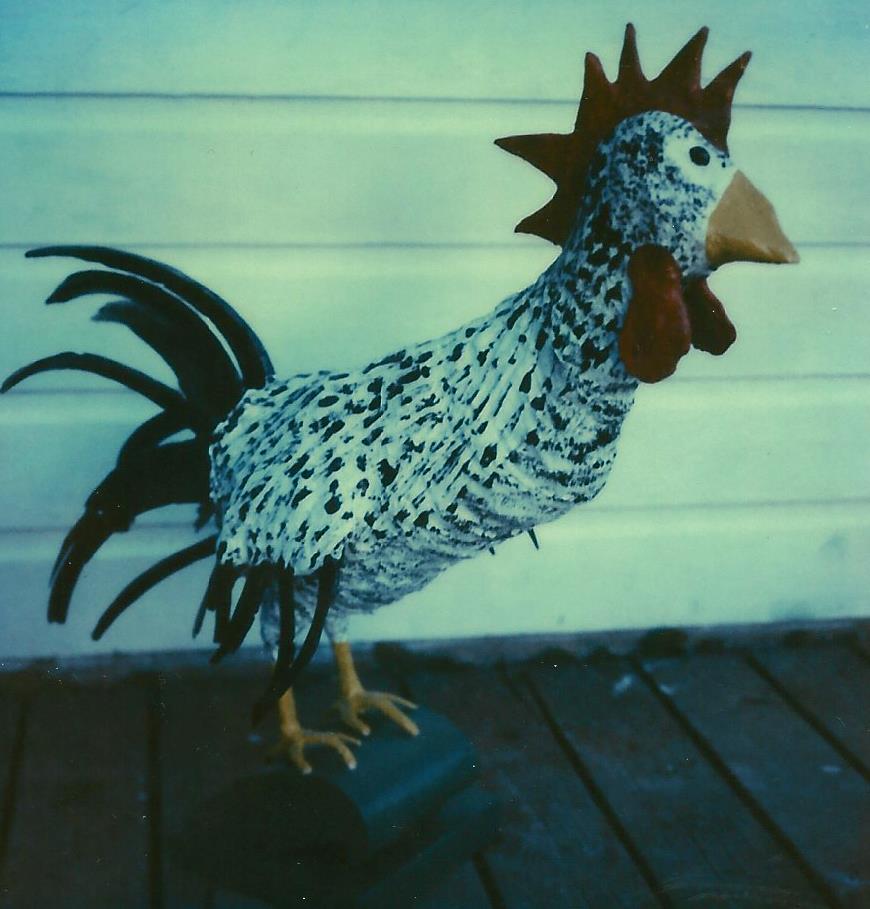
In the late eighties, we were doing a lot of antique shows with the same dealers, when one day an exciting new dealer came on the scene.  She was young, well in her thirties which is young for an antique dealer, had good taste in all things Canadiana and folk art, and was honest and dedicated.  She bought widely from the community and soon developed a sterling reputation.  We did some good business together, and quickly got to know and like Sue; so before long we were hanging out together, back and forth between our places, always having as a common bond a strong appreciation, and enthusiasm for folk art.  It came about one year that Jeanine wanted to make something special for Sue’s birthday.  Sue loved roosters.  She loved a lot of folk art, but she really loved roosters. So Jeanine decided to make a rooster for Sue. She confined herself to the workshop and set about with wire, paper-mache, and oil paint, and presto, several hours later emerged with a dandy of a large, cross-eyed, black and white rooster.  A fine specimen who portrayed the confidence and insolence of a truly fine cockerel.  We loved him, and were fairly confident that Sue would love him too.  At least we hoped so.  Giving people folk art, even to a folk art lover, can be a tricky business.roost3

And so Jeanine was feeling shy to present the work as her own for fear that Sue may not like it, but feel compelled to say she did because the artist was standing right there in front of her.  Thus we decided to create a folk artist to go along with the folk art.  Ah yes, now  M. Rooster was created by a previously unknown 65-year-old folk artist from the Baie St. Paul region of Quebec named Benoit Rotisserie.  Or something to that effect.  I honestly can’t remember. Then we dressed up Jeanine in old dungarees, fake mustache,a scarf and hat, and took a photograph of the artist next to his work.  We created a bio of the artist,document of authentication, and photo which all went into the box along with the sculpture.

Sue’s birthday came.  She opened the box and hooray, she was delighted with what she found inside; and we got to enjoy several minutes of snickering and grinning at each other before she began to put two and two together and started  to question the authentication.  Great fun was had by all, and Jeanine had the reassurance she desired.roost1

Four favourite folk art pieces by “unknown” artists

It is the day before Christmas eve, and I will soon be going downstairs to carve up apples for pies.  Here’s wishing you dear readers, a very Merry Christmas, or Happy Holidays as the case may be, and the best to all in 2017. Don’t let the door hit you in the arse on the way out 2016.  I think we will all be glad to be done with you.

So rather than go into a researched account of things past, or detailed description of some refinishing procedure, I am simply going to show you four of my favourite pieces in our collection, whose maker is unknown, and talk a bit about them.  I think it will be fun, and I will be able to get to the kitchen quicker.

Much folk art is unsigned.  Many who make folk art do so for their own gratification and therefore don’t bother to sign.  Others are perhaps unsure as to whether they want to own up to it. For whatever reason, it can be frustrating to a collector when you come across something you really like, and then can find no clues as to how to find other pieces by the same hand.  Sometimes you continue to find pieces you recognize are by the same maker in the same places, so you know you are getting close, and eventually you may be in the right place at the right time to have someone tell you who made them. Other times you may find a piece which totally blows you away, and never, ever see another piece like it.

Walking around the house I have chosen these four pieces for your consideration.un3

  1. Elephant on a fungus

We came across this unsigned piece on the second floor of Alan Chauvette’s pickers barn in St. Valere Quebec, in about 1985.  I remember the excitement I felt as I pulled it out from underneath a pile of blankets, and immediately fell in love.  Obviously local, the creator was dreaming of exotic, far-off Africa, with palm trees carved in relief against a blue sky.  I have always had a thing for the tree fungus you come across in the woods, which seem to scream out “do something with me”, and after finding lots of pieces involving fungus, I realize that there are many who share my enthusiasm.  For a while there I collected fungus folk art.  That was before Jeanine expressed that she found many of the pieces ugly,  and she developed a theory that they may be releasing spores into our environment,  so she would prefer that I move on.  This piece however, because she loves it as much as I do, and because the fungus is painted clearly falls into a different category.  I cannot logically explain why this piece falls into as Chuck Heston so famously put it, “if you want it, you’ll have to wrench it out of my cold, dead, hands”.  But it truly delights me every time I look at it.un2

  1. Chief Sam Goose

This piece was again found in Alan Chauvette’s barn about the same time.  All we could learn about it was that it was picked in New Brunswick, and had stood at the entrance to a Mi’kmaq reservation for many years.  Oil paint on plywood, it is a wonderful example of how time and nature can have a hand in making a truly unique piece.  If I were to see it new, I would enjoy it for it’s graphic qualities, but it is the fact that the paint has deteriorated into the grain of the plywood in such a beautiful way that it  looks as if the chief is looking at us through the fog of time.   I bought this piece for next to nothing, and actually put it out at three or four shows with a price tag of about $175. Then one day when packing up I took a good look at it and thought “are you crazy. This is a wonderful thing.  They’ve had their chance, and now it’s mine.”un4

  1. A couple of stout fellows from New Brunswick

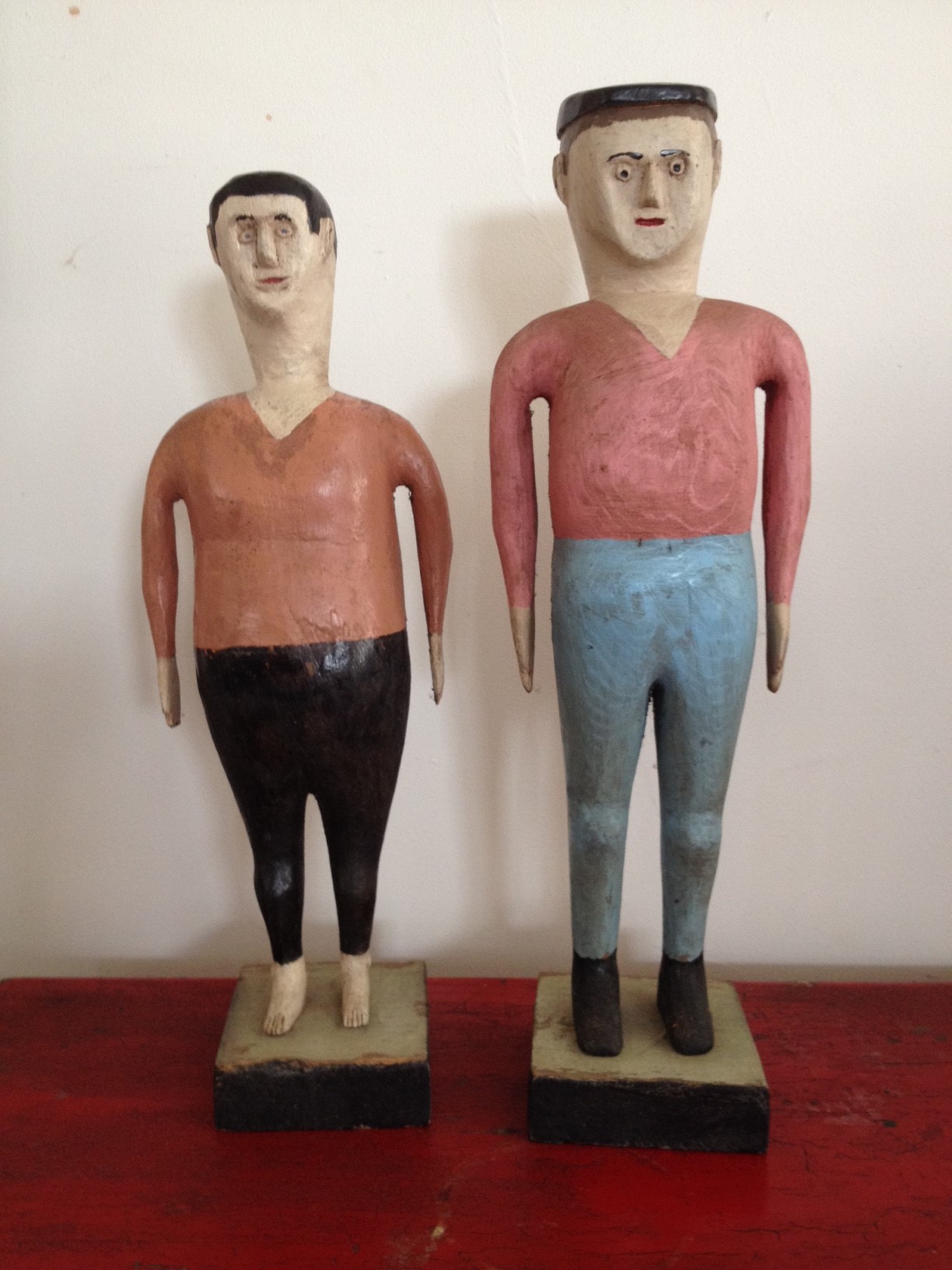
Again, it was love at first site.  This time it was in the early nineties and I was having a quick look around the Inside/Outside show held near the Toronto airport before the crowd was let in. I came across these fellows in the booth of Cathy Constantino, of Timber River Farms.  Cathy is a sweet woman and you can always count on her giving you a good deal so I simply asked for her best price.  She knew they were very good, but she gave me a reasonable price in any case based on her purchase price, which makes Cathy a “class act” in my books.  I put them in my case and didn’t show them to anyone for fear they would offer me “stupid” money, and I may be tempted by the bottom line.  You can’t eat art, but you can’t live without it either.  She actually did have the name of the artist, which I actually did write down in my day book which is how I kept track of everything in those days, but it would take me hours to go through those books to retrieve it now, and as I mentioned I am anxious to make pies. I will do it one day, and write it on a note underneath them but these fall into the category of “I never found another piece by the same artist.” So, it can wait.  Aren’t they just the greatest figures of manhood that you can possibly imagine.  They hit all my buttons.un5

  1. Two facing off Magpies

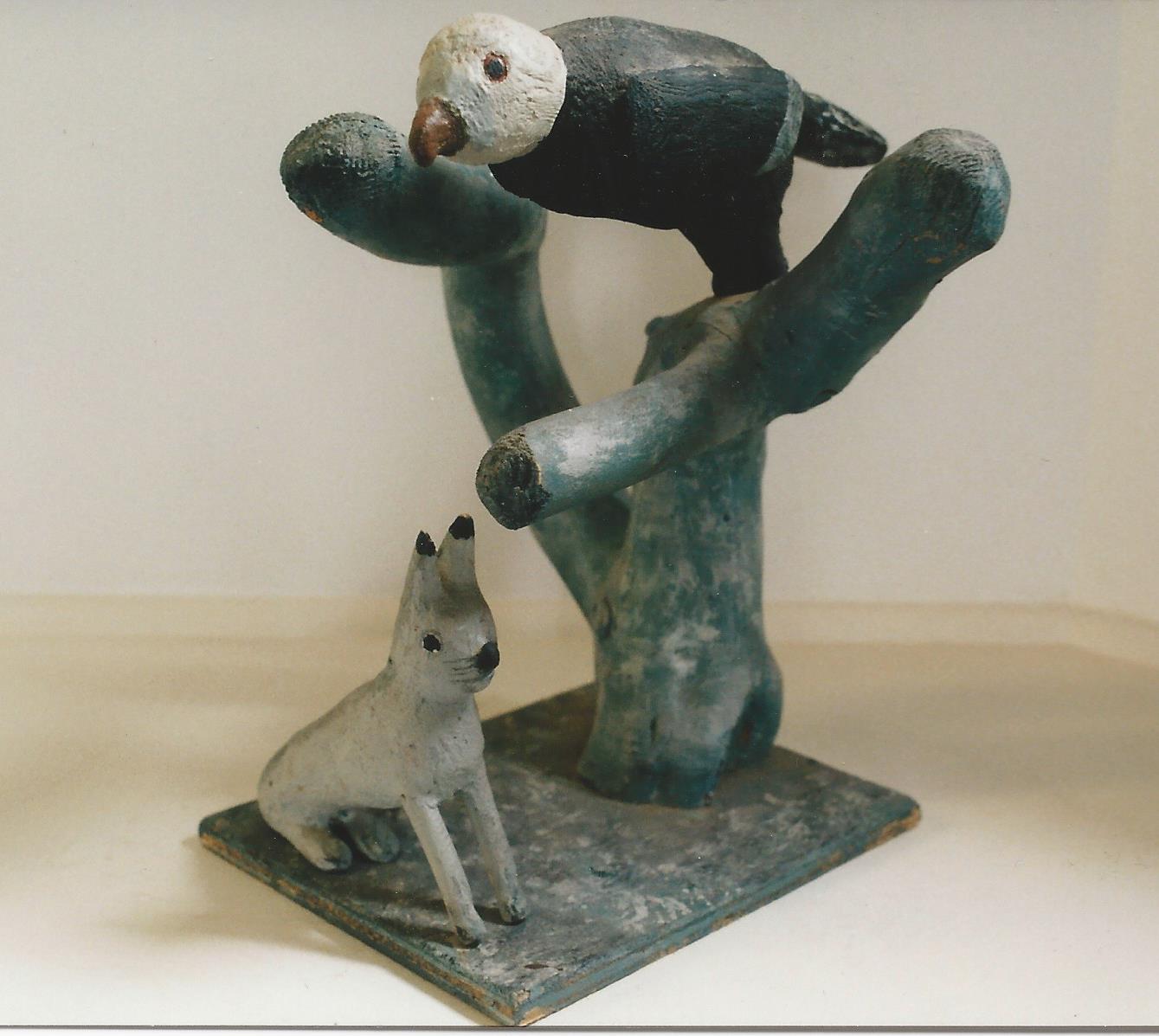
Last, but not least, we have a couple of Magpies facing down each other over a worm (missing). We acquired this at last spring’s Aberfoyle show, from the booth of Craig Gamache.  Jeanine has a large collection of bird carvings, and we knew right away that these fellows would have to be added, so it was with some relief that he offered them to us at a decent wholesale price.  He had no information on the artist but mentioned that there had been a twig, looking like a worm, between their beaks when he bought them; but the worm was broken when he found it, and had become lost.  One of these days I’ll get around to putting a new worm between them so the tug of war can continue, but in the meantime, it just looks like they are having an animated conversation.  As Magpies will do.

A Retrospective of the work of Ewald Rentz at the R.O.M. (almost)

rom1Most folk artists don’t see much recognition for their work during their lifetime.  To most it would never occur to them to expect it.  So it is particularly satisfying to note that two years before his death, the Thunder Bay Art Galley gave Ewald Rentz a major exhibition called “The “Completed” work of Ewald Rentz “.  This was not far from his village of Beardmore so many of his friends made it. His son Ernie told me that it meant a lot to him to have this recognition.  Rentz wasn’t at all interested in the commercial aspect of his art. He just wanted to please people. He was a modest man.rom4

Nova Scotia does a wonderful job of promoting it’s folk art and artists.   I think it is fair to say that this is largely due to the tireless work of Bernie Riordan during his long tenure as the director of the Art Gallery of Nova scotia, and to Chris Huntington who has sold and promoted Nova Scotia folk art since he arrived in Eagle Head in 1974. n 1988, Chris was instrumental in helping to establish the Nova Scotia Folk Art Festival which is held in Lunenburg during late July or early August of each year.  There are many others of course, but these two really got the ball rolling.

My home province of Ontario on the other hand has done little to promote this type of artwork, and so it was of great interest to me when in 1988 I was contacted by our friend Susan Murray whom at the time was a powerful lobbyist (since retired) and dedicated folk art collector.  She had set up a meeting with a person she met from The Royal Ontario Museum who expressed an interest in Canadian folk art.  Susan was and is a dedicated promoter of Canadian Folk Art. The someone in question was Dr. Howard Collinson, head of the department of Art and Culture for the museum.  This is what can come of rubbing elbows with the right people at the right parties, and having a very persuasive nature. rom3

It was a very exciting potential that we considered on the way over to the meeting.  I took to Howard immediately.  He was friendly and personable, but direct. He got right to the point, that the basement galleries of the museum needed to be changed. For decades it housed a rather uninteresting, and frankly in some cases incorrect representation of furnished rooms of Canadian homes of various periods.  It needed to go, and in it’s place he wanted something vital and relevant.  What he had in mind was a show of some sort on Ontario Folk Art.  We looked at pictures of several Ontario artist’s work, thinking this initial exhibit might be a cross section of artists, but when we got to the work of Ewald Rentz, he said “That’s it.  I want it to be a solo exhibition of this man’s work”.   Well alright then. I could see his reasoning.  Rentz’s work is very friendly and approachable, just like the man himself.  Let’s keep it simple and direct.  We went down to see the basement space and then agreed to meet again in a month or so. The timeline for the show was for late the following year, and he had a lot on his plate to deal with before he could dedicate any time to the project.  It all felt very positive and I began to look forward to getting started.rom5

Unfortunately, as these things sometimes go, the next thing I knew I was being contacted by a pleasant-sounding woman who informed me that the museum had a new director, and that Dr. Collinson was no longer with the gallery. She had taken over his position.  She stated that she was still interested in the project, but was currently unable to devote any time to it, having inherited many other more pressing issues.  My heart sank. I could sense from her description of the current situation at the museum, and from her tone that the chances of an Ewald Rentz exhibition at the R.O.M. was quickly becoming slight or most likely not at all. The one that got away.  I was right. She got back to me a few weeks later and said that the new director had imposed a completely different agenda for the department and that she could not see anything happening for the foreseeable future.  I was disappointed of course, but still held the desire to push for an exhibition of Canadian folk art somewhere, at some time.  I did realize this years later in 2005 with the Finding Folk Art exhibition at the Eva Brook Donley museum in Simcoe Ontario.  Admittedly it was not nearly as high profile, but it was a very good exhibition of which I am still proud.  But that’s a different story, for a different day.rom2